
METHODS FOR DETERMINING RESIDUES OF QUINOLONES
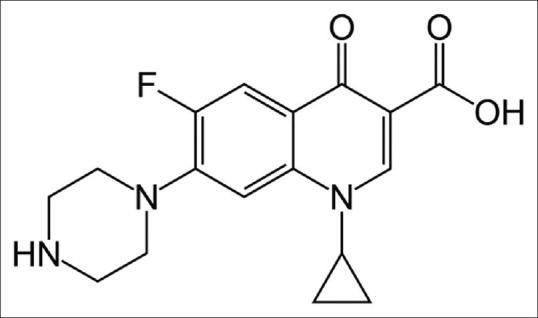
The mechanism of action of fluoroquinolones is based on the inhibition of gyrase, an enzyme required for bacterial DNA synthesis. Therefore, fluoroquinolones are highly effective against most gram-negative and gram-positive bacteria and are widely used in veterinary medicine to treat cattle, pigs and poultry. One of the strongest antibiotic classes used widely in livestock farming and aquaculture is ciprofloxacin.* Ciprofloxacin is a potent antibiotic of the fluoroquinolone group, capable of preventing the replication and synthesis of the chromosome needed for the normal metabolism of bacteria. Overdosing with ciprofloxacin affects the development of cartilage and load-bearing joints, harming the bones and joints of fetuses and young children. Misuse of ciprofloxacin also leads to the destruction of all beneficial bacteria, causing an imbalance in the body's bacterial ecology. The increased use of fluoroquinolones in recent years has led to resistance in E. coli. Therefore, in the EU, maximum residue limits (MRLs) apply to some antibiotics of this group. A typical example is enrofloxacin (metabolite: ciprofloxacin). The MRL for the sum of enrofloxacin and ciprofloxacin in milk (cow, sheep or goat) is 100 µg / kg (ppb).
METHODS FOR DETERMINING QUINOLONE RESIDUES
For determining major amounts (in a pharmaceutical matrix), common in pharmaceutical companies, drug manufacturing plants, etc., titration and colorimetric methods are usually chosen.
For determining trace amounts (food, environment), common in testing and quality control laboratories: the ELISA method and the liquid chromatography method are chosen.
Determining quinolone residues by Capillary electrophoresis
Buffer solution 50:50 MeOH: CH3CN containing 20 mM ammonium acetate, 4% acetic acid and 0.004% hexadimethrine bromide, with an apparent pH of 5.4. Measured at a wavelength of 290 nm, LOD: 60 ng / g for ciprofloxacin.
(Flurer CL. Analysis of antibiotics by capillary electrophoresis. Electrophoresis. 1997;18: 2427–37) ,
Determination by spectrophotometry (colorimetry)
Simple, fast and effective for determining Ciprofloxacin at major amounts by spectrophotometric measurement at a wavelength of 435nm. The complex formed is orange-yellow and stable for 60 minutes, using 1% iron(III) nitrate in 1% nitric acid.
(Fratini L, Schapoval EE. Ciprofloxacin determination by visible light spectrophotometry using iron(III) nitrate. Int J Pharm. 1996;127:279–82)
Determining quinolone residues by titration
The pharmaceutical matrix sample can be dissolved in CH2Cl2 / isopropanol, then titrated with ethanolic sodium hydroxide and detected by potentiometric titration with a glass / silver – silver chloride electrode system.
(Belal F, Al-Majed AA, Al-Obaid AM. Methods of analysis of 4-quinolone antibacterials. Talanta. 1999;50:765–86) ,
High-performance liquid chromatography (HPLC) method
Samanidou et al. used a C8 column at ambient temperature within 15 minutes. The mobile phase was a mixture of citric acid (0.4 mol L – 1) - CH3OH – CH3CN (87: 9: 4% v / v). Detection limit reached 5ppb for ciprofloxacin, 10 ppb for enrofloxacin.
(Samanidou VF, Determination of fluoroquinolones in edible animal tissue samples by HPLC after solid phase extraction. J Sep Sci.
The HPLC methods for determining ciprofloxacin content give recoveries in the range of 97 – 105%, with a relative standard deviation lower than 5%, and repeatability and reproducibility also lower than 5%. The detection and quantification limits reach ppb levels.
HPLC/LC-MSMS METHOD | |
|---|---|
The sample is homogenised and ground finely, with simple clean-up (adding extract or a solvent to remove some fat), and the extract is separated by centrifugation. | The sample is homogenised, extracted, with more complex clean-up. |
Can be detected at low concentrations at ppb levels ELISA has a linear range of 0.32–5000 ng/ml Repeatability >5% (6.52 and 5.94) Recovery > 75% Advantages: fast analysis, high sensitivity, suitable for batch sample analysis | Can be detected at low concentrations at ppb levels The linear detection range is 10–5120ng/ml Detection limit LOD = 0.32 ppb Repeatability < 5% Recovery > 75% Advantages: stable method, high accuracy. |
Source: Reference to foreign studies