
1. Regulations on limits for total aerobic microorganisms in food
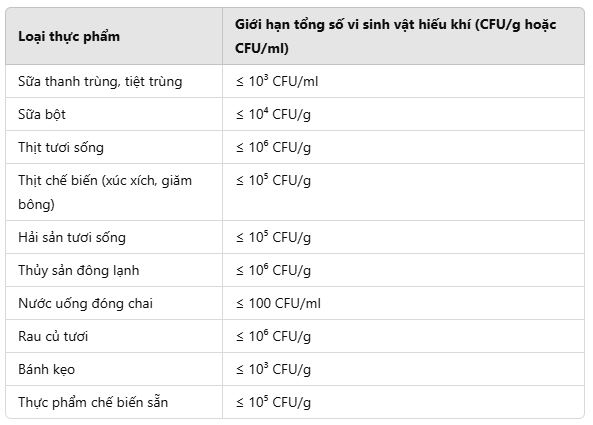
- In Vietnam, the limit for total aerobic microorganisms in food is specified in QCVN 8-3:2012/BYT issued by the Ministry of Health. In addition, international standards such as ISO 4833-1:2013 and CAC (Codex Alimentarius Commission) also set levels depending on the food type.
* Limits by food type
Below are some common limits:
2. Effects of total aerobic microorganisms on food quality
Exceeding the limit for total aerobic microorganisms can cause:
- Deterioration of food quality: vigorous microbial growth can change the color, taste and texture of food.
- Food safety risks: some bacteria can cause illness when consumed in large numbers, especially for sensitive groups such as small children, the elderly and immunocompromised people.
- Shortened shelf life: high microorganism levels can speed up food spoilage, reducing the use-by date.
3. Methods for testing total aerobic microorganisms
- The common method for determining total aerobic microorganisms in food is the colony count method on nutrient medium following The Compact Dry medium plate method. The procedure includes:
- Diluting the food sample to the appropriate level.
- Inoculating the sample onto the Compact Dry TC Total Viable Count plate.
- Incubating the sample at the appropriate temperature (usually 30–37 °C) for 24–48 hours.
- Counting the colonies grown on the Compact Dry TC plate, then calculating the total number of microorganisms in the food based on the dilution factor.

4. Measures for controlling microorganisms in food
To control total aerobic microorganisms in food, the following control measures should be carried out:
- Control of incoming raw materials: use clean materials with clearly established origins.
- Cleaning and disinfection: apply hygiene measures to equipment and food processing utensils.
- Temperature control of storage: store food at appropriate temperatures to limit microbial growth.
- Applying the HACCP process: a hazard analysis and critical control point system helps monitor microorganisms during food production.
- Periodic testing: carry out routine microbiological testing to keep food meeting safety standards.
Limits for total aerobic microorganisms in food are an important part of ensuring food quality and safety. Complying with the regulations on limits and carrying out hygiene controls in production, storage and periodic testing will help minimize the risk of microbial contamination, protect consumer health and raise food quality in the market.