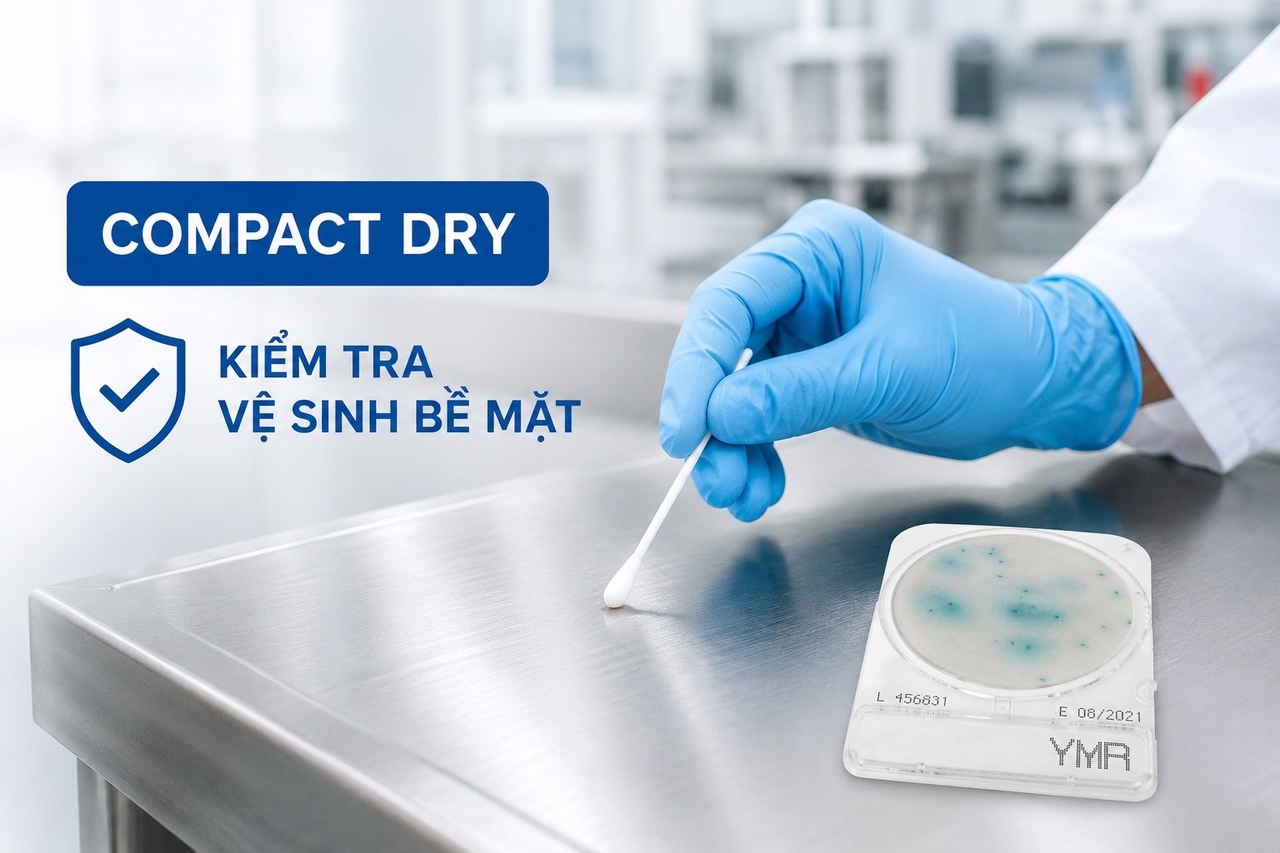
- A surface that is not cleaned properly can become a source of microbial contamination, affecting product quality and increasing the risk of product recalls.
- Today, many businesses are switching to using Compact Dry plates to assess hygiene status after cleaning instead of traditional culture methods. However, a question often asked is: Is Compact Dry surface hygiene testing really accurate?
- The article below will help you understand the accuracy, advantages and how to apply Compact Dry in production hygiene monitoring.
Why is microbiological testing of production surfaces necessary?
After cleaning and disinfection, the naked eye cannot judge how clean a surface is.
A surface that looks clean may still contain:
- Total aerobic bacteria (Total Count)
- Coliforms
- E. Coli
- Yeast and mold
- Bacteria that cause product spoilage
Therefore, surface microbiological testing is an important tool for:
- Verifying cleaning effectiveness
- Assessing the SSOP process
- Complying with HACCP, GMP, ISO 22000, BRC
- Reducing the risk of cross-contamination in production
Compact Dry ready-poured culture plates
Compact Dry is a dry culture plate system developed for fast, simple microbiological testing.
Unlike the traditional agar pouring method, Compact Dry already integrates:
- Culture medium
- Gelling agent
- Color indicator
Users only need to drop the sample onto the plate and incubate as instructed.
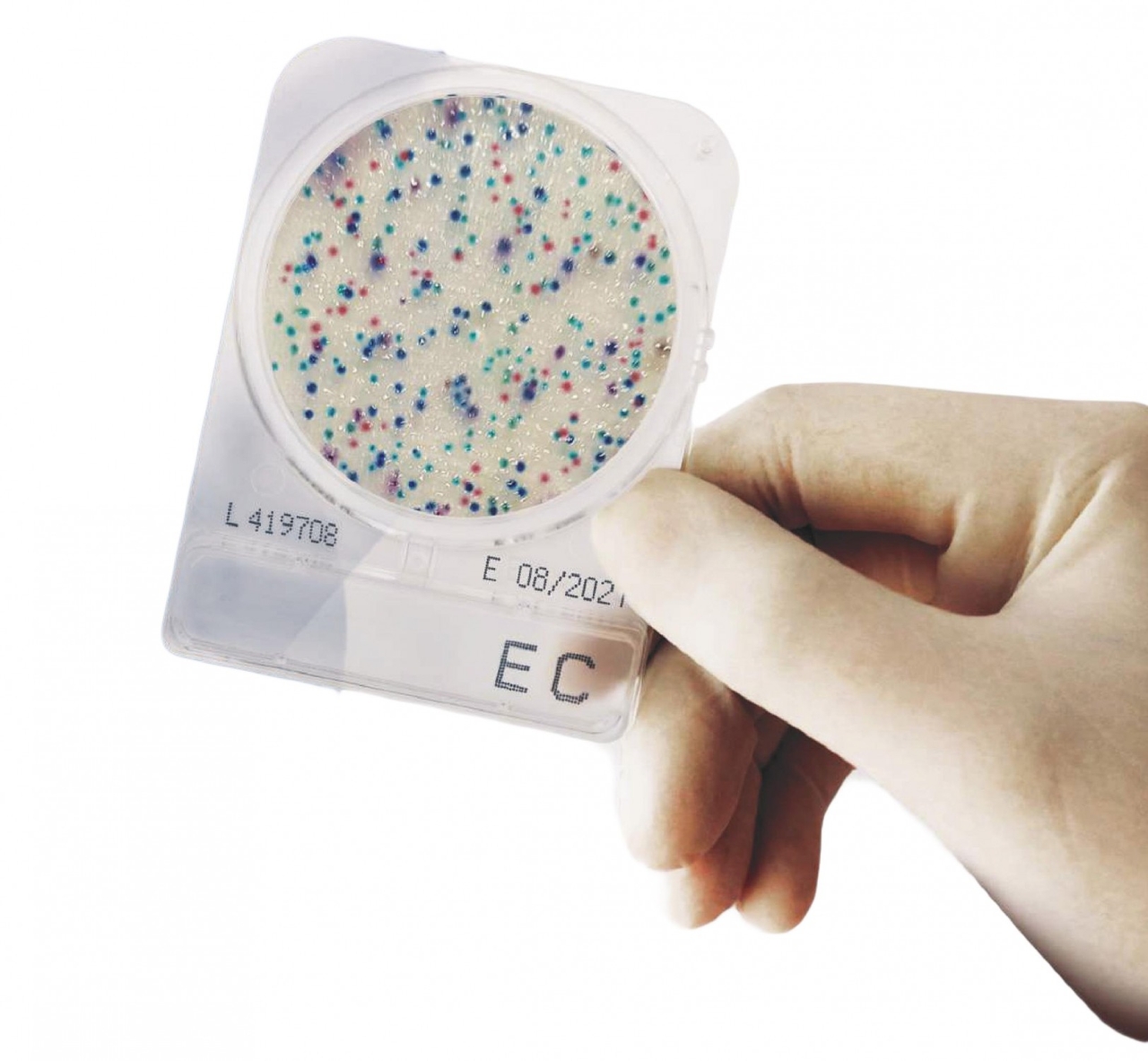
Common Compact Dry plate types include:
- Compact Dry TC: Total aerobic bacteria
- Compact Dry EC: Coliforms and E. coli
- Compact Dry YMR: Yeast and mold
- Compact Dry X-SA: Staphylococcus aureus
- Compact Dry CF: Coliform
- ................................
How is Compact Dry surface testing performed?
Step 1: Collect the surface sample
Typically using:
- Sterile swabs
- Sterile gauze
- Sampling sponges
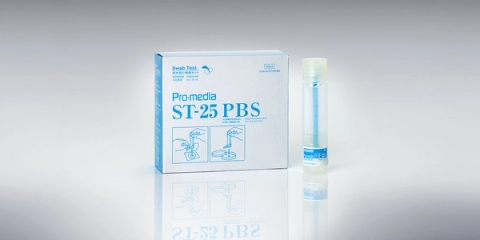
You may refer to the product Promedia ST-25 surface microbiology sampling swab test | Elmex
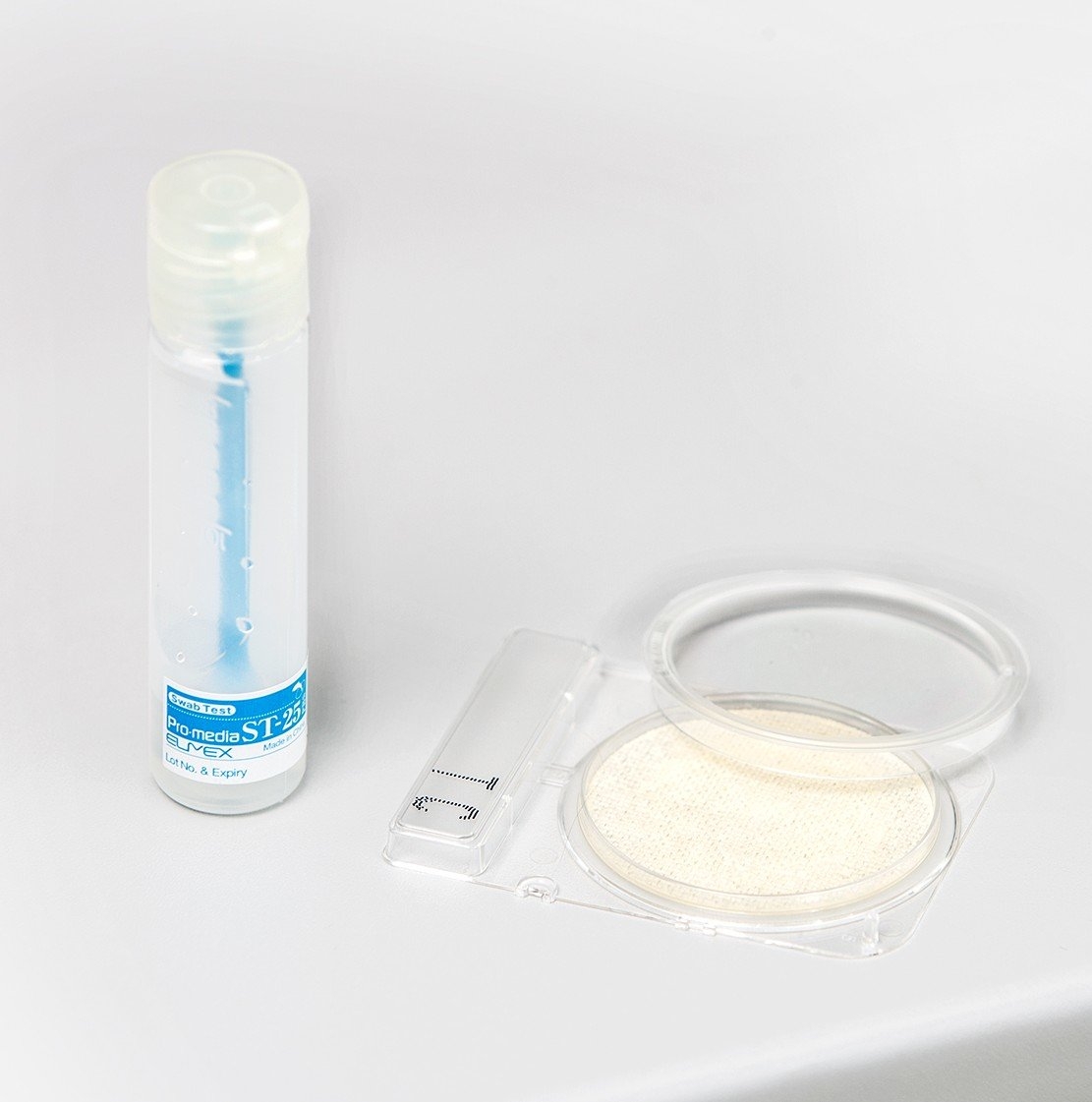
* Frequently tested locations:
- Conveyor belts
- Cutting blades
- Work tables
- Containers, holding tanks
- Packing areas
- Workers' hands
Step 2: Suspend the sample
- The sample, once collected, is placed into sterile diluent solution.
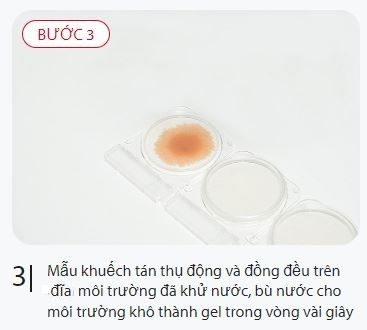
Step 3: Drop the sample onto the Compact Dry plate
- Drop 1 mL of sample onto the plate.
- The medium automatically absorbs and spreads the sample over the entire surface.
Step 4: Incubate and read the results
After the appropriate incubation period:
- Count the colonies
- Assess the number of microorganisms on the surface
- Compare against internal limits or customer standards
Is Compact Dry accurate?
The answer is Yes. Compact Dry is widely used around the world and has been evaluated by many international organizations.
1. High correlation with traditional methods
Many studies show that Compact Dry results correlate very highly with:
- The pour plate method (Pour Plate)
- The spread plate method (Spread Plate)
The deviation between the two methods usually falls within the acceptable limits for food microbiological testing.
2. Reduced handling error
In the traditional method, error can arise from:
- Preparing the medium
- Sterilizing the medium
- The agar pouring temperature
- The thickness of the agar layer
- Spreading technique
Compact Dry removes almost all of these steps, giving more consistent results across different operators.
3. Easy colony reading
Colonies on Compact Dry are usually displayed with distinctive colors.
For example:
- Coliform: blue–green
- E. coli: blue, blue-violet
- Yeast and mold: their own distinctive colors
This reduces confusion when counting colonies.
4. Suitable for periodic monitoring
The goal of surface testing is not in-depth microbiological research but:
- Tracking trends
- Assessing cleaning effectiveness
- Detecting anomalies
Compact Dry meets all these requirements very well.
Factors that affect accuracy
Whether you use Compact Dry or any other method, accuracy still depends on the sampling process.
Non-uniform sampling area
A standard sampling template should be used:
- 10 cm × 10 cm
- 25 cm²
- 100 cm²
Incorrect swabbing technique
You need to:
- Swab horizontally
- Wipe vertically
- Rotate the swab tip while sampling
Improper sample storage
Samples should be:
- Analyzed as soon as possible
- Refrigerated if transport is needed
Incorrect incubation conditions
The incubation temperature and duration must follow the instructions for each Compact Dry type.
Comparing Compact Dry and traditional methods for surface testing

Which businesses should use Compact Dry?
Compact Dry is especially suitable for:
- Food factories
- Dairy plants
- Seafood processing plants
- Bottled water plants
- Beverage plants
- Cosmetics factories
- In-house QC departments
- Contract testing organizations
Especially for businesses that need to test many surface points every day, Compact Dry significantly reduces operating time and cost.
Conclusion
- Surface hygiene testing with Compact Dry is highly accurate when performed with correct sampling and culturing procedures. Many businesses around the world use Compact Dry as a standard tool for factory hygiene monitoring thanks to its simplicity, speed and high reliability.
- If your business is looking for a fast, accurate and economical surface microbiological testing solution, then the Compact Dry plate is a choice worth considering to improve quality control effectiveness and meet GMP, HACCP and ISO 22000 requirements.