
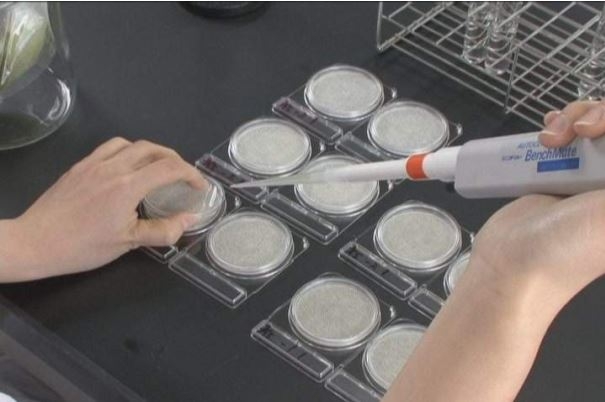
Compact Dry culture plates come in many types for detecting specific microorganism groups such as total aerobic bacterial count, yeasts and molds, E. coli, Coliforms, Staphylococcus aureus,... Below is a general guide on how to use Compact Dry plates:
1. Sample preparation
Before using Compact Dry culture plates, you need to prepare the test sample as required:
- Liquid samples: Dilute the sample at an appropriate ratio if needed (for example: dilute with 0.85% saline solution).
- Solid samples: Weigh an accurate amount of sample, then dilute with sterile distilled water or a suitable buffer. Use a homogenizer or shaker to mix the sample evenly.
- Dry samples: Dissolve the sample with an amount of sterile solvent before sampling.
2. Sampling
- Use a sterile pipette, draw 1ml of the prepared sample and drop it directly onto the surface of the Compact Dry plate. Make sure the sample is dropped into the center of the plate and does not exceed the required amount.
- After the sample is dropped onto the plate, the dry medium in the plate will absorb the sample and distribute it evenly over the entire medium surface.
3. Incubate the sample
- Carefully close the lid of the Compact Dry plate.
- Place the plate in an incubator and incubate at the required temperature. The incubation temperature and time depend on the type of microorganism to be tested and the type of Compact Dry plate used:
* Examples: some parameters of Compact Dry plates
- Compact Dry TC plate (Total aerobic bacterial count): Incubate at 35-37°C for 24-48 hours.
- Compact Dry EC plate (E. coli and coliforms): Incubate at 35-37°C for 24 hours.
- Plate Compact Dry YMR (Yeasts and molds): Incubate at 25-28°C for 3-5 days.
Note: Make sure the plate is placed upside down (sample side up) to avoid the sample contacting the lid and being cross-contaminated.
4. Read the results
After the required incubation time, take out the Compact Dry plate and read the results:
- Total aerobic bacterial count (Compact Dry TC): Aerobic bacterial colonies appear red on the plate surface.
- E. coli and coliforms (Compact Dry EC): Coliform colonies are purple-red, while E. coli colonies are blue.
- Yeasts and molds (Compact Dry YM): Yeasts form blue colonies, while molds may appear gray or dark brown.
5. Calculation of results
- Count the colonies with characteristic colors on the plate. Each Compact Dry plate has a surface area of 20 cm². If the sample has been diluted, the results must be recalculated based on the dilution factor.
- Calculation formula:

6. Cleaning and disposal of Compact Dry plates
After reading the results, Compact Dry plates must be treated as biological hazardous waste. Compact Dry plates must be disinfected (by autoclaving or treatment with disinfectant) before disposal according to regulations.
* Note:
- Ensure that all equipment and tools (pipettes, hands, plates...) are sterile to avoid cross-contamination.
- When working with microorganisms, work in a sterile environment (laminar flow cabinet or under an alcohol lamp).
- Check the expiry date of Compact Dry plates before use to ensure accurate results.
7. The procedure for operating Compact Dry culture plates is illustrated with images
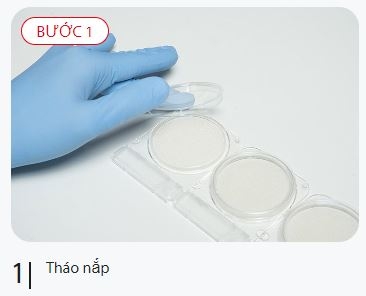
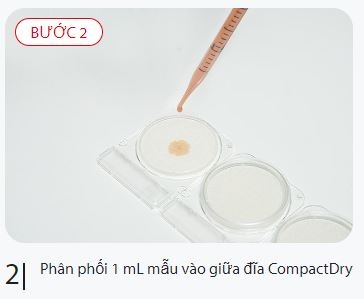
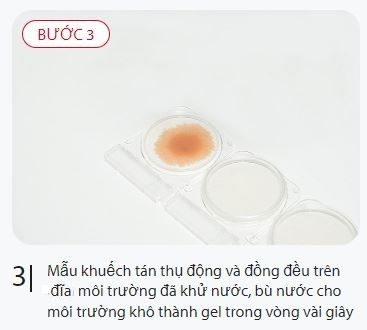
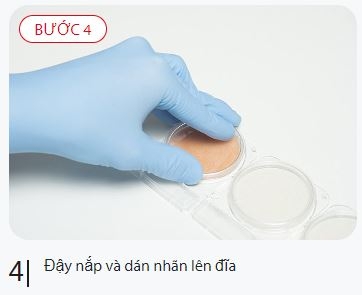
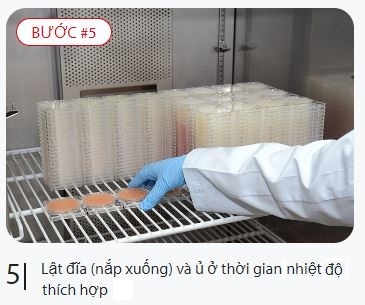
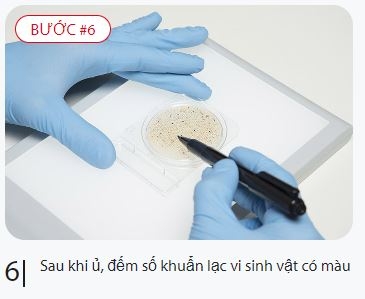
This method brings convenience, speed, and ease to microorganism testing without the complex preparation steps of traditional methods.
Contact us now for advice and to experience the Compact Dry plate products from Shimadzu Diagnostics!