- This has led to a nationwide product recall and renewed attention to the importance of rigorous testing and quality assurance.
- Cases of botulinum poisoning show that the Clostridium botulinum bacteria—although less common—still pose a serious threat. Unlike Cronobacter or Salmonella, botulinum poisoning is caused by a toxin produced by bacterial spores in the infant's gut. Symptoms include difficulty suckling, muscle weakness, and respiratory problems, emphasizing the need for vigilance against many more dangers.
Over the years, pathogenic agents such as Cronobacter sakazakii, Enterobacteriaceae and Salmonella have been identified as serious risks in infant formula.
- EU Regulation (EC) No 2073/2005 requires that these organisms must not be detected in specified sample sizes.
- In the US, all finished dry infant formula samples must be tested for Salmonella and Cronobacter.
- Alongside microbiological safety, nutritional composition is also tightly controlled, because errors in vitamin formulation have previously led to product recalls.
Vitamin fortification: which substances are allowed?
- For example, among the requirements for infant formula, the FDA specifies 30 nutrients that must be present in formula. There are minimum levels for all 30 nutrients and maximum levels for 10 nutrients.
Lactoferrin
- The natural enhancement of the infant's immune system is mediated by the lactoferrin protein in breast milk. Here, it plays an important role in the innate immune system and represents the first line of defense against bacteria and viruses. Its antibacterial effect is mainly due to its ability to form complexes with iron ions, which are very important for bacterial growth.
- In addition, lactoferrin is considered an antioxidant that can enhance the immune response by supporting the proliferation, differentiation, and activation of immune cells. Lactoferrin is found in mucous secretions, urine, and plasma. The highest lactoferrin concentrations are found in milk and colostrum.
- After the European Food Safety Authority (EFSA) approved bovine lactoferrin (bLF) as a novel food ingredient in 2012, demand for this substance has surged due to its application in infant formula, particularly in China.
R-Biopharm's solution for infant formula testing
Microbiological safety – a non-negotiable priority
- Microbiological safety is extremely important in infant formula manufacturing.
The SureFast® Clostridium botulinum Screening PLUS test kit is a real-time PCR kit designed to qualitatively detect the DNA sequence of the neurotoxin Botulinum (BoNT)—specifically types A, B, E and F—on the species Clostridium botulinum, Clostridium baratii and Clostridium butyricum
👉 Real-Time PCR Clostridium botulinum Kit | SureFast® Clostridium botulinum Screening PLUS
- The SureFast® Enterobacteriaceae 4plex multiplex qPCR test kit is specially designed to detect Enterobacteriaceae, Cronobacter and Salmonella in infant formula products
👉 SureFast® Enterobacteriaceae 4plex
An intuitive workflow ensures an easy experience, from sample preparation to result analysis:
- One enrichment step
- One DNA preparation step
- A complete vitamin test kit: Our advanced kit delivers accurate analysis, ensuring precise vitamin fortification in infant formula. 👉 How to Get Started with Vitamin Analysis
Lactoferrin Testing
Adding Lactoferrin not only increases the value of milk powder but also raises the cost. R-Biopharm's EuroProxima brand introduces a rapid Lactoferrin test ELISA kit to monitor the added bovine lactoferrin content. This ELISA test was specifically developed for use in infant formula. It is a fast screening test with a simple sample preparation process that requires no organic solvents.
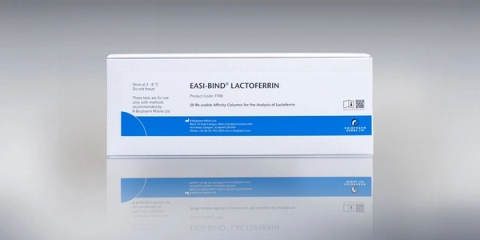
👉 Lactoferrin affinity column analysis | EASI-BIND® LACTOFERRIN
Learn more about Lactoferrin: Lactoferrin: importance, testing, and introducing EASI-BIND® LACTOFERRIN
The recent botulism incident is a clear reminder that infant formula remains a high-risk product. Only through strict microbiological safety standards, regulatory oversight, and advanced testing methods can manufacturers ensure that infants worldwide receive safe, nutritious food for a healthy start in life.