- In industries with demanding hygiene standards such as food, pharmaceuticals, cosmetics and healthcare, ensuring cleanliness after every sanitation cycle is a core factor in preventing cross-contamination, product quality decline and risks to consumer health.
- However, waiting for traditional microbiology results (2–5 days) is usually too slow to intervene. That is why rapid hygiene monitoring has become an important trend in modern quality control.
1. The goals of immediate hygiene testing
- Confirm the effectiveness of sanitation procedures (CIP, equipment SSOP, staff hands, utensils…).
- Rapidly detect organic residues (protein, ATP, blood, glucose…).
- Decide immediately: reuse equipment, move on to the next production lot, or demand re-cleaning.
- Keep control records: clear documentation for audits and certifications (HACCP, ISO 22000, GMP, BRC…).
2. The common methods
2.1. ATP (Adenosine Triphosphate) testing
* Principle: ATP exists in all living cells – bacteria, yeast, fungi, and also in food, blood, milk… When ATP reacts w
* How to use:
- Swab the just-cleaned surface with an ATP swab.
- Insert the swab into the meter.
- Read the result within 10–30 seconds.
* Advantages
- Fast, accurate, quantitative.
- Easy to use; staff can be trained quickly.
- Software included for storing results and exporting reports.
* Disadvantages
- The upfront investment in an ATP meter.
- Cannot distinguish the type of contamination (biological or food).
* Applications: dairy plants, seafood, meat processing, pharmaceuticals, healthcare (endoscopes, operating rooms), industrial cleaning services…
- Please see the Kikkoman Lumitester Smart ATP meter we supply here.

2.2. Surface protein swabs
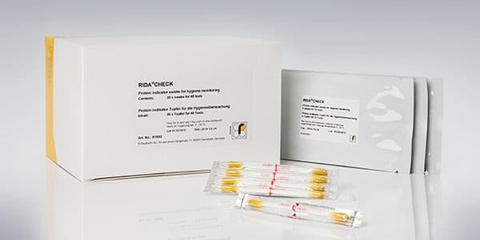
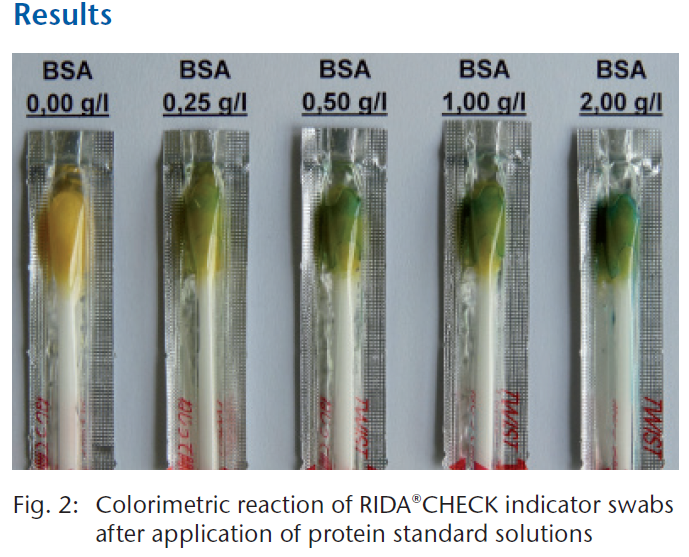
- Principle: a colour reaction between the indicator and protein residues. If protein remains, the swab changes colour from yellow to green, with the intensity reflecting the amount of residue.
* Advantages
- Low cost, no equipment needed.
- Easy to deploy at scale.
* Limitations
- Not quantitative.
- The reaction depends on ambient temperature.
* Applications: commonly used in HACCP and GMP to check hands, utensils and work surfaces.
- Please see the surface protein test swabs we supply here.
2.3. Blood/glucose tests
- For facilities that need to detect characteristic organic matter such as blood or sugar in meat, fish and processed food production…
- Principle: an enzyme colour reaction in the presence of glucose or hemoglobin.
- Advantages: fast, easy to use, targets the right analyte.
- Disadvantages: lower sensitivity than ATP.
3. Integration and evaluation
Criteria for judging immediate hygiene verification
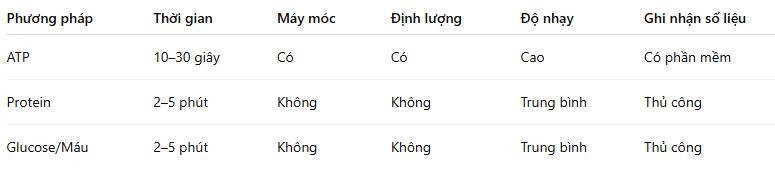
Depending on control goals, businesses can choose one method or combine several. For example:
- ATP for CIP wash areas, automated packaging equipment surfaces, line surfaces, work surfaces…
- Surface protein swabs for monitoring surfaces, food production lines, knives, trays…
- Weekly checks, or checks after cleaning according to the HACCP plan.
4. The benefits of immediate hygiene testing
- More confidence in the sanitation system.
- Less risk of products failing due to cross-contamination
- Higher throughput because there is no waiting for traditional microbiology results.
- Meets the cross-check and audit requirements of customers and certification bodies.
Immediate hygiene testing is an essential tool that helps businesses strengthen hygiene-safety control, cut costs and take a more proactive role in production. A thorough investment from the start brings long-term benefits in quality m