
1. The cost problem in microbiological testing today
In the food, beverage, cosmetics, and pharmaceutical industries, microbiological testing always accounts for a large share of costs because of:
- Labor spent on manual work (preparing media, pouring plates, sterilizing)
- The cost of laboratory equipment (autoclave, laminar flow cabinet, incubator)
- Waste from traditional media (PCA, VRBA, MacConkey...)
- Long analysis times → higher operating costs
👉 This is why many businesses are looking for a solution that is rapid microbiological testing – cost-saving – simpler processes.
2. How Compact Dry plates cut costs by up to 50%
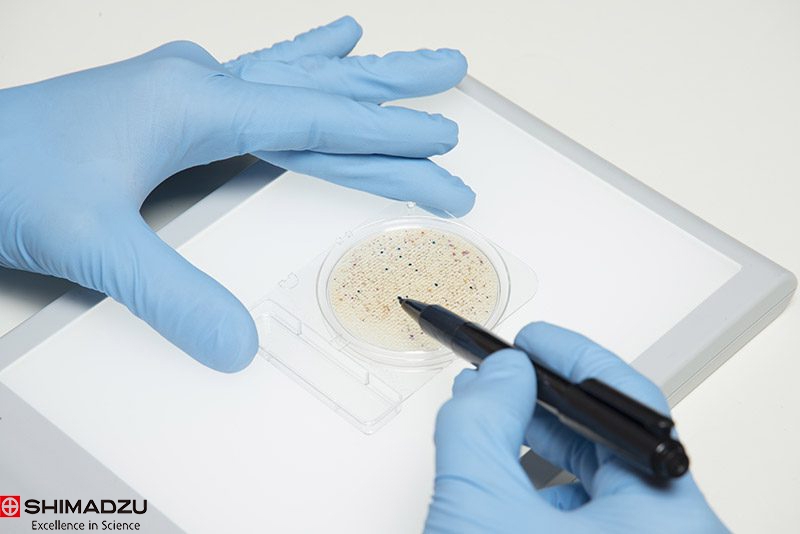
Shimadzu's Compact Dry medium plates are an advanced microbiological testing technology that lets a business:
- Skip preparing media
- Skip pouring Petri dishes
- Skip the autoclave
- Reduce handling errors
👉 Just add the sample → incubate → read the result.
3. Why does Compact Dry cut costs by up to 50%?
3.1. Cuts labor costs
- No highly skilled technician required
- 50–70% less handling time
- One person can process far more samples
3.2. Eliminates media preparation costs
- No need to buy powdered media (PCA, VRBA...)
- No distilled water or chemicals
- No losses during preparation
3.3. Reduces laboratory equipment investment
- No autoclave required
- No microbiological laminar flow cabinet required
- Only a basic incubator is needed
👉 Suitable for: small and medium factories, in-house QC laboratories
3.4. Cuts inventory and storage costs
- Compact Dry stores at room temperature
- Long shelf life
- No fresh media to keep in stock
3.5. Cuts costs from errors and retesting
- Plates are standardized from the factory
- High repeatability
- Fewer errors than traditional methods
👉 Cuts the "hidden" costs many businesses have never accounted for.
4. Cost comparison: traditional method vs Compact Dry

👉 Real savings: 30–50% (even higher depending on scale)
5. Applications of Shimadzu Compact Dry plates
Compact Dry supports testing for many important microbiological targets:
- Total aerobic plate count (TPC)
- Coliform / E. coli
- Yeast and mold
- Enterobacteriaceae
- Staphylococcus aureus
- ................
6. Which businesses should use Compact Dry?
- Food, seafood, and milk factories
- Beverage producers
- Cosmetics and pharmaceutical factories
- In-house testing laboratories (QC)
- Food-industry startups
👉 Especially suitable when you want to:
- Cut microbiological testing costs
- Test quickly – get results fast
- Cope with a shortage of highly specialized staff
7. Conclusion
Switching from traditional methods to Shimadzu Compact Dry plates not only helps to:
- Cut microbiological testing costs by up to 50%
- Improve laboratory operating efficiency
- Simplify processes
but also helps the business sustainably strengthen its quality control capability.