
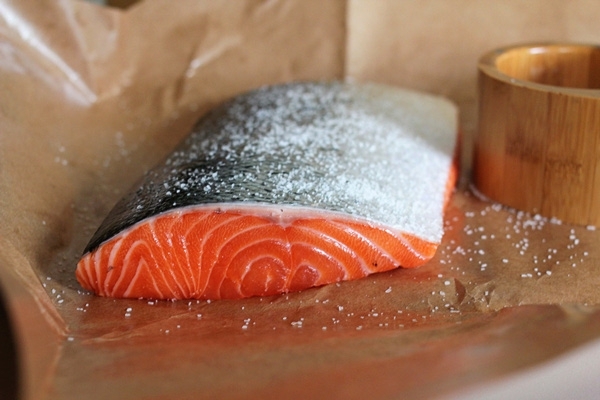
1. Histamine - Overview
Histamine is a product of the histidine degradation caused by the growth of certain bacteria in protein-rich foods (such as fish, cheese and wine). The amount of histamine formed depends on the bacterial species, temperature and contact time and can exceed 1000 mg/kg (ppm). So why is a histamine rapid test?

Harmful effects of Histamine:
Histamine is one of the substances closely related to anaphylactic shock, inflammatory reactions, allergies, nerve transmission and gastric secretion. Fish with a high histamine content is associated with poisoning commonly known as “scombroid poisoning”.
* Scombroid food poisoning symptoms may include flushed skin, headache, itching, blurred vision, abdominal cramps and diarrhea. Symptoms usually start 10 to 60 minutes after eating and can last up to two days.
Permitted limits on the market
The Histamine limit in tuna is 50ppm (2020), however on 27/12/2021, FDA issued a draft reducing the permitted histamin level in products from 50ppm to ≤ 35ppm (mg/kg) . (According to VASEP)
The permitted limits for Histamine levels in fish and fish products also vary depending on the fish species and the importing country.
2. Histamine testing methods
Many histamine analysis methods such as the fluorescence method, gas chromatography, liquid chromatography... have been developed for histamine content analysis.
However, many sample matrices, especially seafood, require a method that is quick, simple and relatively accurate so that a decision can be made immediately (purchasing, production,...).
Therefore, the histamine rapid test methods have appeared one after another. In this article, PacificLAB would like to introduce to our valued customers and readers two histamin on-site rapid test methods from Japan and the elisa method from R-Biopharm.
*General notes when testing Histamine
Histamine levels still increase in chilled foods, so it is important that you carry out the analysis directly after sampling.
Use only plastic containers (for example: polypropylene, PP) for sample preparation. Histamine adsorbs onto glass surfaces, reducing recovery (leading to negative bias).
Normally, when preparing a fish sample, take the skin and remove the bones, but in principle all edible parts should be retained, for example, discard the inedible skin of eel, keep the softened bones of canned salmon and take herring as a whole.
2.1 Histamine rapid test method using ELISA (R-biopharm)
R-Biopharm is a leading developer of test solutions for clinical diagnostics and for food and feed analysis in Germany.
In both fields, R-Biopharm test kits deliver high accuracy and precision, meeting user requirements.
The R-Biopharm Histamine test kit has been awarded AOAC-RI 031901 certification; the method has been proven to be concordant with the chromatography method, and at the same time offers a low detection limit.

- Principle: The determination is based on the enzyme histamin dehydrogenase, which catalyzes the deamination-oxidation of histamin in the presence of an electron carrier that converts the reagent into a colored product. The color intensity obtained is directly proportional to the histamin concentration and is measured at a wavelength of 450 nm.
- General procedure: Depending on the sample matrix, the procedure consists of a few simple basic steps: Vortex together with the extract -> Incubate -> Centrifuge -> Ascorbic reduction (if present) -> Perform the color reaction with the kit. Fish products are extracted with boiling water, while cheese is extracted with water, and the extract is treated with perchloric acid/sodium hydroxide. Wine is extracted with the reagent of the RIDA® Sample Decolorant kit to remove colour pigments and interfering compounds,....
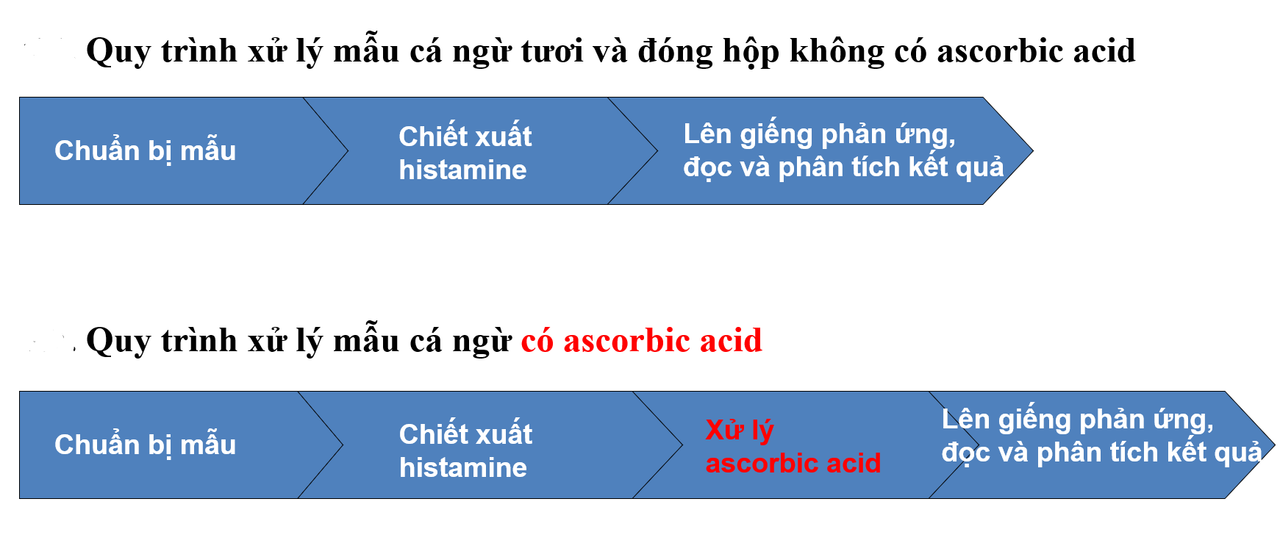
- Run time: From 60 minutes - 90 minutes (if Ascorbic is present)
2.2 Histamine rapid test method using the Comilu sensor chip
Comilu is a Histamine rapid test product from Fujodenolo (Japan). Fujidenolo is headquartered in Komaki city, Aichi province, Japan. The company specializes in manufacturing and selling medical and healthcare products. Founded in 2014, with a young and creative workforce, the company rapidly expanded to five times its size in 2023.
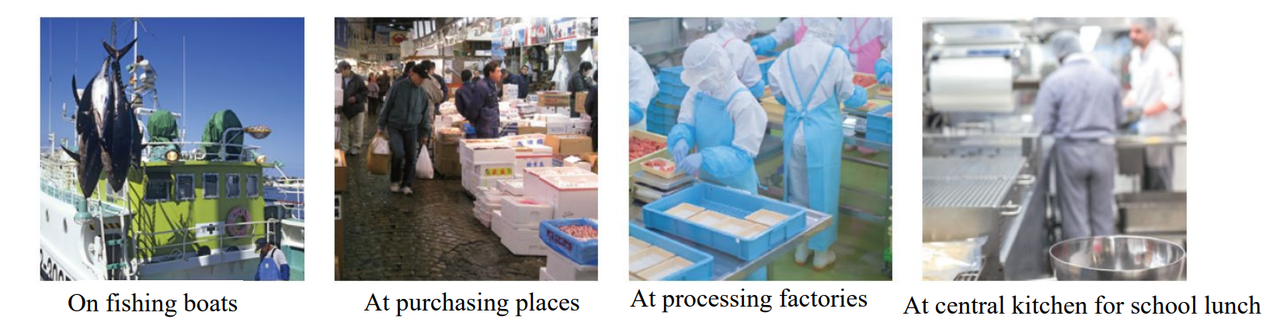
* When is a Comilu histamine rapid test needed?
On fishing vessels harvesting seafood
At markets where seafood is purchased
At frozen seafood processing plants (for export)
At canteens, group kitchens,...
=> On-site histamine rapid testing is usually carried out by fishermen, boat owners, traders, authorities, head chefs,...
- Principle: The detection method uses a sensor chip with a carbon electrode on which highly active histamin oxidase enzyme is immobilized. H2O2 generated from the enzyme reaction with the substrate is converted into an electrical signal. The Histamine concentration can be calculated from this signal.
- General procedure: The procedure consists of the steps: sample collection -> sample extraction -> result reading
There are 2 ways to extract the sample, by centrifuge or by pressing through a syringe.

- Run time: 3 minutes - 10 minutes depending on whether the sample is frozen or soft.
* In particular: the enzyme, histamin oxidase, was developed by Kanagawa Institute of Technology and commercialized by Fujidenoro Co., Ltd. - Japan.
It works more strongly than the enzymes currently available on the market and at the same time improves histamin detection capability and recovery efficiency. The properties of the enzyme and the stability of the enzyme immobilization membrane are also the advantages of the Comilu enzyme sensor chip
2.3 Which histamine testing method should you choose?
Each histamine testing method, whether accurate quantitative testing or rapid test, has its own advantages, disadvantages and certain requirements to perform. To find out which method suits your needs. First, please take a look at a comparison table of some characteristics of the histamine testing methods below:
Quantitative Histamine testing by HPLC | Rapid histamine testing with the Comilu sensor chip | Quantitative histamine testing by ELISA kit | Quantitative histamine testing by fluorescence measuring instrument | |
|---|---|---|---|---|
Steps | Sample collection -> Sample cleanup => Derivatization -> Result measurement with a chromatograph *Sample handling is extremely important and complex because the matrix affects the result of the measurement. | Sample collection -> sample extraction -> load the sample into the enzyme-containing chip -> result reading *There are 2 ways to extract the sample, by centrifuge or by pressing through a syringe. | Sample collection -> Sample extraction -> Remove Ascobic (if present) -> Analysis by ELISA *Sample extraction by centrifuge is relatively simple; the ELISA analysis operation is quick but involves many steps. | Sample collection -> Methanol sample extraction -> Pass through an ion exchange column -> Analysis with a fluorescence measuring instrument *Methanol sample extraction is relatively simple; the column step and the color reaction must be carried out quickly and accurately. |
Principle | The components in the sample are separated after passing through the chromatography column | The detection method uses a sensor chip with a carbon electrode on which highly active histamin oxidase enzyme is immobilized. | The determination is based on the enzyme histamin dehydrogenase, which catalyzes the deamination-oxidation of histamin in the presence of an electron carrier that converts the reagent into a colored product. The color intensity obtained is directly proportional to the histamin concentration and is measured at a wavelength of 450 nm. | The sample is extracted with 75 % methanol (v/v). The extract is passed through an ion exchange column. O-phthaldialdehyde (OPT) solution is added to the eluent to form a fluorescent derivative with histamin. The fluorescence intensity of the derivatives is measured with a fluorescence measuring instrument and the histamin content is quantified using an external standard. |
LOD – linear range | 4,75mg /Kg | 10mg/kg | 0.54 - 3.75 mg / kg (ppm) Histamine depending on the sample matrix | ~ 30mg/Kg |
Time to result | 1 hour / <10 samples (simultaneous analysis) | < 10 minutes / 1 sample | 60- 90 minutes (for many samples at the same time, maximum about 40 samples) | 1 hour for a few samples analysed simultaneously |
Equipment | Sample handling equipment such as vortex mixer, grinder, centrifuge, centrifuge tubes, incubation bath, … HPLC system | Equipment supplied with the kit: plastic syringes prefilled with buffer and filter tips, plastic pp tips for samples, sample pipettes. sensor chip | •Grinder, vortex | Grinder, vortex, centrifuge, centrifuge tubes, micropipette, water bath, pp tubes, filter paper, Fluorescence measuring instrument |
Advantages | High accuracy, low detection limit. | A highly active enzyme improves sensitivity and recovery efficiency. High and stable accuracy and precision | Accuracy equivalent to the HPLC method, low detection limit. | High accuracy, relatively low detection limit, |
Disadvantages | High initial investment cost. | High detection limit. | Ascorbic acid must be removed during analysis | Many handling operations, must be performed quickly, requires preparing your own reagents (pure) |
Applications in | High-technical testing centers | On site | Testing centers. professional analysis, QAQC departments of manufacturing companies (seafood, fish sauce, wine labs,…) | Testing centers. professional analysis, QAQC departments of manufacturing companies (seafood, fish sauce, wine labs,…) |
Certification | AOAC-RI 031901 | TCVN 11047:2015 |
Thus, compared with accurate quantitative methods of high technology, the histamine rapid testing methods offered by PacificLAB have certain advantages, such as fast analysis time, reagents (if any) supplied ready-made, and a large number of samples analysed in the same unit of time. This solves the requirement: fast - accurate - cost-effective for the user.
*For more details about these products, please contact the technical team at PacificLAB