1. What is glycerol?
- Glycerol (also called glycerin) is a polyhydric alcohol compound with the chemical formula C₃H₈O₃, liquid, colorless, odorless, mildly sweet, dissolves well in water and is strongly hygroscopic. In the food industry, glycerol is widely used thanks to the following properties:
- Humectant: prevents food from drying out, helping maintain softness and freshness longer.
- Sweetener: creates a mildly sweet taste, does not cause tooth decay like ordinary sugar.
- Solvent: dissolves and disperses flavorings and food colors.
- Texture former: helps improve the softness and elasticity of baked goods, candy and cakes.
Thanks to these properties, glycerol in food is present in many products such as:
- Confectionery, chewing gum, baked products.
- Non-alcoholic and alcoholic beverages (beer, wine).
- Functional foods in syrup or softgel capsule form.
- Processed meat products, liquid seasonings.
2. Why is it necessary to analyze glycerol in food?
Analyzing glycerol in food is an important step in food quality and safety control, for the following reasons:
2.1. Compliance with legal regulations
- Many countries limit the maximum permitted glycerol content in each type of food and beverage.
- If the limit is exceeded, the product may be recalled or not allowed to be exported.
2.2. Ensuring sensory quality
- Glycerol content directly affects moisture, softness, elasticity and sweetness.
- Too little glycerol can make the product dry and hard; too much will cause a sticky feel, an unusual sweet taste or affect the flavor.
2.3. Detecting fraud and formula deviation
- Some manufacturers may use excessive glycerol to increase weight or extend shelf life in violation of regulations.
- Glycerol analysis helps businesses demonstrate compliance with food safety standards, which facilitates export.
- Glycerol is sometimes added unlawfully to improve sensory properties or to hide product defects (for example: masking bitterness, increasing viscosity).
- Periodic testing of glycerol content helps prevent fraud and protects brand reputation.
- In beer and wine production, glycerol is produced naturally during fermentation; quantification helps monitor the process and adjust the technology.
2.4. Ensuring consumer safety
- Although glycerol is generally safe at permitted levels, high content can cause side effects such as osmotic diarrhea and digestive disorders.
- Quantitative analysis is a way to ensure the product is safe for all groups, including children and people with digestive conditions.
3. Enzytec™ Liquid Glycerol E8360 Kit – Effective Glycerol Analysis Solution
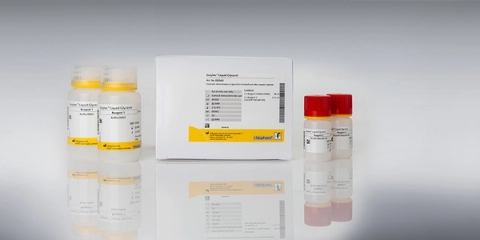
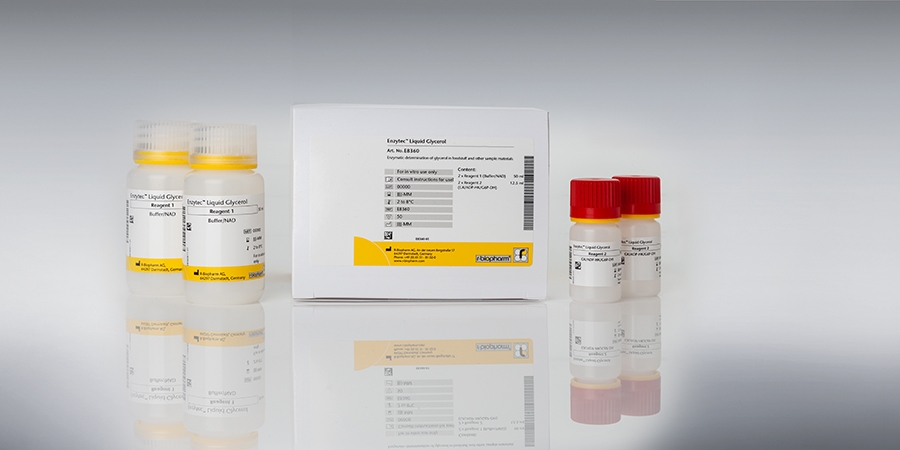
Company R-Biopharm (Germany) supplies the Enzytec™ Liquid Glycerol E8360 – a fast, accurate and easy-to-use glycerol quantification solution.
* Highlights
- Enzymatic principle: uses an enzyme specific to glycerol, avoiding interference from other components in the sample.
- High accuracy: suitable for both low and high glycerol content.
- Simple operation: a clear analytical procedure, requiring no equipment more complex than a spectrophotometer.
- Fast results: completes the analysis in a short time, supporting batch-by-batch quality control.
- Wide application: glycerol analysis in beer, wine, beverages, confectionery, dairy products, syrup and many other processed foods.
* Basic Procedure
- Prepare the sample according to the instructions (dilution may be required).
- Perform the enzymatic reaction with the kit reagents.
- Measure absorbance at the appropriate wavelength.
- Calculate the glycerol content based on the measured value.
Analyzing glycerol in food not only helps businesses comply with safety regulations but is also an important tool to ensure quality, stable flavor and product texture. With the Enzytec™ Liquid Glycerol E8360 Kit from R-Biopharm, laboratories and food manufacturers can carry out tests that are fast, reliable and cost-effective, helping enhance brand reputation and protect consumer health.
👉 Reference Glycerol in food testing kit | Enzytec™ Liquid Glycerol E8360