
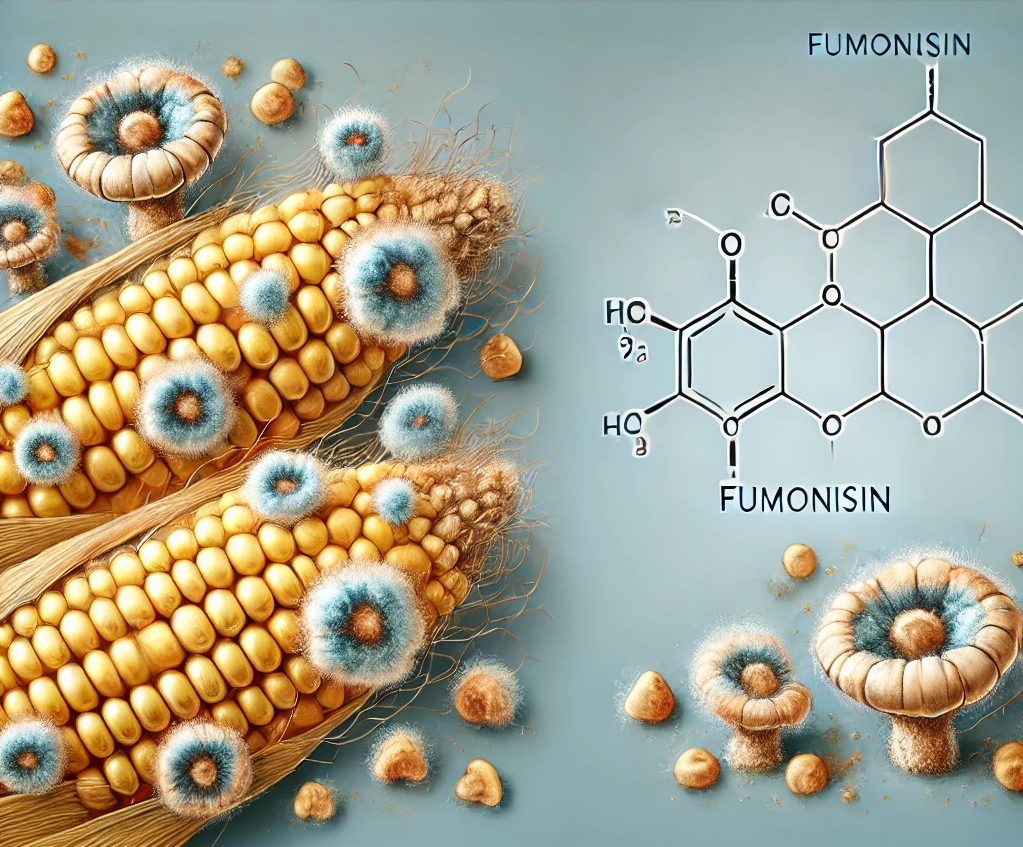
- Fumonisin commonly contaminates cereals such as maize, barley, wheat and cereal products. Fumonisin was first d
- This toxin includes several forms, of which Fumonisin B1 (FB1), Fumonisin B2 (FB2) and Fumonisin B3 (FB3) are the varian
1. The origin and conditions of Fumonisin formation
Fumonisin is produced by Fusarium fungi under:
- Temperature: 20–30°C.
- Humidity: above 70%, especially in cereal storage with high or poorly controlled moisture.
- Tropical and subtropical regions, where humidity and temperature favour fungal growth.
* The products most prone to Fumonisin contamination include:
- Maize and processed maize products (corn flour, animal feed, packaged corn foods).
- Rice, barley and other cereals.

2. The harm of the Fumonisin toxin
2.1. On humans
Fumonisin has serious effects on human health:
- Esophageal cancer: many studies have shown a link between Fumonisin and esophageal cancer rates in regions with high consumption.
- Neurotoxicity: Fumonisin can disrupt sphingolipid synthesis, affecting the nervous system.
- Liver and kidney toxicity: at high levels it damages and impairs liver and kidney function.
2.2. On animals
- Horses: causes leukoencephalomalacia (LEM), a fatal brain degeneration.
- Pigs: causes lung damage, reducing resistance and productivity.
- Poultry and cattle: lower growth and livestock productivity, impairing overall health.
3.3. Economic impact
- Great economic losses due to lower crop quality and yield, affecting export and international trade.
- Higher costs for controlling and handling contaminated food.
4. The toxic mechanism of Fumonisin
Fumonisin affects sphingolipid synthesis, an important cell membrane component. It inhibits the ceramide syn
- Disrupted cell membranes.
- Induced cell death and tissue damage.
5. Detection and control of Fumonisin
5.1. Detection
Modern analytical methods used to detect Fumonisin include:
- High-performance liquid chromatography (HPLC) with fluorescence detection.
- Liquid chromatography mass spectrometry (LC-MS/MS).
- Rapid ELISA test kits: allow rapid detection of Fumonisin levels in cereal samples.
- Rapid Fumonin toxin testing with a test kit
5.2. Control
* Agricultural measures
- Use fungus-resistant varieties.
- Harvest at the right time to keep maize from getting damp.
- Store cereals below 13% moisture to limit fungal growth.
* Post-harvest handling:
- Dry and store under controlled temperature and humidity.
- Use chemicals or additives that control fungal growth.
* Biological methods:
- Use antagonistic microorganisms or enzymes to degrade Fumonisin.
6. Food safety regulations
Many international bodies have set maximum limits for Fumonisin in food and feed:
- Codex Alimentarius: has proposed limit levels for maize and maize products.
- The European Union (EU): limits Fumonisin in raw cereals to 4000 µg/kg.
- The United States (FDA): sets maximum Fumonisin levels in animal feed and consumer foods.
Fumonisin is one of the biggest hazards to food safety and public health. Raising awareness and applying cont
You can see our Fumonisin toxin test products at the following link:
https://pacificlab.vn/vi/shops/group/phan-tich-du-luong-doc-to/