
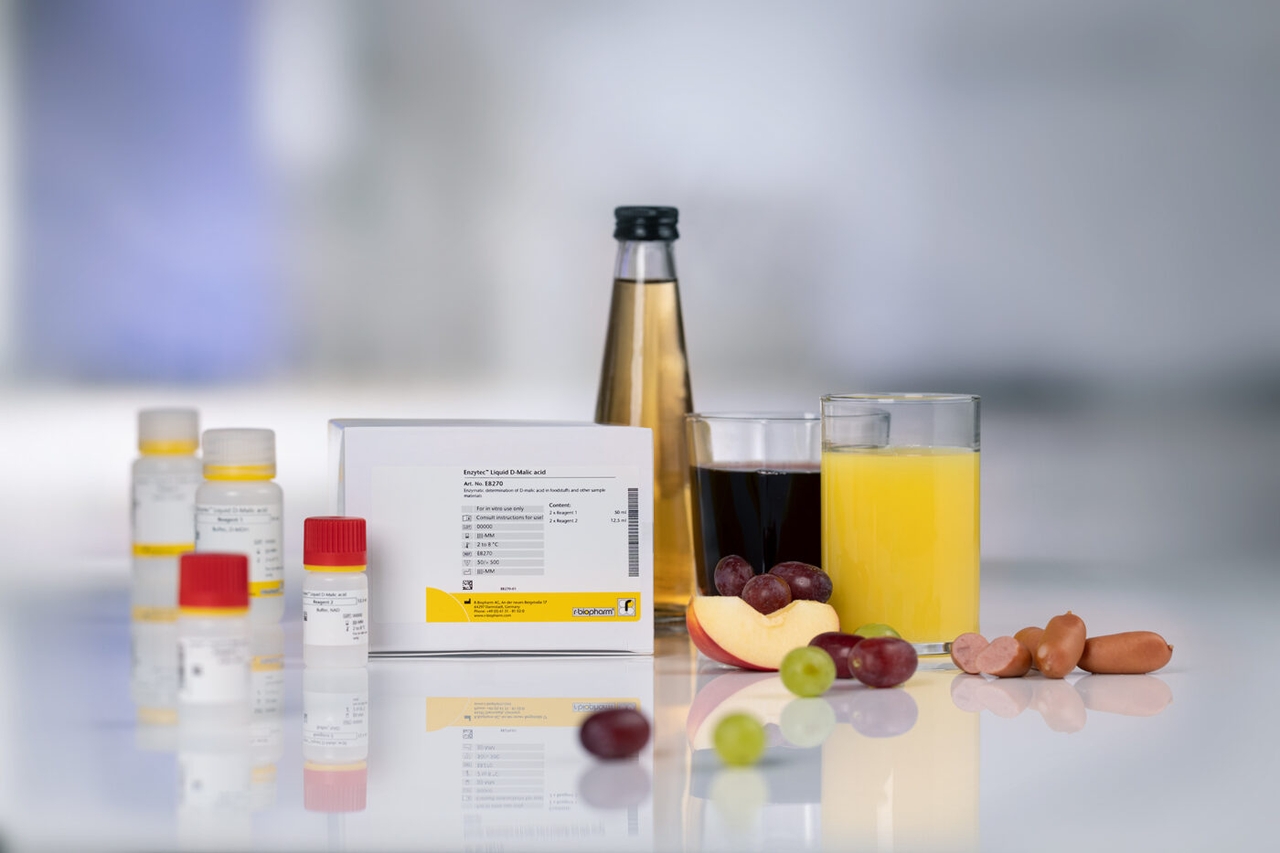
1. The Enzymatic method and food quality control for safe production
- Enzymatic tests can rapidly and accurately determine the content of various sugars such as glucose, fructose, lactose, sucrose and maltose in products from beverages and dairy products to diet foods and confectionery
- These tests are highly specific and effective even in complex sample matrices, thanks to the use of high-quality enzymes that ensure accurate and precise measurements. The results of these enzymatic tests are measured with a spectrophotometer and the process can be automated to achieve the highest efficiency.
- Enzymatic tests can rapidly and accurately determine the content of various sugars such as glucose, fructose, lactose, sucrose and maltose in products from beverages and dairy products to diet foods and confectionery.
- Accurate sugar determination is very important for product quality and compliance with nutritional standards.
* Certification and approval by international organizations
Many enzymatic methods have been validated or approved by leading international organizations, ensuring their reliability and standardization in food analysis. The most important of these organizations include:
- AOAC (Association of Official Analytical Chemists)
- CEN (European Committee for Standardization)
- IDF (International Dairy Federation)
- IFU (International Federation of Fruit Juice Producers)
- ISO (International Organization for Standardization)
- OIV (International Organization of Vine and Wine)
2. Parameters for quality control of food safety during food production
2.1. Acetaldehyde
- Acetaldehyde occurs naturally in all organisms, even in very small amounts, because it is a product of many metabolic processes. Acetaldehyde occurs naturally in coffee, bread and ripe fruit, and is produced by plants. In food production, the acetaldehyde concentration increases considerably when ethanol fermentation takes place, reaching up to 100 mg/l in wine and 20 mg/l in beer
- On the other hand, acetaldehyde is an important flavour-forming compound in wine and beer. In dairy products such as yoghurt and cheese, it is responsible for creating the desired flavour but also causes flavour defects.
* Rapid Acetaldehyde test kits from R-Biopharm:
Acetaldehyde (Art. No. 10668613035)
2.2. α-Amino Nitrogen
- During grape juice fermentation, yeast needs nitrogen as a nutrient, part of which is supplied by amino acids. The corresponding test may be called Primary Amino Nitrogen (PAAN) or α-Amino Nitrogen.
- Yeast Assimilable Nitrogen (YAN) corresponds to the total amount of nitrogen available for yeast growth and must be determined by adding the Ammoniacal Nitrogen (AN) content to PAAN.
* Rapid α-Amino Nitrogen test kit from R-Biopharm include::
RIDA®CUBE alpha-Amino Nitrogen (Art. No. RCS4630)
2.3. Ammonia
- Ammonia in the environment is the result of natural processes from the nitrogen cycle, but also from industrial activities including intensive livestock farming. High ammonia concentrations may indicate bacterial decomposition of substances such as milk, meat and seafood, where it is the main component of the off-odour and off-taste associated with spoilage.
- Ammonia also indicates the presence of faeces, urine and microorganisms in water. On the positive side, ammonia is an important nitrogen source for many microorganisms in fermentation processes such as wine production. Ammonium salts produced on a large scale are used to manufacture fertilisers, animal feed, paper and, in the case of food, as foaming agents, stabilisers and for flavouring purposes.
* The rapid Ammonia test kits from R-Biopharm include the following products:
- Enzytec™ Liquid Ammonia (Art. No. E8390)
- RIDA®CUBE Ammonia (Art. No. RCS4390)
2.4. Cholesterol
- Cholesterol is the most important animal sterol. It is an important component of the cell membrane of higher species and a precursor of the whole range of steroid hormones. Cholesterol is present in all animal fats and is an important component of egg yolk. It occurs in foods such as meat, poultry, seafood and dairy products. Because of its relatively stable content, it is often used to determine the egg content of foods such as baked goods, pasta and eggnog.
- A diet high in cholesterol can cause heart, liver and kidney diseases. The daily intake should not exceed 300 mg.
* The Cholesterol rapid test kits from R-Biopharm include the following kits:
Enzytec™ Liquid Cholesterol (Art.No E8320)
2.5. Copper
- Determining the copper content is very important in wine production. Excess copper ions, for example from fining, can cause an undesirable haze in the finished wine.
* Rapid copper test kit from R-Biopharm:
Enzytec™ Color Copper (Art. No. E2400)
2.6. Ethanol
- Ethanol occurs naturally in almost all organisms, even in very small amounts. It is the end product of alcoholic fermentation and is a desirable component in alcoholic beverages, but an undesirable component in non-alcoholic and low-alcohol beverages, or in other foods including chocolate, candy, jam, honey, vinegar and dairy products.
- The presence of ethanol in fruit products such as fruit juice indicates that the ingredients used for production may have decomposed. The presence of ethanol is also an indirect indicator of the presence of yeast. In meat products, ethanol indicates spoilage. In non-food industries, ethanol is a solvent, for example for essential oils and pharmaceuticals.
* The rapid Ethanol test kits from R-Biopharm include the following products:
- Enzytec™ Liquid Ethanol (Art. No. E8340)
- RIDA®CUBE Ethanol (Art. No. RCS4340)
- Alcohol standard (Art. No. AQ03-015)
2.7. Glycerol
- Glycerol, a by-product of alcoholic fermentation, and its fatty acid esters (glycerides) are commonly found in nature. In the food industry, glycerol is an important humectant for baked products. It is also added to candy and icing to prevent crystallisation, as a solvent for food colours and a carrier for extracts and flavourings. As a product of fermentation, glycerol is monitored in the beer and wine industries, where it occurs at a concentration of about 1%.
- Glycerol contributes to the aroma; its sweetness gives wine "body". In the pharmaceutical industry, the smoothness of skin creams, creams and toothpastes is due to the combination of glycerol. The glycerol backbone is found in all lipids called triglycerides.
* The Glycerol rapid test kits from R-Biopharm include the following products:
- Enzytec™ Liquid Glycerol (Art. No. E8360)
- Enzytec™ Multi-sugar standard low & high (Art. No. E8440 / E8445)
2.8. Iron
- Iron is associated with haze formation (along with copper); iron ions can contaminate wine through contact with iron surfaces (not stainless steel).
- The maximum value is about 8 mg/l; above this limit, the risk of iron haze is high.
* Rapid iron test kit from R-Biopharm:
Enzytec™ Color Iron (Art. No. E2300)
2.9. Nitrate
- Nitrogen needed for plant growth (protein formation) is absorbed by plants almost entirely in the form of nitrate (fertiliser). Nitrate in food is nutritionally important because it is reduced to nitrite and forms compounds that bind to haemoglobin. It also forms nitrosamines, which are known carcinogens. Some plant species, for example cabbage, beetroot, radish, spinach and lettuce, can store nitrate in their tissues. The nitrate content in potatoes is relatively low. When these vegetables are cooked, a large amount of nitrate is lost into the boiling water. In meat production, potassium nitrate is used as a curing and reddening agent.
- However, the nitrate/nitrite concentration in meat products must not exceed 100 mg/kg. In fruit juice, a high nitrate concentration indicates that water has been added. There are also limits on the nitrate concentration in drinking water/tap water (for example: 50 mg/l in Europe). "Natural" water contains about 1 mg nitrate/l.
* Rapid nitrate test kit from R-Biopharm:
Enzytec™ Liquid Nitrate (Art. No. E8370)
2.10. D-Sorbitol/ Xylitol
- D-sorbitol is an alcohol sugar that is abundant in fruit, for example apples, cherries, pears, plums, but is absent or present only in small amounts in grapes, grape juice and wine. It is a parameter for determining the authenticity of red juice and for checking the fruit content. For example, the D-sorbitol concentration can be used to calculate the apple juice content of a beverage declared as "containing apple juice".
- D-sorbitol has an anticariogenic effect, but can have a laxative effect if consumed in large amounts (10 - 50 g per day). It is used in the food industry as a humectant and as a sugar substitute (E420) for products for diabetics because insulin is not required for metabolism.
- D-sorbitol is stable towards acids, improves the texture of food and is a non-browning component. Xylitol is an alcohol sugar commonly found in fruit, vegetables and mushrooms. Xylitol is produced on an industrial scale. Xylitol is not fermented by caries-causing bacteria (for example Streptococcus mutans) in the mouth.
* D-Sorbitol/ Xylitol rapid test kit
D-Sorbitol / Xylitol (Art. No. 10670057035)
2.11. Free Sulfite
- Sulphur dioxide in the wine tank is in equilibrium between various forms, from SO2 (which is a gas in the headspace), to free SO2 (5 – 50 mg/L) and bound SO2 (100 – 400 mg/L).
- Bound SO2 has no protective effect against spoilage and oxidation of wine, therefore the level of free SO2 must be monitored with a specific test. Total SO2 is the sum of free and bound SO2.
* The rapid Free Sulfite test kits from R-Biopharm include the following products:
- Enzytec™ Liquid SO2-Free (Art. No. E8610)
- RIDA®CUBE SO2-Free (Art. No. RCS4610)
2.12. Total Sulfite
- Sulphur dioxide (SO2 ), sulphurous acid (H2SO3 ) and sulfites (SO3 salts) occur at very low concentrations in nature. However, sulfites are widely used as preservatives (E220 to E228) in the food industry to prevent bacterial spoilage and oxidation. The use of sulfites (SO3 ) and sulphur dioxide (SO2 ) is among the most important techniques for improving the stability and flavour of wine.
- Sulfite is considered a cell toxicant. Its content is legally limited for certain specific foods in certain countries and this content must usually be declared on the label because some individuals cannot tolerate sulfite. For example, the limit value is 10 mg/L for juice.
* The rapid Total Sulfite test kits from R-Biopharm include the following products:
- Enzytec™ Liquid SO2-Total (Art. No. E8600)
- RIDA®CUBE SO2-Total (Art. No. RCS4600)
- Enzytec™ Generic Sulfite (SO2-Total) (Art. No. E6275)
2.13. Urea/ Ammonia
- Urea is the most important degradation product of protein metabolism. Measuring urea in body fluids indicates the protein balance in muscle cells and the protein supply, for example in cattle. Urea is sometimes added (illegally) to meat products to indicate a higher muscle protein content than actual (adding 1% urea pretends to add about 3% protein).
- Moreover, urea is an indicator of the presence of urine in swimming pools. It is also used as a component in the manufacture of cosmetics, pharmaceuticals and paper.
* Urea/ Ammonia rapid test kit
Enzytec™ Liquid Urea/Ammonia (Art. No. E8395)
3. Benefits of using the Enzymatic method
- Precise composition analysis: Ensures accurate measurement of sugar, acid, alcohol and other food components, maintaining product quality and consistency.
- Standards compliance: Helps manufacturers meet international standards and regulations, such as those set by AOAC, CEN, IDF, IFU, ISO and OIV.
- Quality control: Strengthens the quality control process, ensuring products meet the desired specifications and consumer expectations.
- Flexibility: Suitable for many types of food, including fruit juice, wine, beer, dairy products, eggs and meat, making it a useful tool for many segments of the food industry.
- Easy to automate: Creates favourable conditions for automation in the laboratory, improving efficiency and accuracy in routine analysis.
Monitoring ingredients and controlling food quality is necessary to maintain the quality, safety and compliance of food products. By using advanced enzymatic tests and technology such as the SureFood® and Enzytec™ product ranges, manufacturers can achieve accurate and reliable measurement of key food components. This not only ensures product consistency and consumer satisfaction but also helps meet strict international standards and regulations. Implementing comprehensive component testing supports strong quality control and improves overall production efficiency.
* Customers can refer to the series of articles on determining sugar and acid content in food via the following 2 links: