
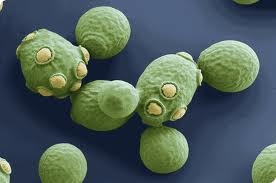
They make food spoil, they cause unwanted fermentation, they are one of the most important spoilage agents. They are moulds and yeasts. If you are still unsure of the answer to the question: moulds and yeasts differ. You can read our related article.
Today, Pacificlab will debunk the misconceptions about food safety concerning yeasts and moulds. First, let us learn more about the harmful effects of the toxins moulds produce.
The harmful effects of mould toxins
Type of mould toxin | Effects on the body |
|---|---|
Aflatoxins | + Causes liver cancer and birth defects |
Ochratoxins | + Nephrotoxic |
Fumonisins | + Causes pulmonary oedema and suppresses the immune response |
Trichothecenes | + Digestive disorders (vomiting, diarrhoea, loss of appetite) |
Zearalenone | + Can lead to vulval oedema, vaginal prolapse and uterine enlargement in females |
Ergot alkaloids | + Neurological effects or necrosis |
Fescue toxins | + Effects on the immune and reproductive systems |
Cyclopiazonic acid | + Necrotic effects (liver, gastrointestinal tissue, kidneys, skeletal muscle) |
Citrinin | + Nephrotoxic |
Roquefortine | + Neurotoxic |
Patulin | + Genotoxic |
1. If there is mould on food, you can just scrape it off
Mould does not only make food unappetising; it also carries many hidden dangers. Some species of mould produce mould toxins during growth. These toxins may be aflatoxins, which can cause acute poisoning as well as chronic health effects including cancer, damage to genetic material and damage to the immune system. Mould toxins are highly stable and can hardly be removed from the product. Moreover, mould is not only the visible fuzz on the surface. Inside the food, the fungus forms a thread-like structure that the naked eye cannot see. That is why simply cutting off the mouldy part is not enough.
2. When food is cooked, you can eliminate mould toxins
Did you know? Aflatoxin B1 is an extremely toxic mould toxin. Just about 0.03 ppm of aflatoxin B1 from peanuts can cause liver tumours (liver cancer). More than 400,000 species of mould are found everywhere. Each species of mould can produce one or several different toxins. Those toxins may be: Aflatoxin, Ochratoxin, Deoxynivalenol, Fumonisin, Zearalenone… Different moulds can also produce the same kind of toxin . Most types of mould toxin can still persist and remain chemically stable throughout normal food processing.
A typical example is that the decomposition temperatures of aflatoxin B1 and ochratoxin A are 160 °C and 180 °C respectively (According to M. Raters, R. Matissek, 2008). However, normal cooking temperatures are around 120 °C or lower. Therefore, the idea that cooked food is safe because mould toxins will be "destroyed" is completely wrong.
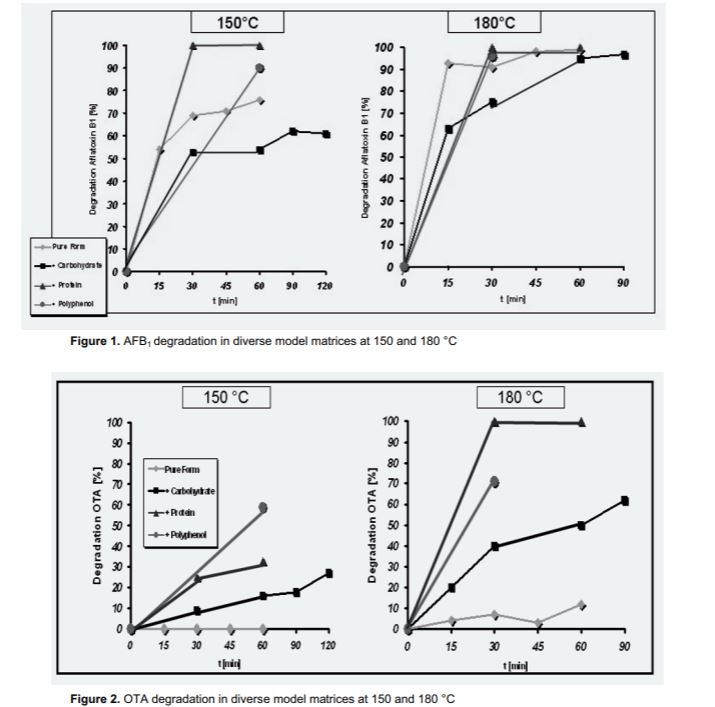
Heat stability of the mould toxins aflatoxin B1 and ochratoxin
3. If food is chilled enough, mould will not grow
Yeasts and moulds are highly adaptable microorganisms. They can grow at low pH values (pH 2–9), in both dry and moist environments and even at refrigerator temperatures. They can survive at temperatures from 10 to 35 °C. Yeasts do not even need oxygen, because they can respire aerobically and anaerobically. Fresh foods such as fruit, vegetables and dairy products are especially prone to fermentation. Bread products, nuts, spices and dried fruit are also excellent breeding grounds for mould. Regular microbiological analysis is therefore especially important for food processing businesses.
A study by Beatriz Helena Pinho1 et al. also showed that even when stored in the refrigerator, pizza flour no longer met requirements after a period because the mould count had increased. (See the original study)
4. Is yeast and mould testing as time-consuming and complex as you think?
Yeast and mould analysis
Microbiological analyses are based on culturing microorganisms. Traditional methods really require long incubation times of three to seven days. This is a real problem for food manufacturers, because the relevant production batch cannot leave the factory until test results are available. This leads to delays in delivery and extra storage costs.
However, advanced techniques and microbiological tests are now faster than you think. For example, the new Compact Dry YMR from R-Biopharm for testing yeasts and moulds. The yeast and mould culture medium plate Compact Dry YMR is very easy to use. It allows detection of yeasts and moulds in all relevant sample matrices in only 48 to 72 hours. Moreover, Compact Dry YMR also allows surface testing
Mould toxin analysis
For mould toxins, analysis today is mainly divided into 2 types:
- Rapid, simple analytical techniques: ELISA, rapid test strips, etc. Used in factories and for on-site testing.
- Standard analytical methods: HPLC, LC/MS/MS, etc. Used by independent testing centres.
We hope the knowledge in this article helps you better understand the harmful effects of yeasts and moulds described above and how to prevent them. We also hope you will not be careless when dealing with fermented or mouldy food.
Regarding yeast, mould and toxin testing, each type of test method has its own advantages and disadvantages. R-Biopharm provides testing solutions for both approaches, from chromatography systems to immunoaffinity columns, ELISA kits and test strips, ready-prepared medium plates, and more. If you would like to learn about a complete Mycotoxin analysis solution, you can find more information hereor contact our sales team.
If food is contaminated with mould, what should you do to remove the toxins? Pacificlab would like to share a small tip. One fairly effective way is to soak mould-contaminated food and grains in hypochlorous acid water to reduce aflatoxin B1 by 85% (see the specific study). Besides, prevention is better than cure. We would also like to tell you about an effective solution for removing mould from clothing and food stored in cold rooms: a H2O2-generating device that disinfects and kills fungi.
Thank you.
Source: food.r-biopharm.com