1. What is folic acid
- Folic acid is also known as vitamin B9, folic acid is a water-soluble vitamin in the B vitamin group. In the body, folic acid plays an important role in DNA synthesis, cell division and red blood cell formation. This is a nutrient especially necessary for pregnant women, helping to prevent neural tube defects in the fetus.
* Food sources rich in folic acid
- Dark green leafy vegetables (spinach, chard)
- Citrus fruits
- Whole grains
- Animal liver
- Fortified food products (breakfast cereals, vitamin-enriched flour...)
2. Why is it necessary to test folic acid in food?
Testing the folic acid content in food plays an important role in:
- Ensuring quality and nutritional value: helping food manufacturers ensure products meet the declared content standards.
- Controlling overdosing: supplementing too much folic acid can mask the signs of vitamin B12 deficiency, causing a risk of nerve damage.
- Nutritional research: tracking the level of vitamin B9 absorption in different diets.
- Compliance with regulations: some countries require mandatory folic acid fortification in grains – testing helps comply with the regulations.
3. Methods for testing folic acid in food
3.1. Common method: High-performance liquid chromatography (HPLC)
- HPLC is currently the most accurate and reliable method for the quantitative analysis of folic acid.
- Principle: based on the ability to separate the components in a food sample according to their interaction with the stationary and mobile phases.
* Basic procedure
- Sample preparation: grind the food → extract with a solvent (usually a buffer solution containing deconjugating enzymes).
- Filtration and sample clean-up: use a filter or solid-phase extraction to remove interferents.
- HPLC analysis: use a UV detector or a fluorescence detector.
- Calculation of results: compare with the folic acid calibration curve.
* Advantages
- High accuracy and repeatability
- Able to quantify different folate forms
- Wide application in food and pharmaceutical analysis
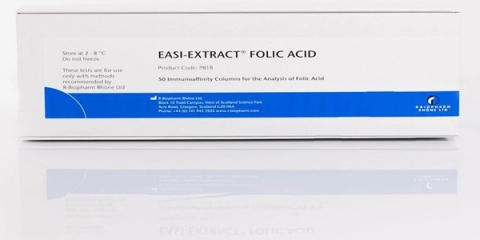
- See the Folic Acid analysis immunoaffinity column | EASI-EXTRACT® FOLIC ACID that we supply here.

3.2. ELISA method (Enzyme-Linked Immunosorbent Assay)
- The ELISA method uses specific antibodies to detect and quantify folic acid.
- Principle: the reaction between the antibody and folic acid produces a colour signal which is measured by an ELISA reader.
* Advantages:
- Simple procedure, no HPLC equipment required
- Suitable for non-specialist laboratories
- Can analyse many samples at the same time (high efficiency)
* Disadvantages:
- Lower accuracy and specificity than HPLC
- Can be interfered with by similar substances in the sample
3.3. Other methods
- Gas chromatography (GC): less common because folic acid is difficult to volatilise.
- Microbiological assay: based on the ability of microorganisms to grow depending on folate (such as Lactobacillus casei), widely used in nutritional research.
Folic acid is an essential micronutrient, especially important for public health. Testing the folic acid content in food is a key step to ensure product quality and consumer health. Among these, HPLC is the most common and reliable analytical method, while ELISA is a quick and convenient choice for routine laboratories.