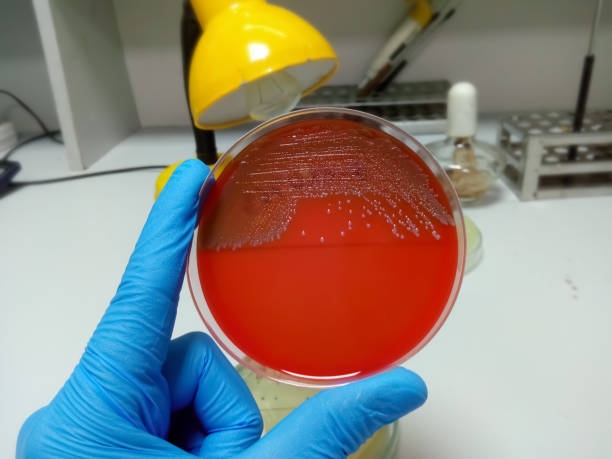
Enterobacter bacteria can cause urinary tract infections, bloodstream infections, and pneumonia. To isolate and identify Enterobacter accurately, choosing a suitable culture medium is necessary in the microbiology laboratory. This article introduces the culture media commonly used for Enterobacter and their role in diagnosis and research.
1. The characteristics of Enterobacter bacteria and the requirements for the Enterobacter culture medium
Enterobacter is a gram-negative, facultatively anaerobic bacterium that can ferment glucose and lactose. It commonly resides in the digestive tracts of humans and animals, and can survive in water, soil, and food. Enterobacter bacteria can develop in many kinds of medium, but selective and differential media help isolate and identify them more effectively.
* Characteristics of the culture medium for Enterobacter:
– A neutral pH: for the bacteria to grow best, the medium needs a pH of 6.8 to 7.4.
– Contains color indicators: to distinguish Enterobacter from other bacterial species by producing a characteristic color.
– Contains selective agents: helps block the growth of unwanted bacteria.
– The necessary nutrients: peptone, sugars (lactose, glucose), salts, and other growth factors to support development.
2. The types of Enterobacter culture media
2.1. MacConkey Agar medium
This is a common selective and differential medium for isolating bacteria of the Enterobacteriaceae family, including Enterobacter.
– Main components: lactose, bile salts, and the neutral red indicator.
– Working principle: lactose-fermenting bacteria such as Enterobacter grow on this medium with a pink or red color. The bile salts in the medium block the growth of gram-positive bacteria.
– Application: isolating Enterobacter from clinical samples such as stool, urine, or food.
2.2. Eosin Methylene Blue (EMB) Agar medium
– EMB Agar is another selective and differential medium for isolating gram-negative bacteria, including Enterobacter.
– Main components: lactose, eosin Y, and methylene blue.
– Working principle: methylene blue suppresses gram-positive bacteria. When bacteria ferment lactose, they form colonies with a characteristic color; Enterobacter usually produces pink or pale purple colonies.
– Application: used to identify lactose-fermenting enteric bacteria, including Enterobacter.
2.3. Chromogenic Agar medium
– Chromogenic agar is a differential medium designed to detect and identify Enterobacteriaceae bacteria thanks to its unique color indicator mechanism.
– Main components: chromogenic substrates and specific enzymes.
– Working principle: each bacterial species hydrolyzes different substrates and produces a characteristic color. Enterobacter usually produces a blue or cyan color.
– Application: distinguishing Enterobacter from the other Enterobacteriaceae bacteria thanks to the color differences.
2.4. Xylose Lysine Deoxycholate (XLD) Agar medium
XLD Agar is commonly used to isolate enteric bacteria and helps distinguish Enterobacter from other pathogenic bacteria such as Salmonella and Shigella.
– Main components: xylose, lysine, sodium deoxycholate, and the phenol red indicator.
– Working principle: bacteria able to ferment xylose, such as Enterobacter, produce yellow colonies because of the pH change.
– Application: useful for identifying bacteria capable of fermenting sugars.
2.5. Tryptic Soy Agar (TSA) medium
TSA is a non-selective medium used for general bacterial culture, including Enterobacter.
– Main components: peptone, soybean extract, and sodium chloride.
– Working principle: contains no inhibitors or color indicators, creating conditions for many kinds of bacteria to grow.
– Application: used for general bacterial detection tests or biochemical experiments on Enterobacter.
2.6. The Compact Dry Enterobacteriaceae plate (Compact Dry ETB)
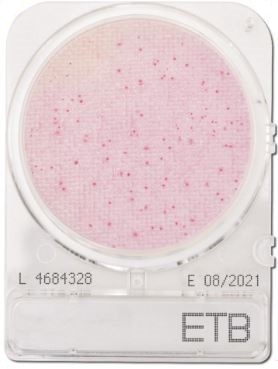
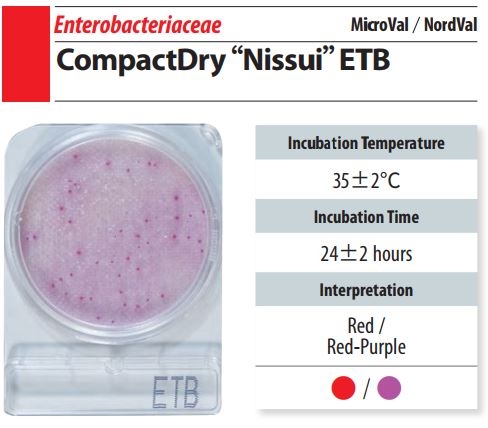
– The Compact Dry Enterobacteriaceae (ETB) plate is an effective tool for detecting and quantifying Enterobacteriaceae bacteria in food, beverage, and cosmetics samples. This product, developed by Nissui Pharmaceutical of Japan, brings convenience and high accuracy to microbiological testing.
* Advantages of the Compact Dry Enterobacteriaceae plate:
– Saves time and cost: no culture media or complex tools need preparing, cutting the cost and time of running it.
– High accuracy: reliable, easy-to-analyze results, and colonies can be picked for additional biochemical tests.
– Easy storage: the plates can be stored at room temperature for a long time without quality being affected.
- See the detailed information for the Compact Dry Enterobacteriaceae plate we supply here.
3. The applications of Enterobacter culture media in medicine and industry
Enterobacter culture media play an important role in medical diagnosis, microbiological research, and food safety testing. Using the right culture medium detects Enterobacter strains quickly and accurately from clinical, water, and food samples.
– Pathological diagnosis: in medical laboratories, isolating Enterobacter from samples such as blood, urine, or sputum helps determine the cause of infection and supports choosing the right antibiotics.
– Food safety: culture media help test for the presence of Enterobacter in food and water sources, thereby preventing the risk of bacterial infection.
– Microbiological research: Enterobacter is also a subject of research on antibiotic resistance and virulence factors, supporting the development of treatment and prevention methods.
Choosing the right culture medium is the core factor in isolating and identifying Enterobacter. Media such as MacConkey Agar, EMB, Chromogenic Agar, XLD agar, and the Compact Dry Enterobacteriaceae plate optimize the isolation and identification process, serving microbiological research, medical diagnosis, and food safety testing effectively.