
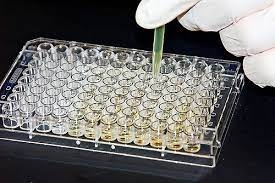
In the previous article we clearly analysed the differences between the ELISA techniques.
In this part, the pros and cons of the Elisa method in particular will be presented more clearly.
1. Direct ELISA method
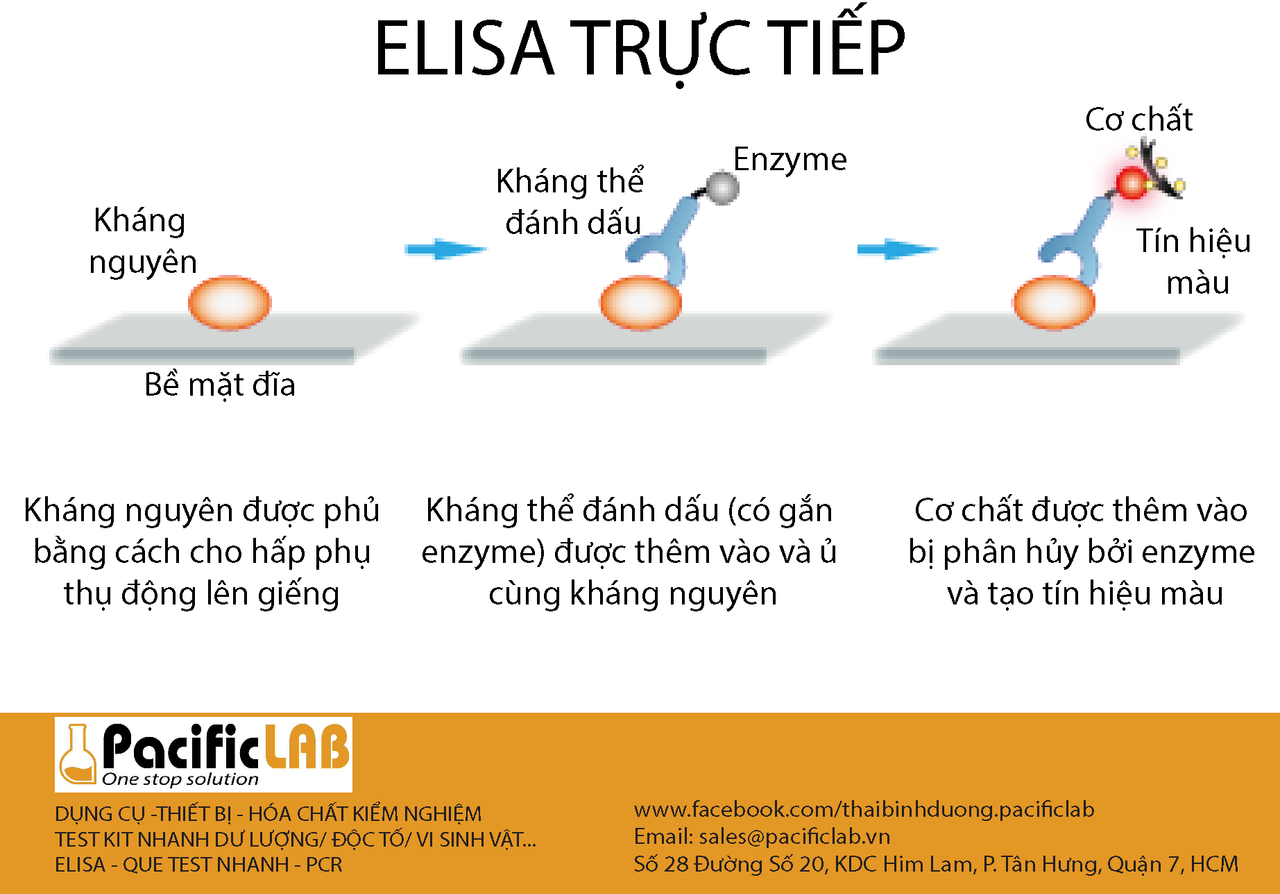
Advantages:
Simple and fast - only one antibody is needed and the workflow consists of only a few steps. Fewer errors - relatively few pipetting steps compared with other ELISA methods,
because there is only one antibody, there is almost no risk of antibody cross-reactivity.
Disadvantages of the method: Limited sensitivity due to the absence of a signal amplification step. Developing a test KIT is time-consuming - each test target requires a specific enzyme-conjugated primary antibody,
this can also make the test relatively expensive.
Low flexibility: Enzyme attachment to the antibody may be limited
(because the available space on the antibody for binding sites that link with the antigen is limited)
High background noise because all proteins in the sample bind to the surface.
2. Indirect ELISA method
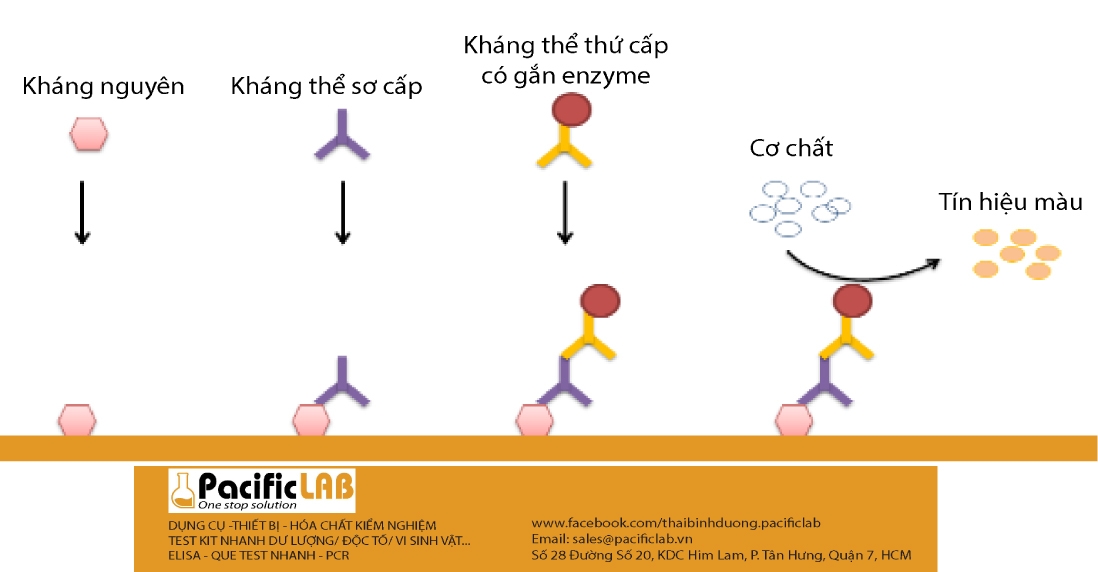
Indirect elisa technique
Advantages:
High flexibility: the same secondary antibody can be used for many types of primary antibody
High sensitivity - more than one labelled antibody can bind to the primary antibody
Highly selective immune reaction - no interference with sites on the primary antibody.
Economical - requires few types of labelled antibody (enzyme-conjugated)
Disadvantages:
More complex workflow - an additional incubation step for the secondary antibody is needed.
Cross-reactivity - non-specific signal due to cross-reactivity with the secondary antibody.
3. Sandwich ELISA method

(1) The plate is coated with a layer of capture antibody; (2) The sample is added, any antigen present will bind to the capture antibody; (3) The detection antibody is added; (4) An enzyme-conjugated secondary antibody is added, and it binds to the detection antibody; (5) Add the enzyme substrate and detect the signal.
Advantages:
High flexibility and sensitivity: both the direct (single layer) and indirect (two layer) methods can be used.
High specificity - two antibodies are used to detect the antigen.
Suitable for complex samples - no purification of the antigen is required before measurement.
Disadvantages:
Complex workflow - requires more incubation steps than other ELISA formats.
Complex KIT development process – because cross-reactivity between different antibodies has to be checked
4. Competitive ELISA method
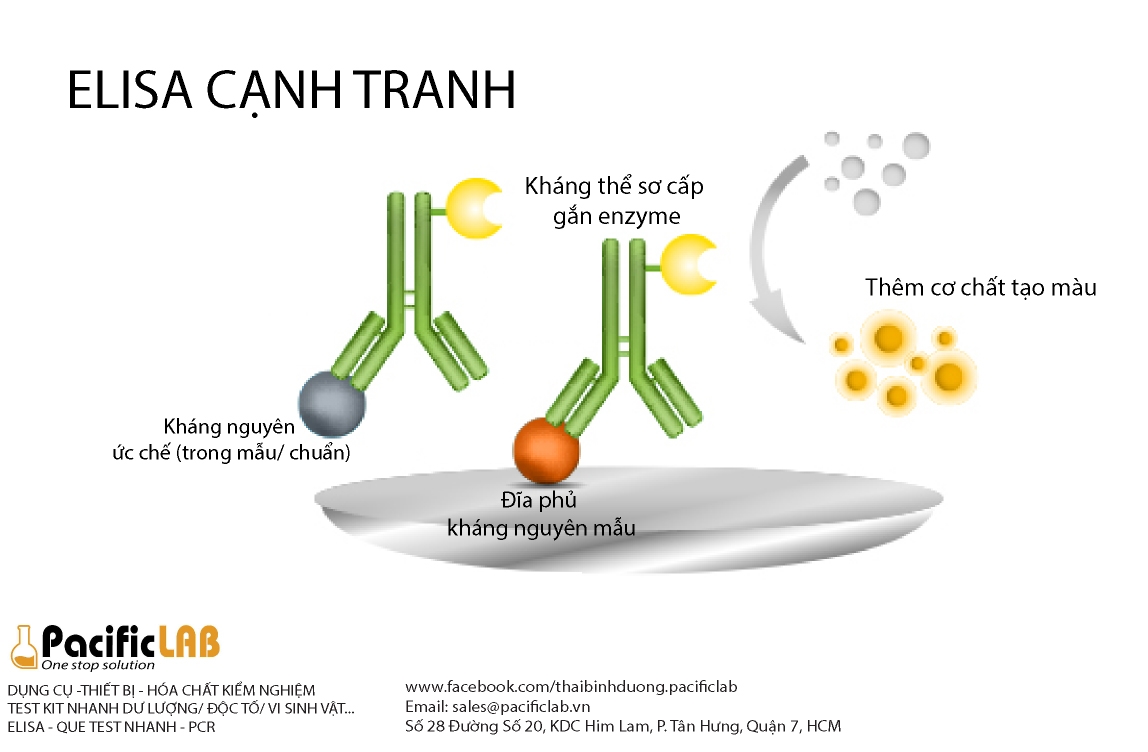
Advantages:
Highest flexibility - can be based on the direct, indirect or sandwich ELISA format
Highest specificity - the antigen is captured and detected specifically
Strong signal amplification - minimises the influence of sample dilution and sample background effect
Disadvantages:
Quite time-consuming – complex process
Subject to the disadvantages of the selected detection format
Each manufacturer KIT test ELISA (residue testing for antibiotics, allergies, hormones, toxins,...) will have its own ELISA technique in particular. Depending on the required sensitivity and the complexity of the sample matrix, when choosing to buy an ELISA KIT you should also pay close attention to which technique the supplier has chosen and whether it suits your own test criteria.
Cost, stability, sensitivity, analysis time,... are all governed by the ELISA method that the KIT applies. Therefore, you should not overlook this important criterion when choosing a test KIT.
PacificLAB Scientific and Technical Equipment Company, the exclusive distributor of many types of ELISA kit with different ELISA methods offering high sensitivity and high stability.
For advice on specific test kits for each parameter. Please contact:
PACIFICLAB SCIENTIFIC AND TECHNICAL EQUIPMENT CO., LTD
 | Head office: 3rd Floor, No. 382/17-19 Nguyễn Thị Minh Khai, Ward 5, Dist. 3, HCM Sales office: No. 28 Street No. 20, Him Lam Residential Area, Tan Hung Ward, Dist. 7, HCM | ||
 | Tel: (+84) 28 62 65 46 83 |  | Email: |
| Fax: (+84) 28 62 65 46 93 | sales@pacificlab.vn | ||