ELISA (Enzyme-linked immunosorbent assa), is a biochemical technique that detects the presence of an antibody or antigen in a sample through a specific immunological reaction. Specifically, the antigen/ antibody (depending on the type of ELISA technique) is coated onto the well surface, then an antibody conjugated to an enzyme is added, and finally a substrate is added so that the enzyme breaks down the substrate to produce a colored substance.
1. What is the mechanism of the ELISA technique?
ELISA technique is an immunological reaction involving at least one antibody that specifically pairs with a specific antigen. Depending on the type of ELISA, the mechanism varies. After the antigen is immobilized on the well wall, detection antibodies are added and form an antigen – antibody complex. The detection antibodies are linked to an enzyme, or are linked to an enzyme-bearing secondary antibody (through covalent bonding between the biomolecules). The amount of enzyme that breaks down the substrate is proportional to the color intensity, and therefore proportional to the amount of initial antigen. Between each step, the microplates are usually washed with a mild washing solution to remove free proteins or free antibodies.
2. Equipment needed for the ELISA technique
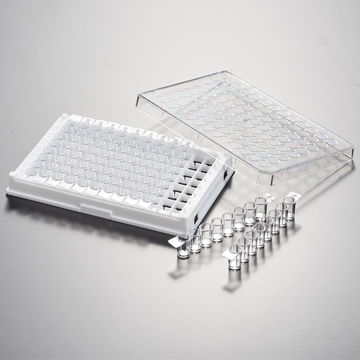
- Solid-phase ELISA microplates
Typically, ELISA plates have 96 wells and are usually polystyrene or derivatives of polystyrene. They are divided into 8 rows and 12 columns. The volume of each well is about 350 µl.
In recent years, 384-well and 1536-well plates have also appeared with the same overall dimensions as traditional 96-well plates. These larger plates are used when testing large numbers of samples.
In addition, there are also 96-well plates whose volume is only half that of a traditional well, which helps save a significant amount of the components taking part in the reaction.
- Single-channel and multichannel micropipettes
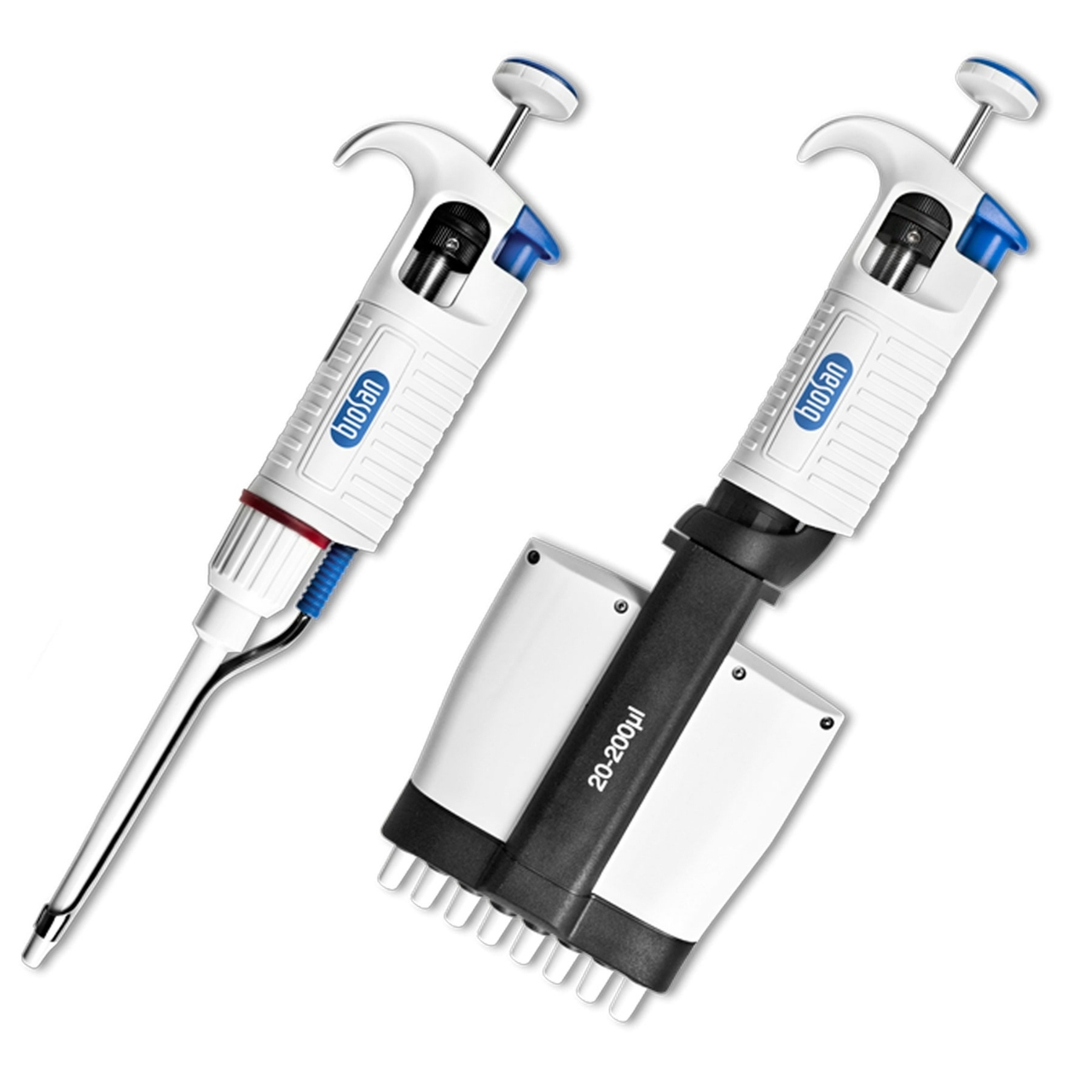
There are 2 types of pipettes commonly used, the multichannel pipette and the single-channel pipette.
Single-channel pipettes are common with aspiration volumes such as: 1- 20 µl, 10- 100 µl, 20- 200 µl…
Multichannel pipettes: there are 2 types, 8-tip and 12-tip, corresponding to the number of rows and columns of the ELISA plate.
Samples and standards can be added using single-channel pipettes. Reagents used in the same fixed amounts across the wells can be added using a multichannel pipette to minimize the time difference in color development between standards and samples, and at the same time reduce %CV.

- ELISA kit washers
Manual washing can dry out the well surface, and uneven cleaning of the wells leads to a high %CV. When the number of samples is large, you can equip your laboratory with an automatic washing system.
Washers can be divided into 2 types: those that wash one row or column, and those that wash a whole plate at a time or several plates at once. Depending on the purpose of the work, we choose the suitable type of machine.
- ELISA plate readers
Similarly to ELISA washers, ELISA readers can also be divided into: machines that can read one row or column at a time, that can read the results of a whole plate at a time, or that can read the results of several plates at once.
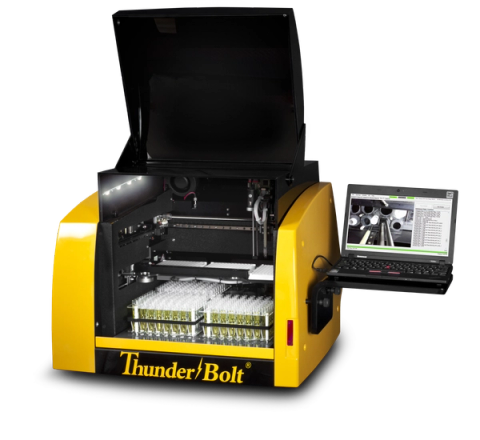
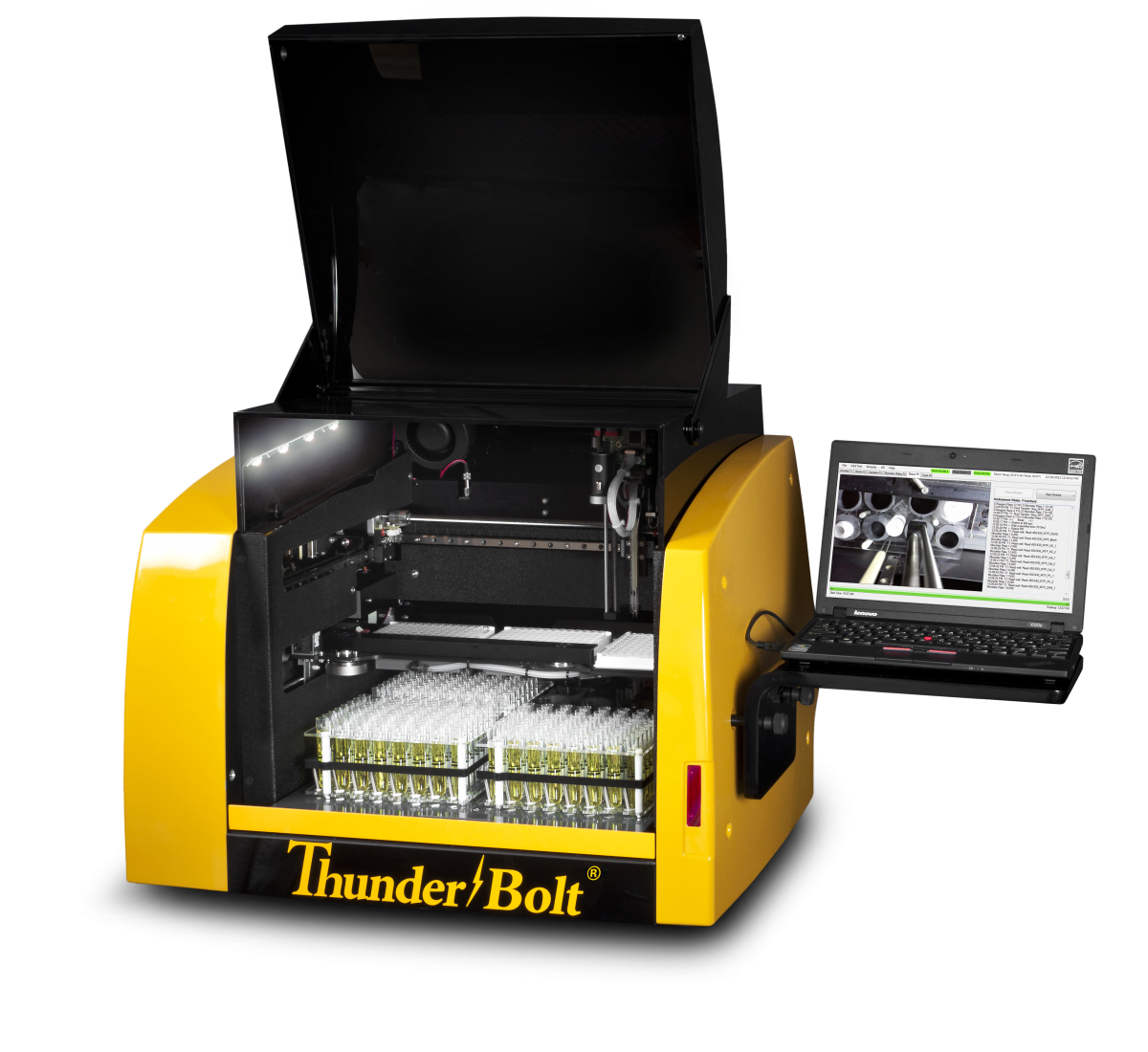
There are also systems automated ELISA machines that perform all of the operations above for you. ThunderBolt is one example. This is a fully automated system, including all steps such as sample handling, dilution, dispensing, incubation and washing. ThunderBolt also includes machines for measuring and evaluating by the fluorescence and absorbance methods. All processes are carried out by specially designed control software.
https://pacificlab.vn/vi/shops/phong-thi-nghiem/he-thong-elisa-tu-dong-thunderbolt.html
3. ELISA techniques
a) Direct ELISA technique
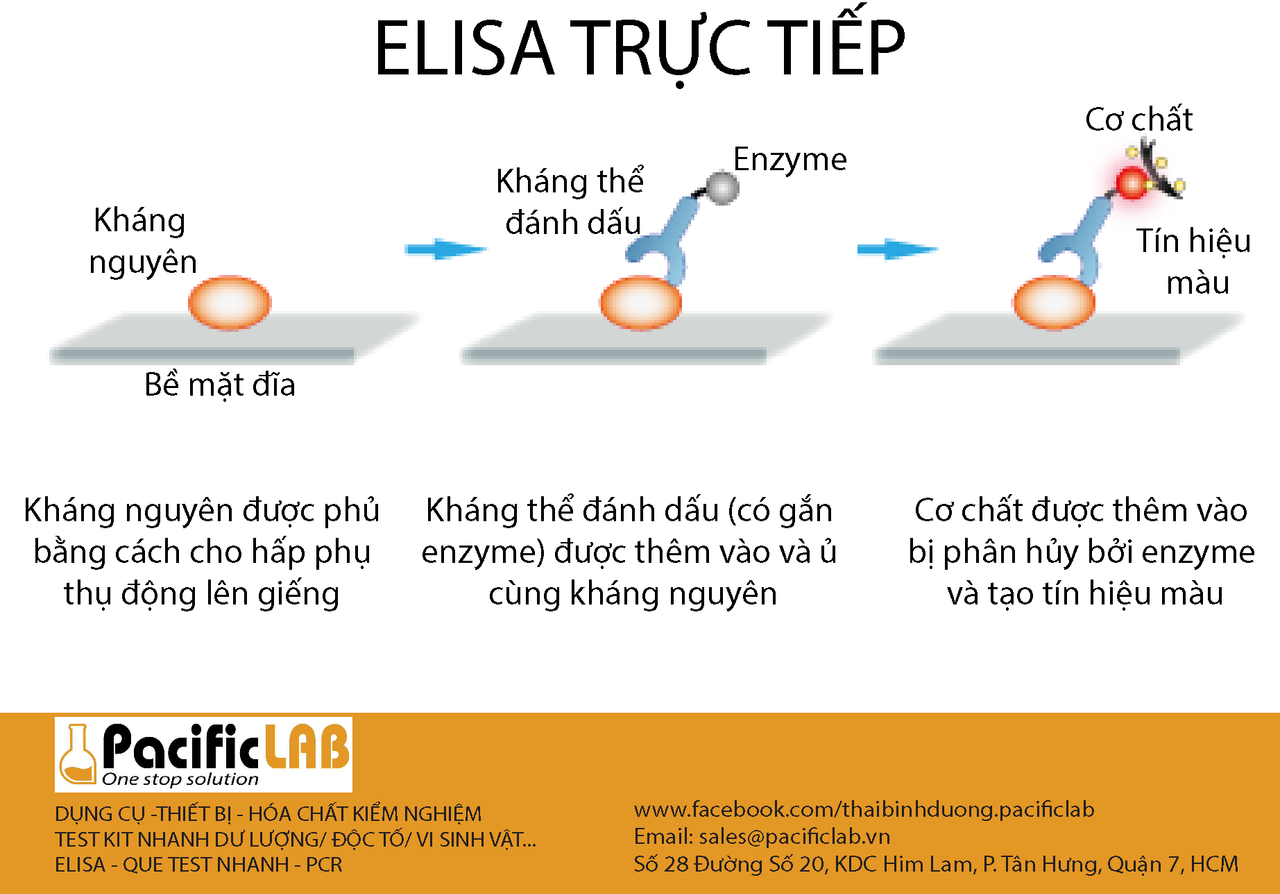
Direct ELISA technique: is the simplest ELISA method, the antigen (Antigen-Ag) is adsorbed onto the well surface, then a large amount of a protein (usually bovine serum albumin- BSA) is added to block all other binding sites. The enzyme-antibody complex is added and is retained by adsorption through the antigens. After the excess enzyme-antibody complex is removed, any enzyme- antibody complex attached to the antigen will remain on the well. By adding a substrate that is broken down by the enzyme, the signal emitted represents the amount of antigen in the sample.
b) Indirect ELISA technique
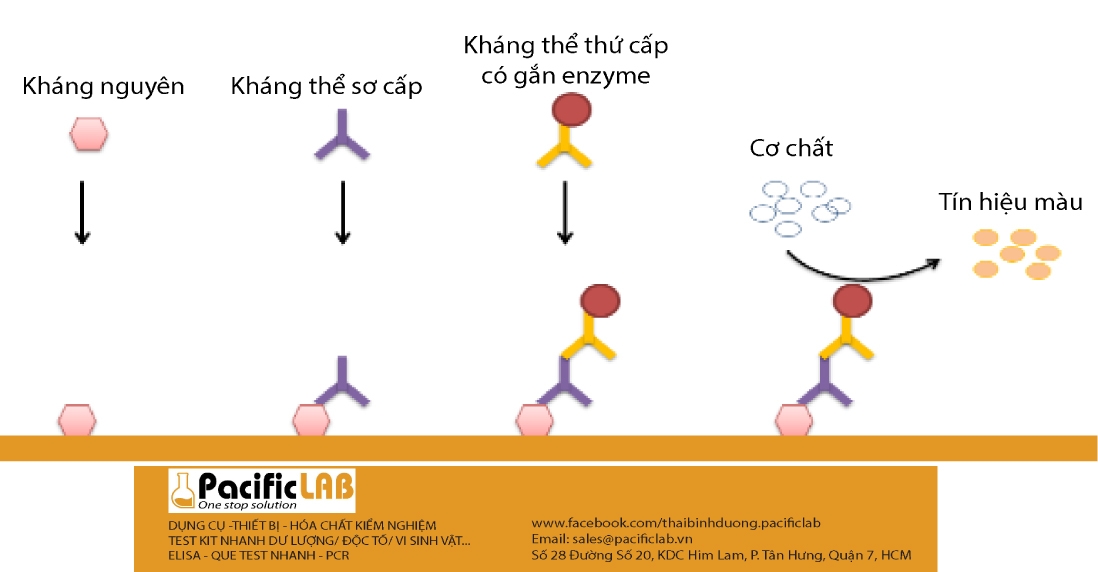
Indirect ELISA technique: The steps carried out are also similar to direct ELISA, but after the antigen has been adsorbed onto the plates, and after the BSA step, the antibodies that are then added are primary antibodies, specifically selected for the antigens (these antibodies are not conjugated to an enzyme). Then a prepared enzyme-conjugated secondary antibody is added to the plate to detect the antibodies adsorbed to the antigen
c) Sandwich ELISA technique
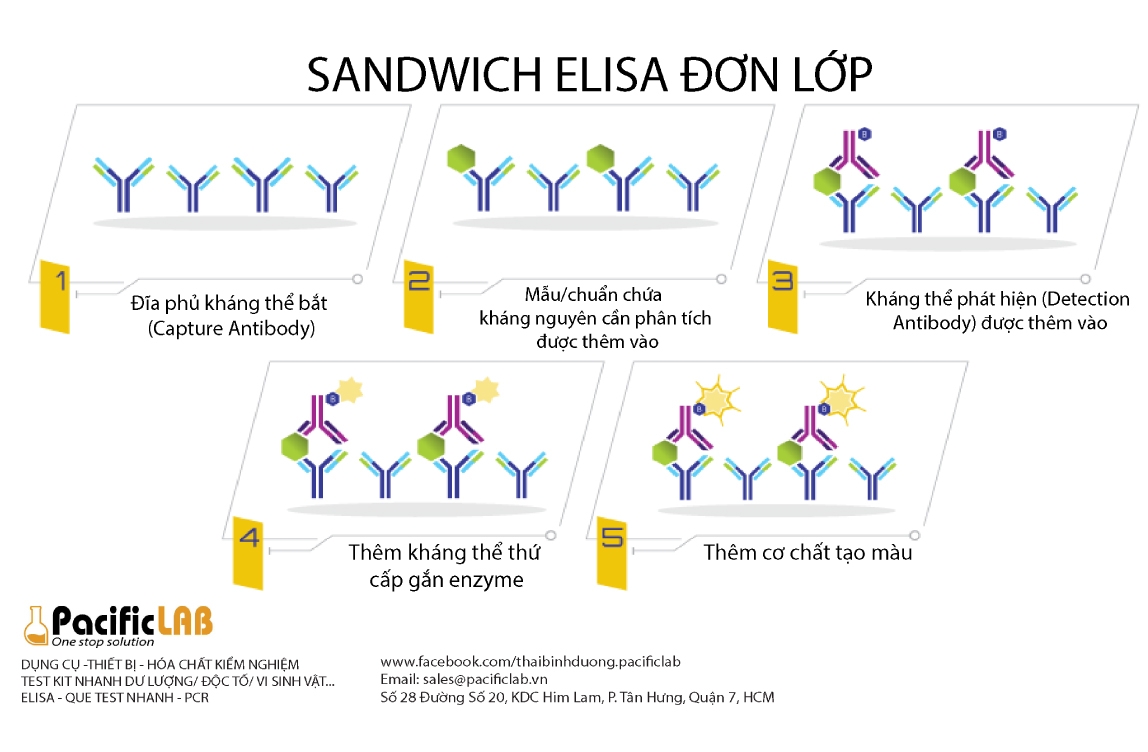
Sandwich ELISA is a less common type of ELISA technique but gives high sensitivity.
Sandwich ELISA quantifies the antigen between two layers of antibodies (capture antibody and detection antibody). The antigens being quantified must contain at least two antigen epitopes capable of binding to 2 antibodies.
Both monoclonal and polyclonal antibodies can be used as the capture antibodies and the detection antibodies in the sandwich ELISA system.
- Monoclonal antibodies have a single epitope (a position on the antigen where the antibody attaches) which allows good detection and quantification of small differences in the antigen.
- Polyclonal antibodies, on the other hand, are usually used to capture as much antigen as possible.
The sandwich ELISA process can be difficult to optimize and requires checking for incorrectly paired antibodies.
Steps:
- Prepare a surface containing the capture antibodies.
- Block the non-specific binding sites on the surface.
- Add the samples containing antigen into the wells.
- Wash the plate to remove the free antigens.
- Add the detection antibody.
- - Single layer: The detection antibody is already conjugated to an enzyme.
- - Two layers (Double Sandwich): Then add an enzyme-linked secondary antibody, which will specifically bind to the Fc region of the detection antibody.
- Wash the plate to remove the unbound enzyme - antibody links.
- Add the substrate of the enzyme to produce color or a fluorescent or electrochemical signal.
- Measure the absorbance or fluorescence or electrical signal of the wells to determine the presence and amount of antigen.
Primary detection antibodies (specific for each antigen) can be linked to an enzyme to produce a single-layer sandwich. However, having to make many different types of (enzyme – primary antibody) complexes is expensive. By using 1 non-specific secondary antibody, making the (antibody - secondary enzyme) complex becomes simpler.

(1) The plate is coated with a layer of capture antibody; (2) The sample is added, any antigen present will bind to the capture antibody; (3) The detection antibody is added; (4) An enzyme-linked secondary antibody is added and attaches to the detection antibody; (5) The substrate of the enzyme is added and the signal is generated.
d) Competitive ELISA technique
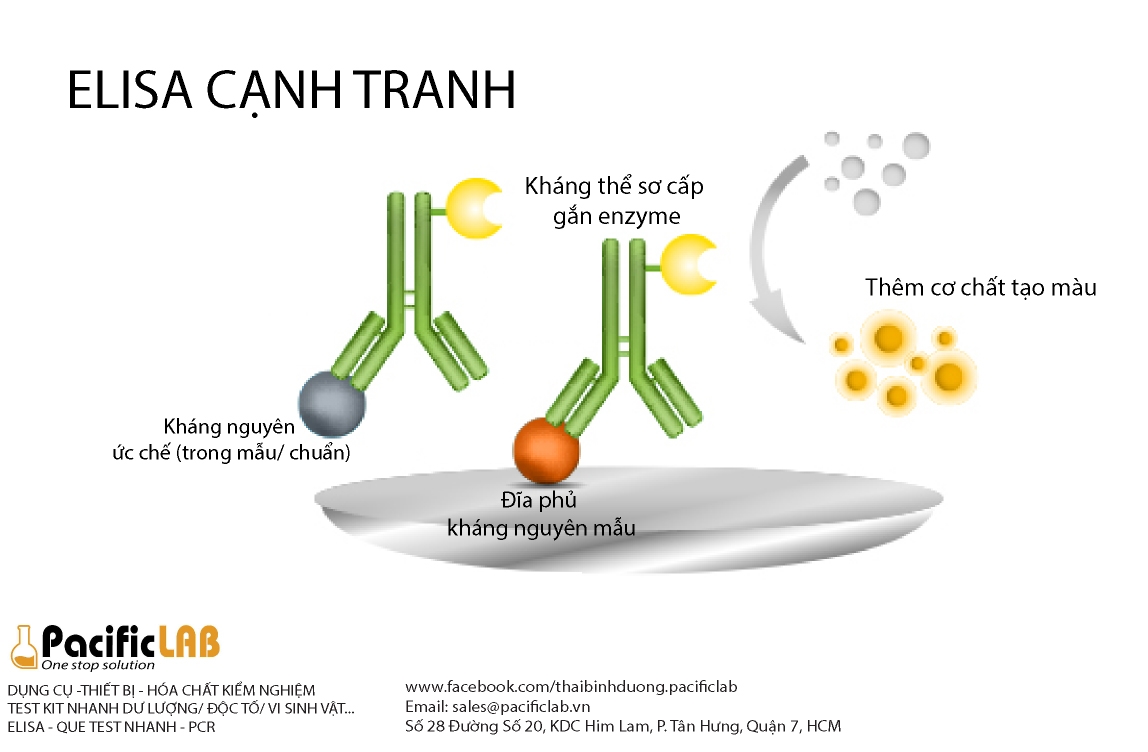
Competitive ELISA is the process in which the original antigen (sample antigen) and the added antigen (Inhibitor Antigen) (antigen in the standard, in the sample...) compete to bind to a specific labeled antibody.
- The original antigen (control) is coated first onto the microplate.
- The sample and the labeled antibody are added to the wells and incubated. Free antigen and antigen on the well wall compete to bind to the antibody.
- The unbound antibody is removed through the plate washing step.
- Enzyme-conjugated secondary antibodies that are specific to the primary antibodies will be added.
- Add the substrate, the enzyme breaks down the substrate and produces a color or fluorescent signal. The stronger the color, the more antibody has been retained. This means that the more antigen there is in the sample, the fewer reference antigens are detected and the weaker the signal.
4. Points to note when applying the ELISA technique
- - If a protein has multiple epitopes to be detected, the sandwich assay is a good choice. This assay requires two antibodies that react with different epitopes.
- - If the sample matrix is pure and can be efficiently adsorbed in the well, we can set up a competitive ELISA technique.
- - Amino acid analysis: Polystyrene plates with medium to low binding can bind 100-200 ng IgG/cm2, while plates with high binding can usually bind up to 400-500 ng IgG/cm2. Besides proteins, polystyrene plates also adsorb peptides with lengths from 15 - 20 amino acids. To achieve strong binding, a peptide needs both hydrophobic and hydrophilic interactions. Generally, the drawback of direct peptide adsorption (direct ELISA) is that peptides tend to have few epitopes, and if they interact with the plastic, the peptide-binding antibody will have difficulty. Another solution is to attach the peptides to a larger protein through a spacer- segment in order to provide distance between the peptides and the protein, allowing the antibodies to interact with the peptides.
- - An assay detecting a bacterial cell or a virus can also use the sandwich ELISA technique with similar antibodies for both capture and detection. If the target molecules (bacterial cells or viruses) have only one single epitope, they need to be attached to larger proteins, creating a configuration that allows multiple epitopes to interact with the antibodies.
- - Highly glycosylated carbohydrates and proteins do not adsorb well to polystyrene in the direct method because they have very little ability to take part in hydrophobic interactions. Using covalent linkage or reducing the detergent concentration is the best way to attach these proteins (covalent linkage can be carried out in the presence of detergents such as Tween20, Tween80.
See also 10 points to note for successful ELISA analysis :
https://pacificlab.vn/vi/news/blog-kien-thuc/10-dieu-luu-y-de-xet-nghiem-elisa-thanh-cong-cuc-ki-quan-trong-23.html
Some popular ELISA products offered by PacificLAB:
https://pacificlab.vn/vi/shops/group/elisa.html
PACIFICLAB SCIENCE AND TECHNOLOGY EQUIPMENT CO., LTD
 | Head office: 3rd Floor, 382/17-19 Nguyen Thi Minh Khai, Ward 5, District 3, HCMC Showroom: No. 28, Road No. 20, Him Lam Industrial Park, Tan Hung Ward, District 7, HCM | ||
 | Tel: (+84) 28 62 65 46 83 |  | Email: |
| Fax: (+84) 28 62 65 46 93 | sales@pacificlab.vn | ||