
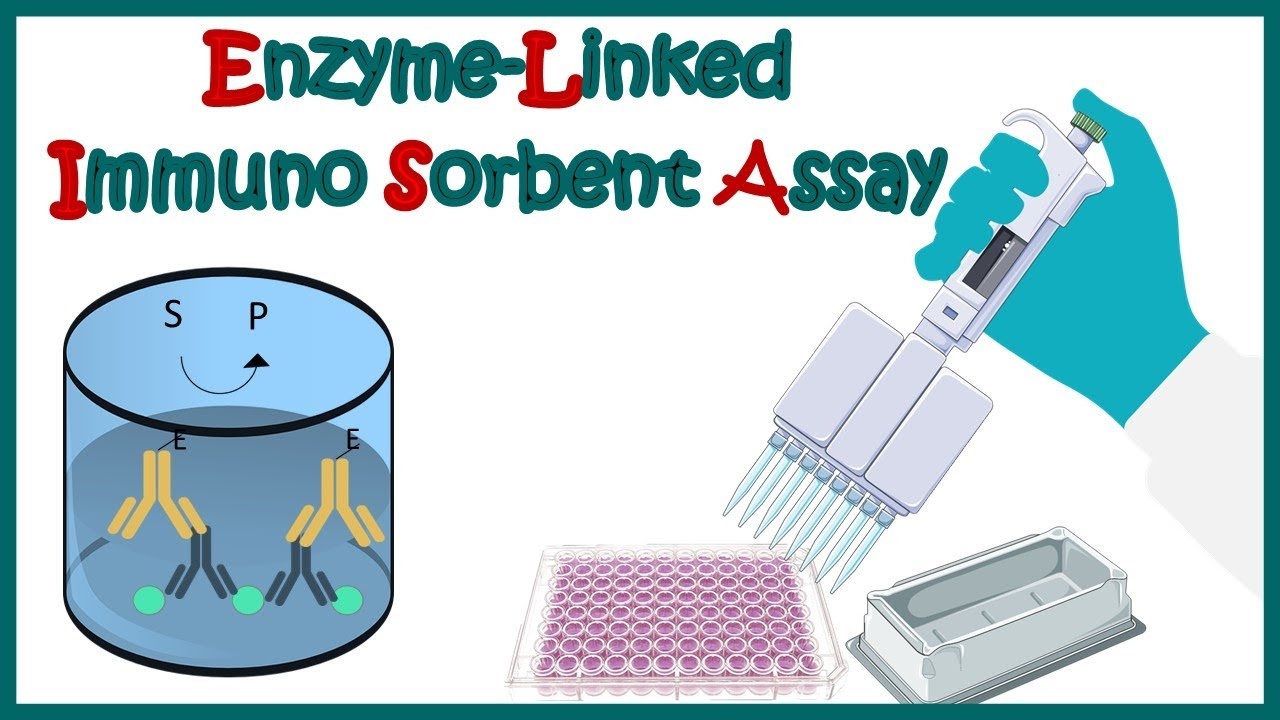
The ELISA technique is favored for its accuracy, high sensitivity, and ability to analyze many sample types.
1. The principle of the ELISA method
– The ELISA method works on the antigen–antibody interaction, in which an antibody is conjugated to an enzyme and binds specifically to the target antigen.
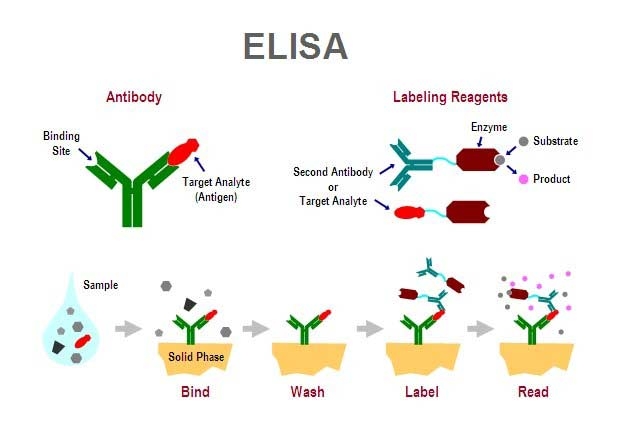
* There are four basic formats of the ELISA technique:
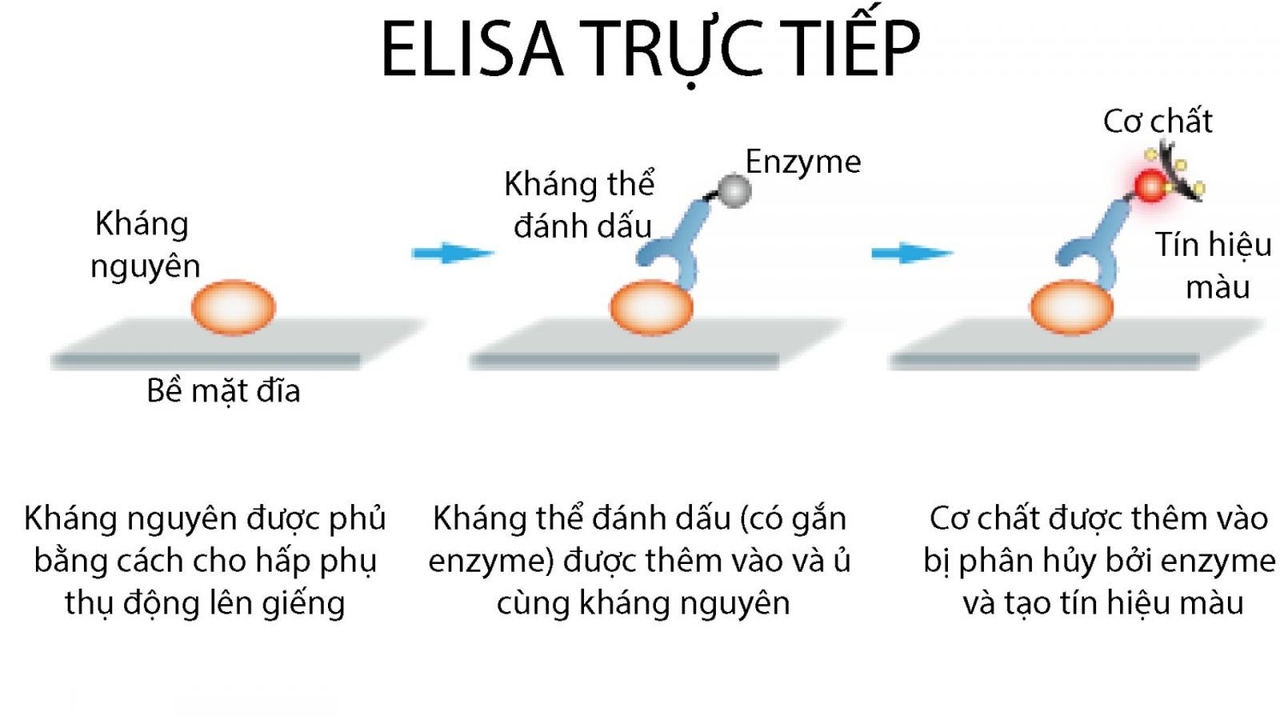
– Direct ELISA: In this format, an antibody conjugated to an enzyme binds directly to the antigen.
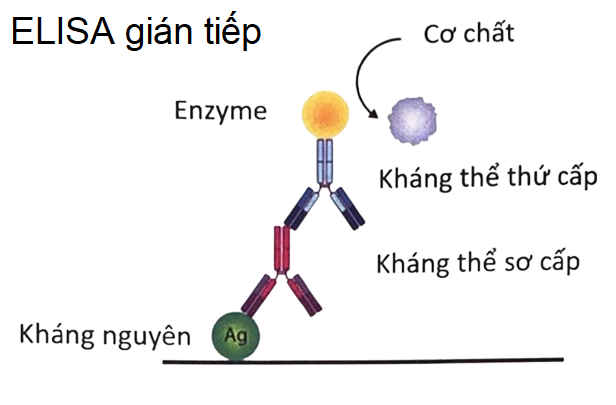
– Indirect ELISA: The antigen is coated on the surface, then a primary antibody binds to the antigen, followed by an enzyme-conjugated secondary antibody.
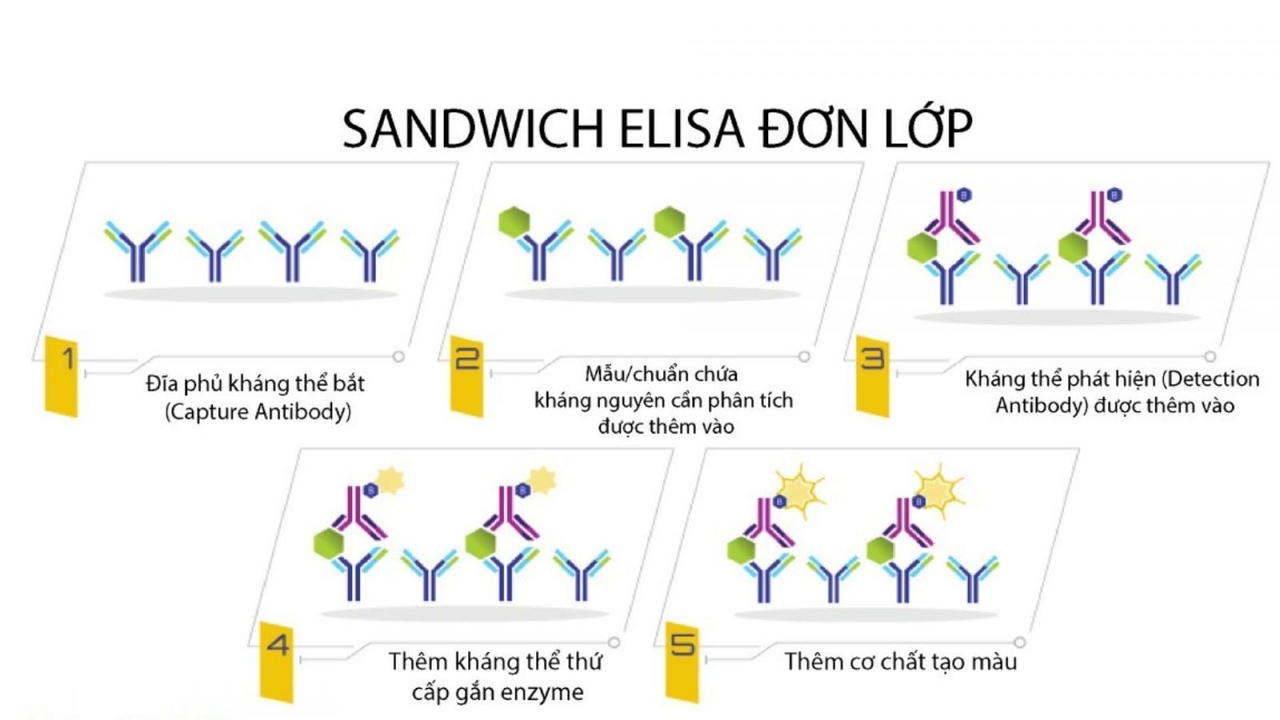
– Sandwich ELISA: The antigen sits between two antibodies (like a "sandwich"). The first antibody binds to the antigen, and the second enzyme-conjugated antibody binds to another site on the same antigen.
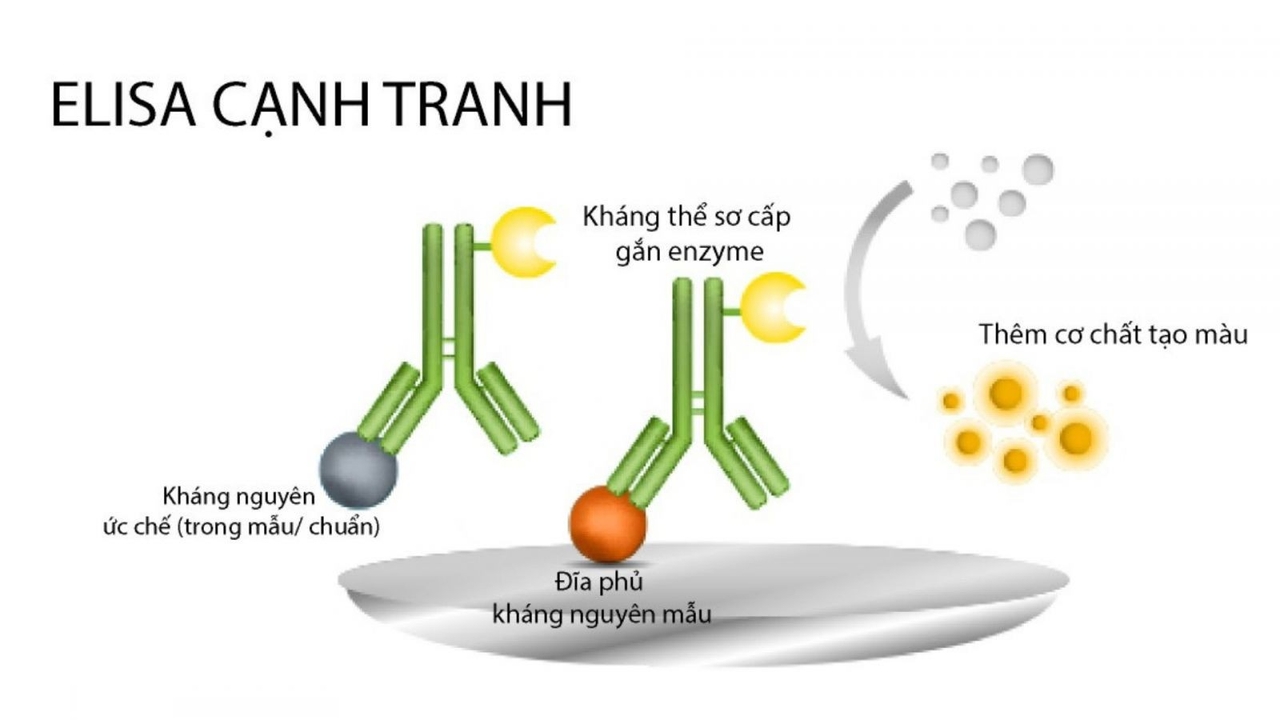
– Competitive ELISA: The antigen in the sample and the labeled antigen compete with each other to bind to the antibody. The signal is inversely proportional to the amount of antigen in the sample.
2. Applications of the ELISA technique in food testing
ELISA is widely applied to detect many types of harmful substances and to test food safety.
2.1. Detection of pathogenic microorganisms
– In the food industry, pathogenic microorganisms such as Salmonella, Escherichia coli (E. coli), and Listeria monocytogenes often cause food poisoning. ELISA helps detect the characteristic proteins of bacteria or viruses quickly and reliably.
2.2. Allergen testing
Allergens such as gluten, milk, peanuts, soy, and eggs can cause reactions ranging from mild discomfort to life-threatening anaphylaxis in sensitive individuals.
2.3. Detection of mycotoxins
– Some molds and bacteria can produce dangerous toxins in food, such as aflatoxin, ochratoxin, and deoxynivalenol (DON), which ELISA detects at very low levels.
2.4. Detection of antibiotic residues
The use of antibiotics in agriculture and livestock farming can leave residues in food, and ELISA is a fast screening tool to control them.
2.5. Identification of GMO (genetically modified organism) components
The ELISA method can be used to detect the characteristic proteins present in genetically modified organisms, supporting the verification of GMO-free labeling.
3. The ELISA procedure
Although there are many variations, the general ELISA procedure in food testing includes the following steps:
1. Sample preparation: The food sample is processed to extract the antigen to be detected.
2. Coating the antibody or antigen onto the ELISA well surface: The wells in the ELISA plate are coated with a suitable antibody or antigen.
3. Adding the sample and antibody: The food sample is added to the wells, and the enzyme-conjugated antibody is added as well so it can bind to the target.
4. Washing: After the antigen–antibody interactions have taken place, the wells are washed thoroughly to remove unbound components.
5. Adding the substrate: A substrate that reacts with the enzyme to produce color is added to the well.
6. Measuring the signal: The signal (usually a color change) is measured with a spectrophotometer to determine the presence and amount of the target.
4. Advantages of the ELISA method
– High sensitivity and specificity: ELISA can detect substances at very low concentrations and deliver reliable results.
– Versatility: ELISA can be customized to detect many different antigens from many sample types.
– Speed: The method takes far less time than culture-based methods.
– Accurate quantification: ELISA not only detects the presence of the target but also provides a quantitative result.
5. Limitations and challenges of the ELISA method
– High cost: ELISA requires specific antibodies and enzymes, along with specialized analytical equipment.
– High technical demands: Running an ELISA must be done in a laboratory environment and by trained personnel for the results to be dependable.
– Risk of cross-contamination errors: If the washing steps are not performed correctly, there is a risk of false-positive results from contamination.
– Limits with complex samples: Some complex food samples (containing many interacting components) can interfere with the reaction and reduce accuracy.
The ELISA technique has proven to be an indispensable tool in food testing thanks to its accuracy, sensitivity, and versatility. As demand for food safety and quality keeps rising, ELISA will continue to play a central role in protecting consumer health and supporting the food industry in meeting the strictest quality standards.