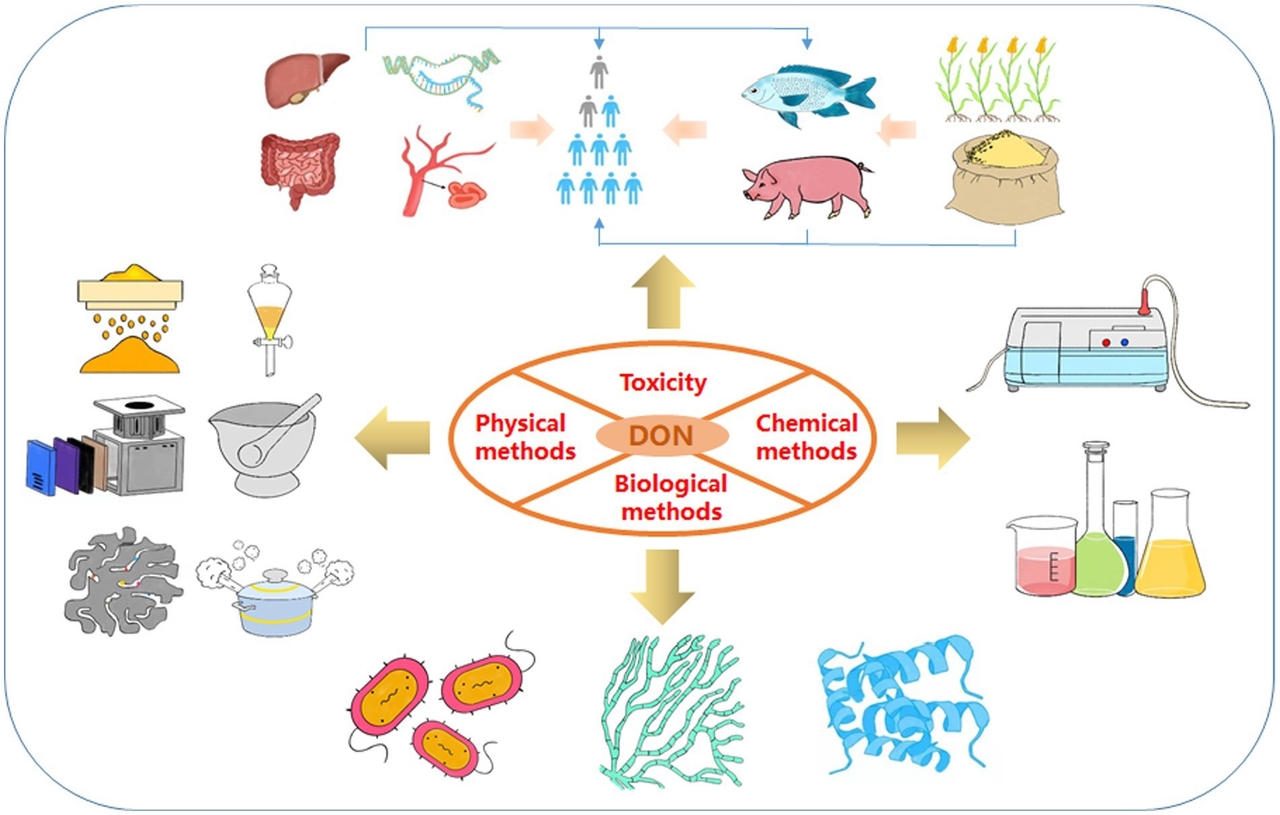
- DON toxin is commonly found in cereals such as wheat, maize, barley and oats, especially under humid climates and fluctuating temperatures.
- DON toxin not only harms the agricultural industry but is also a major threat to the health of livestock and people. Because it withstands high temperatures, this toxin is difficult to remove during feed processing.
1. Effects of DON toxin on livestock
DON toxin can cause serious harm, especially in sensitive species such as pigs, poultry, dairy cattle and fish. The main effects include:
1.1. Effects in pigs
- Reduced feed intake: DON acts directly on the feeding control centre, making pigs off their feed or refusing to eat.
- Lower productivity: because feed consumption falls, pigs gain less weight and overall productivity drops.
- Effects on the immune system: DON weakens the immune system, increasing the risk of disease.
1.2. Effects on poultry
- Reduced egg production.
- Reduced digestion and nutrient absorption.
- Higher rates of digestive disease.
1.3. Effects on dairy cattle
- Reduced milk production.
- Effects on rumen health, reducing feed conversion.
2. Safe thresholds for DON toxin
Safe thresholds for DON toxin in animal feed are usually set strictly to minimise risk to animals. Some common recommended thresholds:
- Pigs: < 1 ppm (1 mg/kg feed).
- Poultry: < 5 ppm.
- Dairy cattle: < 5 ppm.
However, safe thresholds can differ depending on the country and the animal species.
3. Methods for testing DON toxin in animal feed
Testing for DON (deoxynivalenol) in animal feed is an important step to ensure safety and efficiency in livestock farming. Below are common and effective methods for testing DON toxin in animal feed.
3.1. Screening Methods
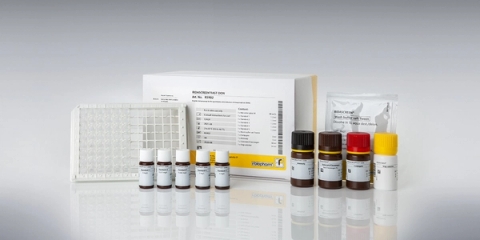
3.1.1. ELISA Kit (Enzyme-Linked Immunosorbent Assay)
- Principle: based on the reaction between the antigen (DON) and antibodies in the sample. Results are usually measured by spectroscopy (colour or light absorbance).
* Advantages:
- Easy to use, requiring no complex equipment.
- Fast to perform (30–60 minutes).
- Low cost, suitable for testing large numbers of samples.
* Disadvantages:
- Accuracy and specificity can be affected by interfering factors.
- Results are qualitative or semi-quantitative and need confirmation by another method.
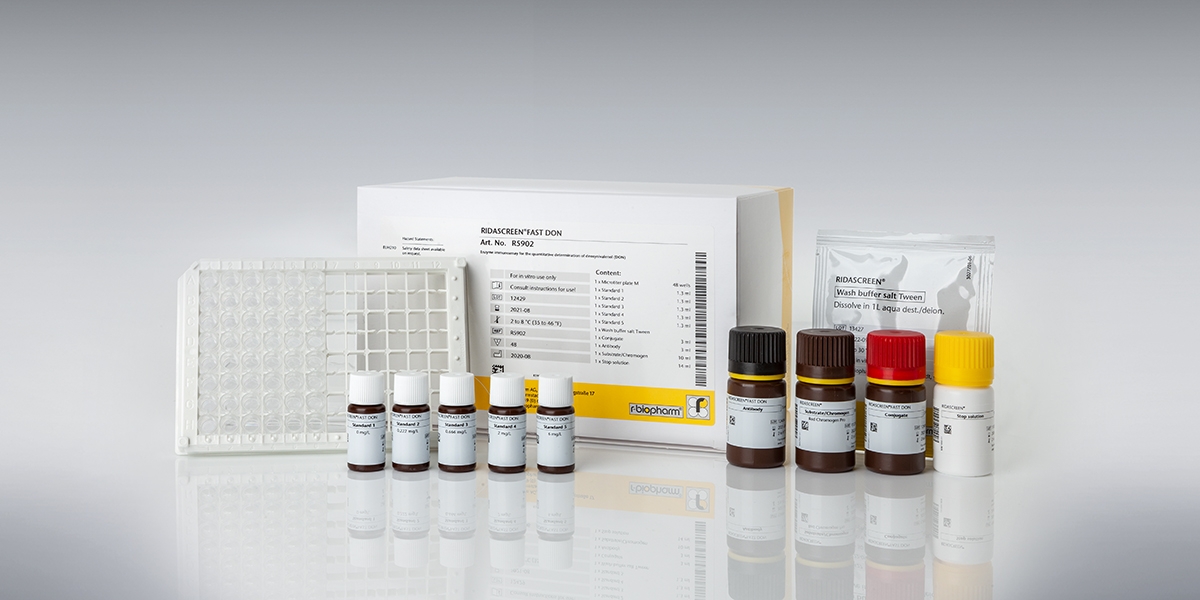
See the ELISA test kit for DON toxin here.
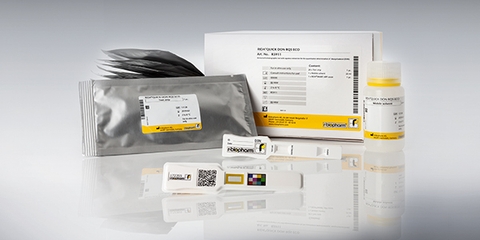
3.1.2. Rapid Test Kit (Lateral Flow Device - LFD)
- Principle: Uses a paper strip containing DON antibodies; on contact with the sample it gives a result through a colour change.
* Advantages:
- Simple to perform, requiring no advanced technique
- Gives on-the-spot results within 5–10 minutes.
* Disadvantages:
- Lower sensitivity than ELISA.
- Mainly used for screening; a reader is needed for quantitative results.
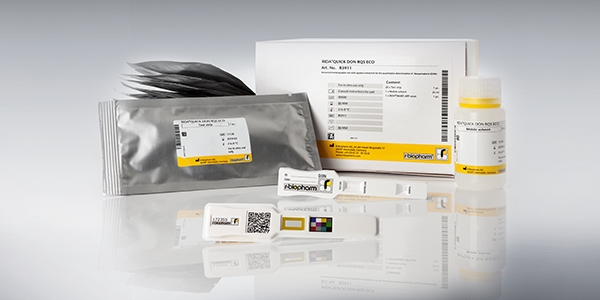
See the rapid test kit for DON toxin here.
3.2. Advanced quantitative methods
3.2.1. High Performance Liquid Chromatography (HPLC)
- Principle: DON is extracted from the feed sample, then separated and analysed on a liquid chromatography column. DON is usually detected with a UV or fluorescence detector.
* Advantages:
- High accuracy and sensitivity.
- Provides detailed quantitative results.
* Disadvantages:
- Requires complex equipment and qualified technicians.
- High initial investment cost.
- Longer analysis time than screening methods.
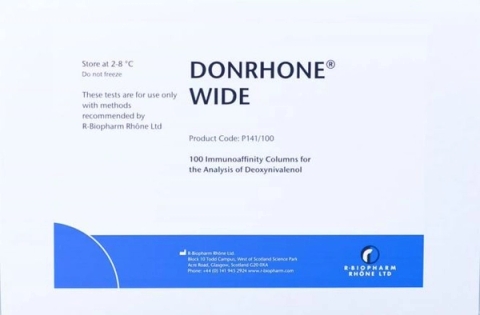
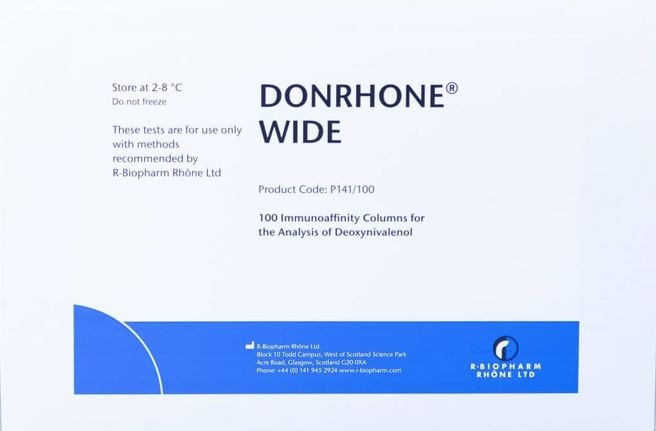
See the immunoaffinity column product for DON analysis here.
3.2.2. Liquid Chromatography-Mass Spectrometry (LC-MS/MS)
- Principle: DON toxin is analysed by liquid chromatography and measured precisely by mass spectrometry.
* Advantages:
- Very high accuracy and specificity.
- Can detect several other mycotoxins in the same run.
- Meets international testing requirements.
* Disadvantages:
- Very high analysis cost.
- Requires advanced equipment and specialist technicians.
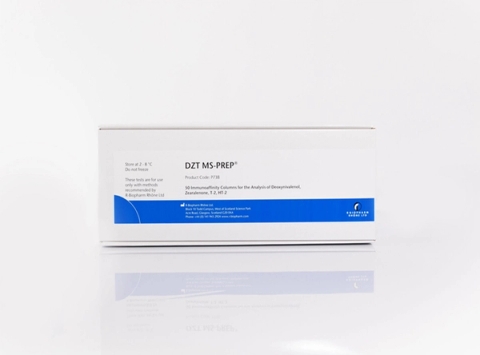
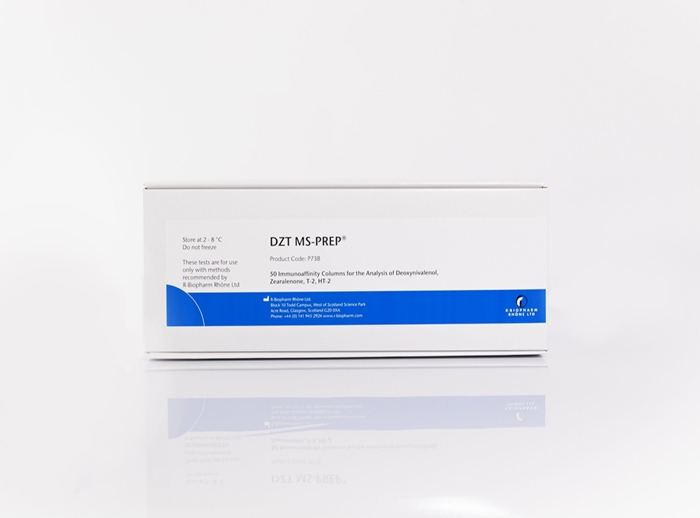
See the immunoaffinity column product for simultaneous analysis of DON, Zearalenone and T2/HT2 here.
3.3. Spectroscopic methods
- Principle: uses spectroscopy equipment to determine the absorption or emission of light by DON in the sample.
* Advantages:
- Fast analysis time.
- Can be used for many different types of sample.
* Disadvantages:
- Lower sensitivity than HPLC and LC-MS/MS.
- Requires careful calibration to avoid errors.
3.4. Molecular biology methods
- Principle: based on analysing DNA or RNA segments of Fusarium fungi, helping determine the presence of the source producing DON toxin.
* Advantages:
- High specificity.
- Rapid detection of the presence of toxin-producing fungi.
* Disadvantages:
- Cannot quantify the amount of DON in the sample.
- High cost and requires modern equipment.
4. Sample preparation procedure
Before applying any testing method, feed samples need to be processed to ensure accurate results:
- DON extraction: use a suitable solvent (methanol, acetonitrile) to separate DON from the feed sample.
- Clean-up: use a filter membrane or extraction column to remove impurities.
- Preparing the sample solution: dilute or process the sample to suit the requirements of the analytical method.
5. Choosing a suitable method for DON toxin testing
Choosing a method for testing DON toxin depends on the purpose and practical conditions:
- For testing at farms or factories: ELISA kits or rapid tests are a good choice thanks to their convenience and low cost.
- For accurate laboratory analysis: HPLC or LC-MS/MS are preferred for their high accuracy.
- When monitoring the source of DON contamination: molecular biology methods can be useful for traceability.
6. Methods for controlling DON toxin
To minimise the presence and impact of DON in animal feed, control measures should be applied from production through to processing:
6.1. Field management
- Use crop varieties resistant to Fusarium fungi.
- Apply good agricultural practices such as crop rotation, weed control and field hygiene.
6.2. Raw material storage
- Store cereals at low moisture (< 14%) to limit mould growth
- Use anti-mould preservatives in storage.
6.3. Testing and treating raw materials
- Test the level of DON toxin contamination using analytical methods such as ELISA or LC-MS/MS.
- Use mycotoxin adsorbents in feed, such as bentonite, zeolite or specialised biological products.
6.4. Biotechnology
- Use enzymes or bacteria that break down DON to reduce toxicity.
- Research additives that reduce DON absorption in the digestive tract.
7. The role of DON toxin control in the livestock industry
Managing DON toxin not only helps ensure the health and productivity of livestock but also protects human health through the food chain. Applying coordinated control measures will help:
- Improve economic efficiency: reduce losses from lower livestock productivity.
- Ensure food safety: prevent DON from accumulating in meat, eggs and milk.
- Enhance the reputation of the livestock industry: meet international food safety standards.
DON toxin is a major hazard in the livestock industry, but it can be fully controlled through appropriate management measures. Raising awareness, applying technology and implementing scientific solutions will help build a more sustainable, safer and more efficient agriculture.
Testing for DON toxin is an essential part of the animal feed management chain. Combining rapid screening methods with in-depth analysis will help businesses and farmers effectively control contamination levels, thereby ensuring livestock health and improving economic efficiency. If you need detailed guidance on equipment or testing procedures, do not hesitate to ask us for more information!
We hope this article provides useful information for you in understanding and managing DON toxin in animal feed!