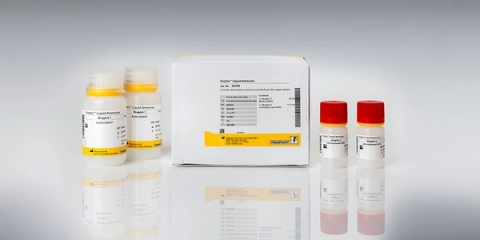
1. Principle of the enzymatic method used to determine ammonia
The method of R-Biopharm (for example: test kit Enzymatic BioSystems Ammonia or equivalent in the Enzytec™ liquid Ammonia) is based on the following reaction chain:
-Ammonia (NH₃) reacts with 2-oxoglutarate (α-ketoglutarate) and NADH (nicotinamide adenine dinucleotide, reduced form) under the catalysis of the enzyme glutamate dehydrogenase (GLDH):

- The amount of NADH consumed in this reaction is directly proportional to the amount of ammonia in the sample.
- Measurement of light absorbance at the wavelength 340 nm, where NADH absorbs strongly. The decrease in absorbance reflects the amount of NADH oxidized and from that the amount of ammonia is calculated.
2. Advantages of the enzymatic method of R-Biopharm
- High accuracy, good repeatability, high sensitivity.
- Not interfered by other compounds as in the colorimetric method.
- Convenient: standardized procedure, a standard spectrophotometer can be used.
- Suitable for many types of samples such as: meat, fish, milk, urine, drinking water, fermented foods, etc.
3. Basic analysis procedure (depending on the test kit)
- Sample preparation: centrifuge or filter if necessary.
- Take the sample amount or extract as instructed (for example: 20–100 µL).
- Add to the reaction solution containing GLDH, NADH and 2-oxoglutarate.
- Incubate the reaction at 25–37°C for a few minutes.
- Measure the absorbance at 340 nm before and after the reaction.
- Calculate the ammonia concentration based on the calibration (calibration curve or the available quantification factor).
4. Practical applications
- Assess the quality of fish meat (protein degradation indicator).
- Control the fermentation process, especially in yoghurt, beer, wine.
- Check nutrition in animal feed.
- Analysis of urine, serum in biological research or medicine, veterinary medicine.
Customers can refer to the detailed specifications of the Ammonia kit we provide at the following link: