
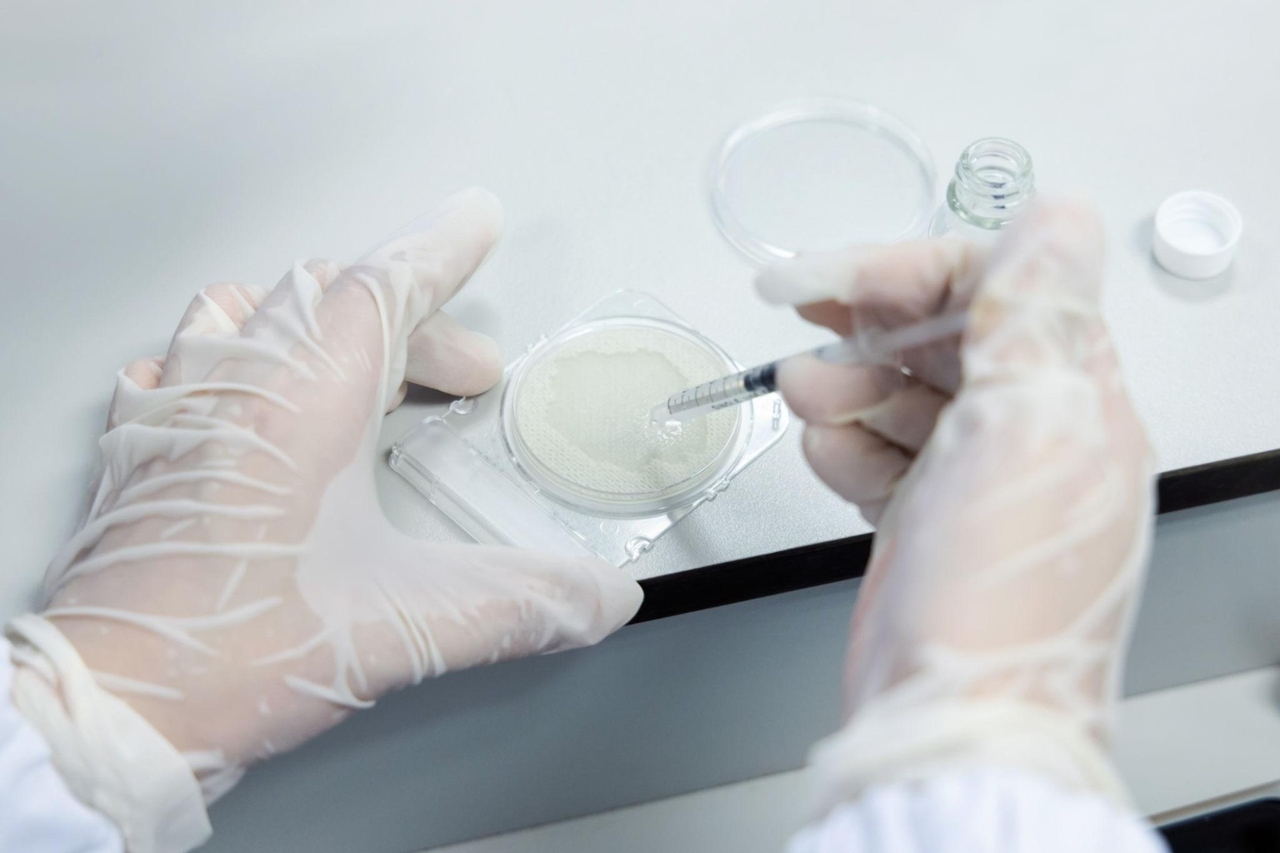
The product is widely used in:
- Food & beverages
- Drinking water, domestic water
- Cosmetics
- Animal feed
- Microbiology testing laboratories
1. Advantages of using Compact Dry
- No need to prepare media (saves time)
- Fewer handling errors
- Easy to use even in small labs
- Fast, easy-to-read results
- Saves testing costs
👉 This is why more and more businesses are switching to the Compact Dry rapid microbiological testing guide instead of traditional methods.
2. How to use Compact Dry – Standard procedure steps
Step 1: Sample preparation
- Take the sample to be tested (food, water, surface…)
- Dilute the sample with a suitable solution (0.85% NaCl, BPW…)
- Shake well to homogenise the sample
Step 2: Inoculating the sample onto the plate
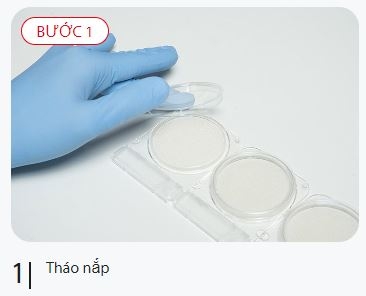
- Open the Compact Dry plate lid
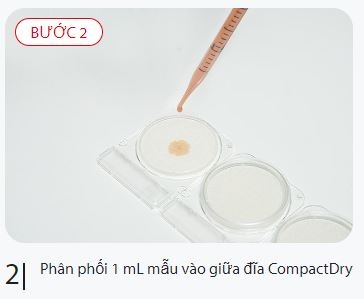
- Use a micropipette to draw 1 ml of sample
- Pipette it directly into the centre of the plate
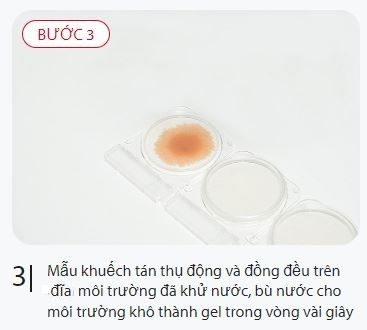
- The sample spreads evenly on its own thanks to the dry medium structure
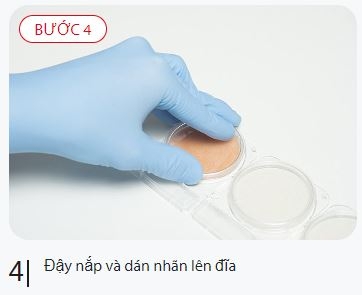
Step 3: Close the lid and incubate the sample
- Close the lid immediately after inoculation
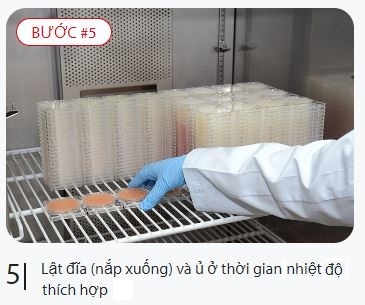
- Place the plate in the incubator
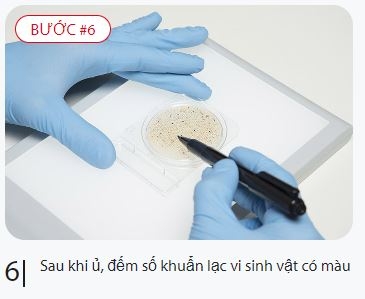
Illustrated description of the process
4. Notes when incubating the sample (Extremely important)
To ensure accurate results when applying how to use compact dry, note the following:
- Common incubation temperature: 30–37°C (depending on the parameter)
- Incubation time: total microorganisms: 24–48h, Coliform/E. coli 24h
- Place the plate upside down to avoid water condensation
- Do not stack too many plates on top of each other
- Avoid shaking during incubation
5. How to read Compact Dry results accurately
After incubation, read the results:
* General principles:
- Count the number of colonies appearing on the plate
- Each colony = 1 CFU (colony forming unit)
* Colour distinction (depending on the plate type):
- Coliform: red and pink colonies are Coliforms.
- E.coli: all blue and purple colonies are E.Coli.
* Calculation:
- See how to calculate colonies here.
6. Common mistakes in rapid microbiological testing
- Inoculating the wrong volume (not a full 1 ml)
- Not diluting the sample → bacterial overload
- Incubating at the wrong temperature
- Reading the colony colours incorrectly
- Storing the plate incorrectly
👉 These mistakes can distort the results of the rapid microbiological testing guide, so special care is needed.
7. Conclusion
Understanding clearly how to use compact dry will help businesses:
- Shorten testing time
- Save up to 50% of costs
- Ensure high accuracy
- Standardise the microbiological testing process
👉 If you are looking for a solution for fast, simple and effective microbiological testing, then the Compact Dry plate is the optimal choice.