1. What is aflatoxin M1 and why test it
- Aflatoxin M1 (AFM1) is a mold toxin originating from aflatoxin B1 in animal feed (corn, beans, bran…). When dairy cows eat feed contaminated with this toxin, AFM1 is metabolized and excreted into milk
- This is a potential carcinogen capable of affecting the liver and immune system, especially dangerous for children — the biggest milk consumers.
👉 Therefore, testing aflatoxin M1 in milk is a mandatory requirement for:
- Milk processing plants
- Export businesses
- Livestock farms
- Testing organizations
2. Regulations on aflatoxin M1 limits in milk
International and Vietnamese standards are very strict:
- Vietnam: ≤ 0.5 µg/kg (ppb)
- EU: ≤ 0.05 µg/kg (ppb) — 10 times stricter
- USA (FDA): ≤ 0.5 µg/kg
This means: if a product exceeds the EU threshold → the risk of export rejection is very high
3. Common aflatoxin M1 testing methods
3.1. Rapid test
- Principle: immunochromatography (lateral flow)
* Advantages
- Gives fast results (5–10 minutes)
- Easy to use, no complex equipment needed
- Suitable for testing at farms and raw material receiving points
* Disadvantages
- Lower accuracy than laboratory methods
- Mostly used for screening

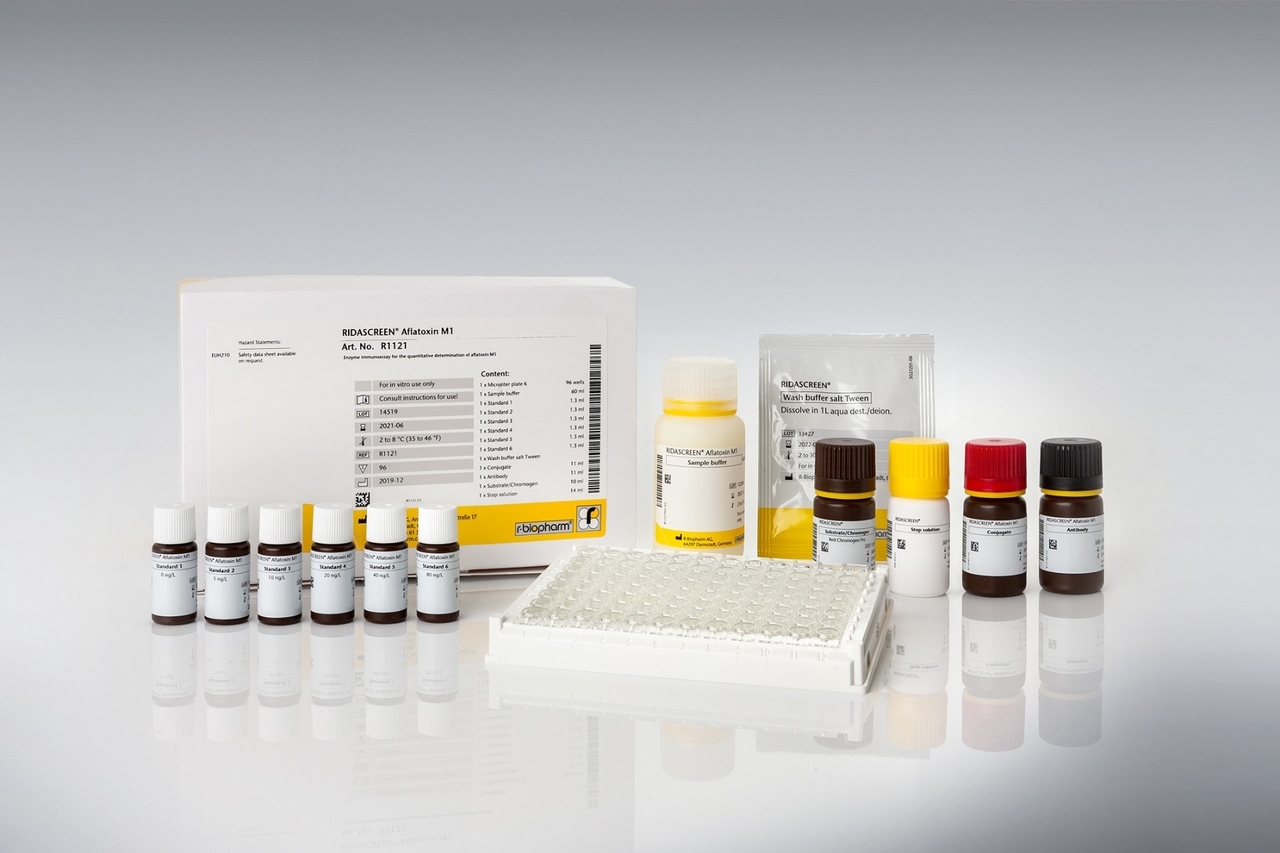
3.2. ELISA method
- Principle: enzyme immunoassay (ELISA)
* Advantages
- Extremely high accuracy
- Analyzes many samples simultaneously
- Suited to QC rooms and testing laboratories
* Disadvantages
- Needs equipment: ELISA reader, pipettes, incubator
- Analysis time: 1–2 hours
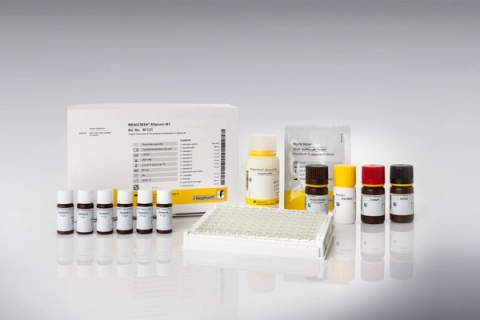
👉 See the aflatoxin M1 ELISA test kit we supply here.
3.3. HPLC / LC-MS/MS (the most accurate standard)
Principle: liquid chromatography with a fluorescence detector or mass spectrometer
* Advantages
- Extremely high accuracy
- Recognized by AOAC and ISO
- Suitable for confirmation testing & export
* Disadvantages
- High investment cost
- Needs highly specialized technicians
- Long sample preparation
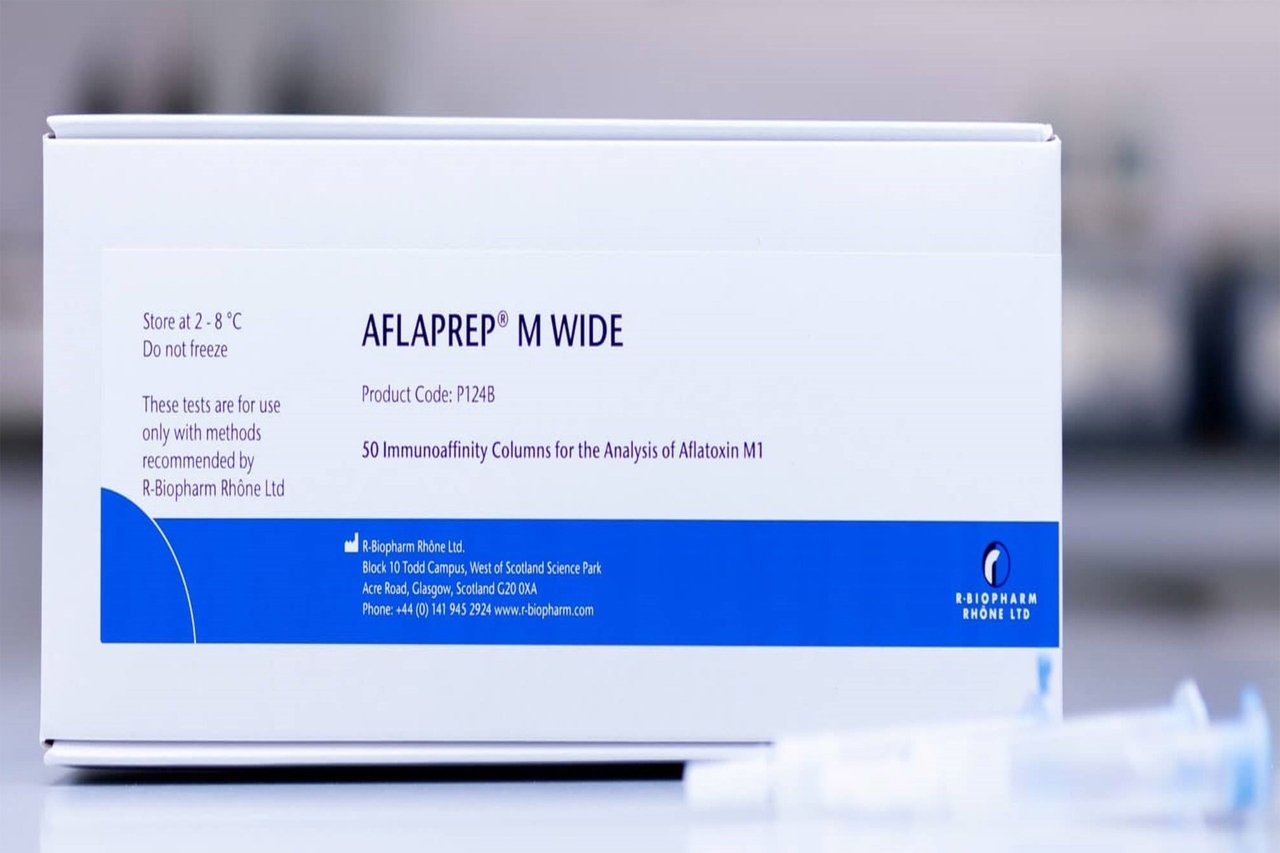
👉 Usually combined with an immunoaffinity column (IAC) to clean the sample before analysis. See the AFLAPREP® M WIDE immunoaffinity column product we supply here.
-
4. Procedure for testing aflatoxin M1 in milk (basic standard)
1. Take a representative milk sample (fresh milk, powder, raw milk)
2. Process the sample (centrifuge, defat if needed)
3. Extract the toxin
4. Analyze with the chosen method:
- Rapid test → screening
- ELISA → rapid quantification
- HPLC/LC-MS/MS → official confirmation
5. Read the result & compare with the standard
5. Effective aflatoxin M1 control solutions
To reduce AFM1 risk in milk, businesses need to:
- Control aflatoxin B1 in animal feed
- Use mycotoxin binders
- Test periodically with rapid tests & ELISA
- Establish HACCP & ISO 22000 systems
6. Which method should the business choose?

Testing aflatoxin M1 in milk is an indispensable step ensuring:
- Food safety
- Brand reputation
- Export regulation compliance
Businesses should combine several methods (rapid test + ELISA + HPLC) for optimal control effectiveness.