
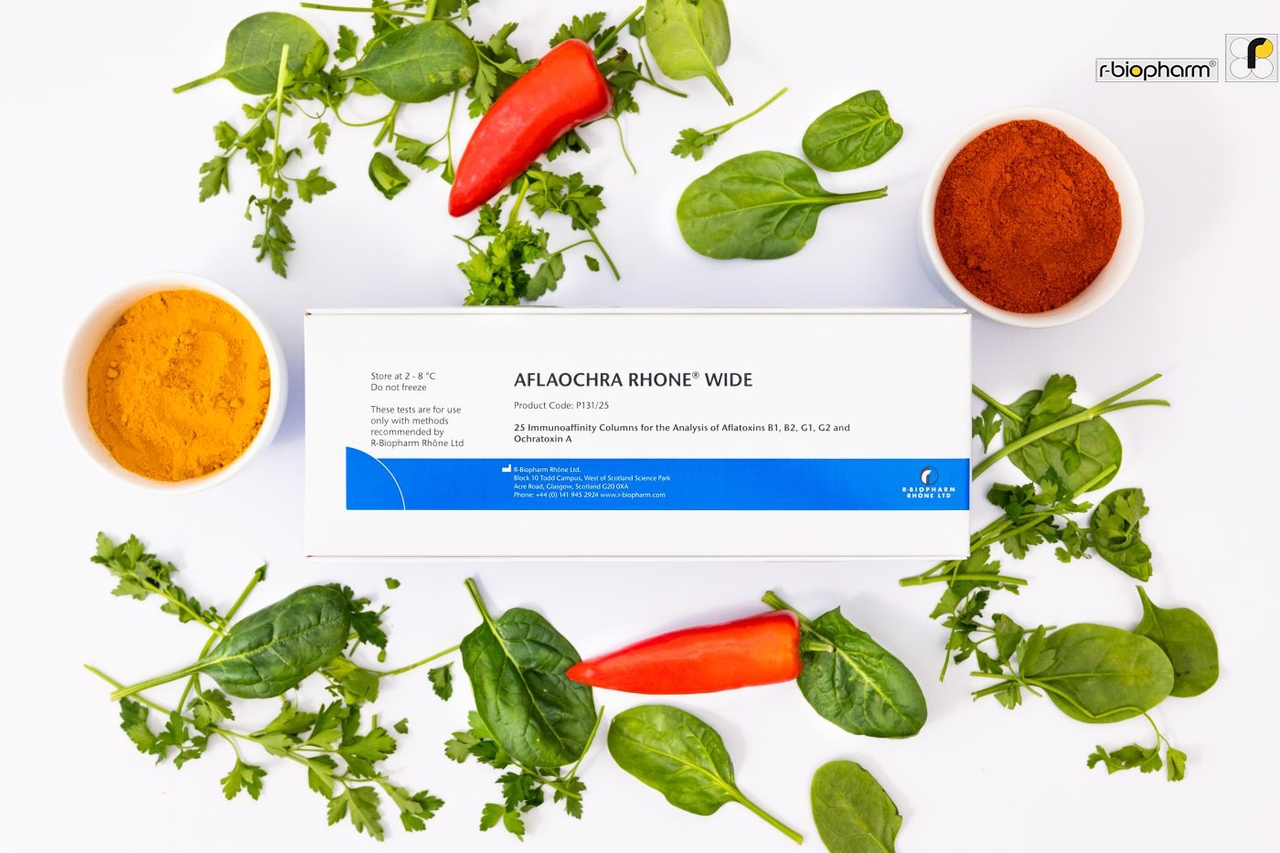
- With global food safety standards tightening, Vietnamese export businesses must apply the reliable, standardized sub the IAC (immunoaffinity column).
- Among the widely used solutions, IAC R-Biopharm stands out for its high accuracy, specificity, and full compliance with
Why do mycotoxins pose a big risk to exported agricultural products?
The common mycotoxins in coffee, pepper, cashews, and rice include:
- Aflatoxin B1, B2, G1, G2
- Ochratoxin A
- Fumonisin
- Zearalenone (ZEA)
- DON (Deoxynivalenol)
- T-2 / HT-2
Even when the raw material is well stored, if the contamination rate is low but exceeds the importing country's limit, the business can fa
- Rejection, suspended exports, or 100% inspection status
- Major financial losses
- Loss of reputation with international customers
1. Mycotoxin control requirements of major export markets
EU (Europe)
The EU is regarded as the market with the strictest limits (MRLs) in the world.
Examples:
- Total aflatoxin in oilseeds and nuts → 4–10 µg/kg
- Ochratoxin A in roasted and instant coffee → 5 µg/kg
- Aflatoxin B1 in cereals and rice → 2 µg/kg
🔎 The EU requires standardized analytical methods (AOAC, EN, ISO) and documents from an ISO 17025-accredited laboratory.
Japan
Japan applies:
- The limit Aflatoxin B1 = 10 µg/kg for many agricultural products
- Increased inspection frequency for high-risk groups such as pepper, beans, cashews
- Japan emphasizes the accuracy and repeatability of the analytical method.
United States (US FDA)
The USA regulates mycotoxins under FDA and USDA rules:
- Aflatoxin in cereals, peanuts, nuts → 20 µg/kg
- Fumonisin in cereals → 2–4 ppm
The US allows many testing methods but prioritizes ELISA, IAC-HPLC, and LC-MS/MS.
2. Why do export businesses need R-Biopharm IAC immunoaffinity columns?
✔ Globally recognized – meeting AOAC/ISO standards
Many R-Biopharm IAC lines (Aflatoxin, OTA, ZEA, Fumonisin...) have:
- AOAC certification
- Compliance with European and Codex standards
- Use by ISO 17025 laboratories worldwide
As a result, results from the R-Biopharm IAC immunoaffinity column are easily accepted for export.
✔ Very high specificity – less matrix interference from Vietnamese agricultural samples
Coffee, pepper, cashews, and rice all have complex matrices that easily cause errors when analyzing mycotoxins.
The R-Biopharm IAC column helps:
- Remove impurities, lipids, polyphenols
- Increase extract cleanliness
- Optimize the signal when analyzing by HPLC or LC-MS/MS
→ Ensuring accurate, highly repeatable results.
✔ Cost and time savings
Businesses using the R-Biopharm IAC column can:
- Shorten sample preparation time
- Cut repeat-run costs
- Reduce the risk of rejected shipments from analytical errors
✔ Scientific documentation support for export
A major advantage of R-Biopharm:
- Complete international certifications
- Supplies COA – Validation Report – standardized user guides
- Suitable for inclusion in export testing dossiers
→ It helps the business raise reliability with EU–Japan–US partners.
3. Benefits for coffee – pepper – cashew – rice businesses
- Fewer rejected shipments, saving billions of dong in logistics costs
- Proven quality – raising brand reputation
- Proactive quality control before sending samples to the importing country
- Meeting the strict testing requirements of demanding markets
- Creating a competitive advantage in export contract negotiations
In the context of increasingly demanding export markets, mycotoxin control is a mandatory requirement for commodities like coffee, pepper, cashews, and rice to keep their standing in the international market. With high reliability, complete international certification, and superior specificity, the R-Biopharm IAC column is the optimal solution, helping businesses meet EU – Japan – US standards, export with confidence, and raise the reputation of Vietnamese goods.
👉 See R-Biopharm immunoaffinity column product information we supply at the following link:
https://pacificlab.vn/vi/shops/group/phan-tich-du-luong-doc-to/page-3/