1. Principle of competitive ELISA
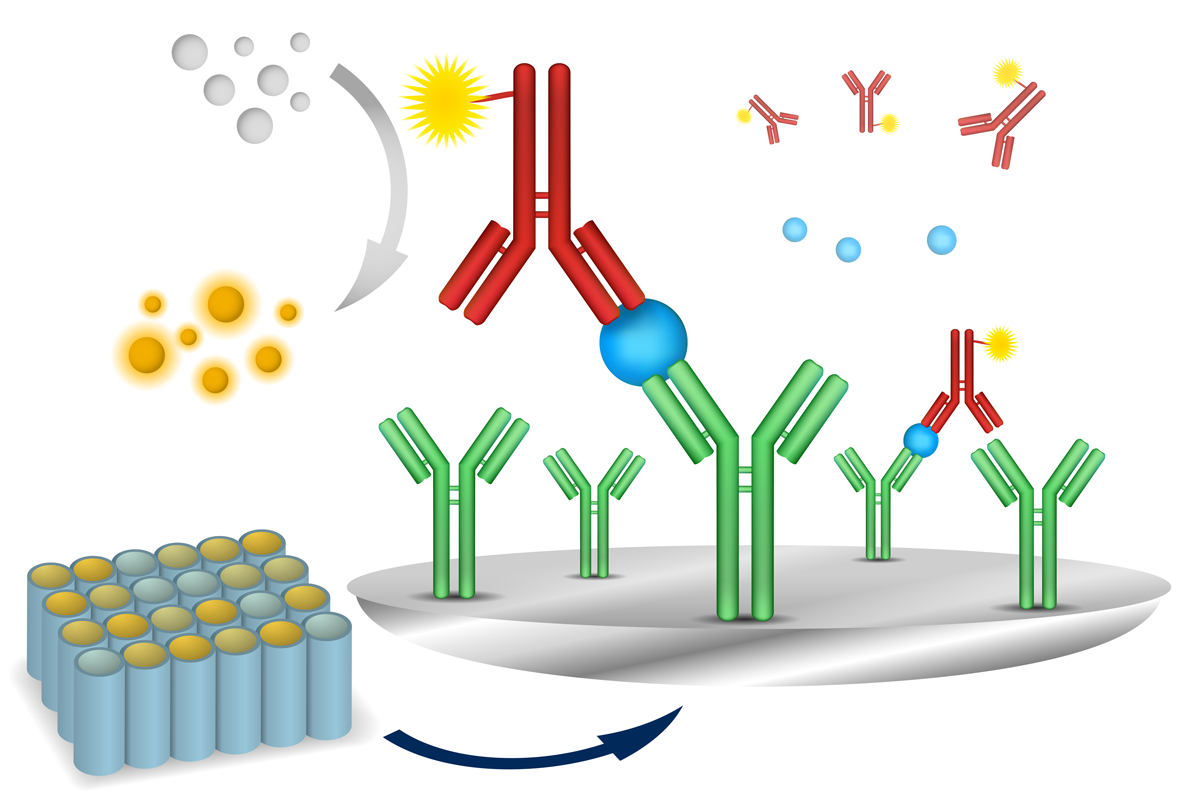
Competitive ELISA is based on the competition between two components:
- Unknown antigen (test sample): The substance to be determined in the sample.
- Standard antigen or enzyme-labeled antigen: The competing substance that binds to the specific antibody.
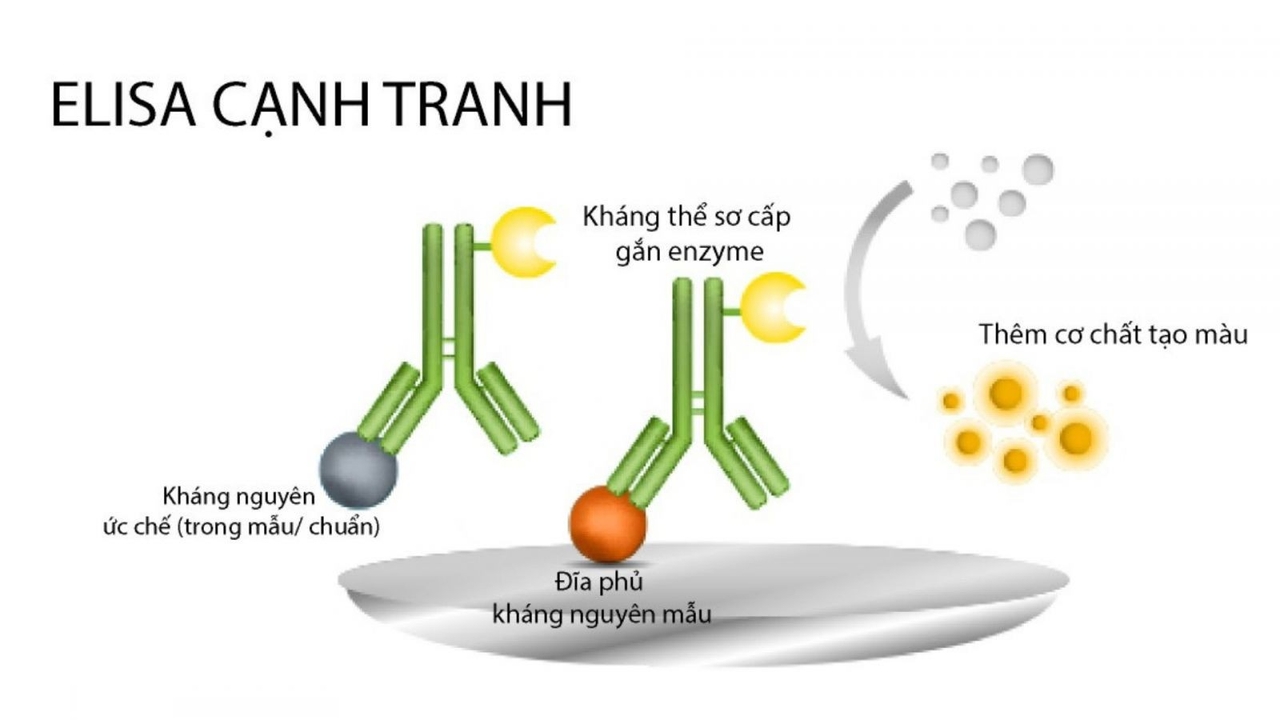
* The process consists of the following main steps:
- Prepare immobilized antibody: The specific antibody is immobilized on the well surface of the ELISA plate.
- Add the test sample and the enzyme-labeled antigen: The sample containing the antigen (unlabeled) is added together with the enzyme-labeled standard antigen. These two components compete for the active sites of the immobilized antibody.
- Wash to remove residues: After the reaction is complete, the unbound components are removed by washing.
- Add the enzyme substrate: The enzyme substrate is added and a color reaction occurs.
- Read the results: Color intensity is measured with a spectrophotometer. Color intensity is inversely proportional to the antigen concentration in the sample: a higher sample antigen concentration occupies more binding sites and reduces the amount of enzyme-labeled antigen retained.
2. Advantages of competitive ELISA
- Small molecule detection: This method is ideal for measuring small molecules such as hormones, drugs, toxins, or haptens that are difficult to detect with other methods.
- High sensitivity: Direct competition reduces interference from the sample and increases measurement accuracy.
- High specificity: Thanks to the use of an antibody specific to the target antigen.
- Versatile applications: Can be used with many different sample types such as blood, serum, urine, or environmental samples.
3. Limitations of competitive ELISA
- More complex procedure: Compared with other ELISA methods (such as direct or indirect ELISA), competitive ELISA requires more careful preparation and more steps.
- High technical requirements: High-quality antibodies and antigens are needed to ensure accurate results.
- Difficult to standardize: Because it depends on competition, variables such as standard antigen concentration, enzyme, and antibody must be tightly optimized.
4. Applications of competitive ELISA
- Hormone level testing: For example, measuring cortisol and testosterone levels in blood samples.
- Toxin and drug detection: Checking pesticide, antibiotic, or biological toxin residues in food and the environment.
- Hapten determination: Small molecules that are not immunogenic, but when conjugated to a carrier protein they can produce an immune response, as in the detection of drugs or steroids.
- Immunology research: Assessing antigen-antibody binding capacity, or studying immune responses in pathology.
- In food: determining toxins, allergens in food, microbiological testing of food.
5. Competitive ELISA procedure
A concrete example illustrating how to perform competitive ELISA:
- Prepare the ELISA plate: Attach the specific antibody to the well surface.
- Add the sample antigen: Dilute the sample and add it to the plate.
- Add the enzyme-labeled antigen: Dilute the enzyme-labeled standard antigen and add it together with the sample.
- Incubate: Let the reaction proceed under optimal conditions.
- Wash the plate: Remove the unbound components.
- Add the substrate: Trigger the color-developing enzyme reaction.
- Read the results: Measure the optical density (OD) at the appropriate wavelength and compare with the standard curve.
Competitive ELISA is a powerful tool in biological analysis research and applications. Its ability to detect small molecules with high sensitivity and outstanding accuracy makes it an ideal method in the fields of medicine, food, and the environment. However, to achieve maximum effectiveness, the principle must be clearly understood, the process optimized, and quality strictly controlled.
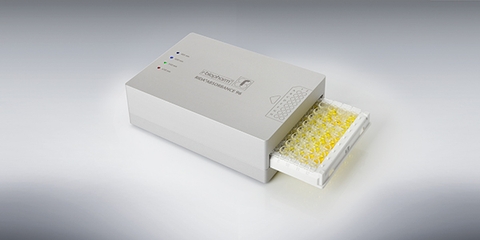
PacificLAB supplies ELISA readers from R-Biopharm, origin: Germany. Customers are welcome to refer to the detailed product information we provide here: