
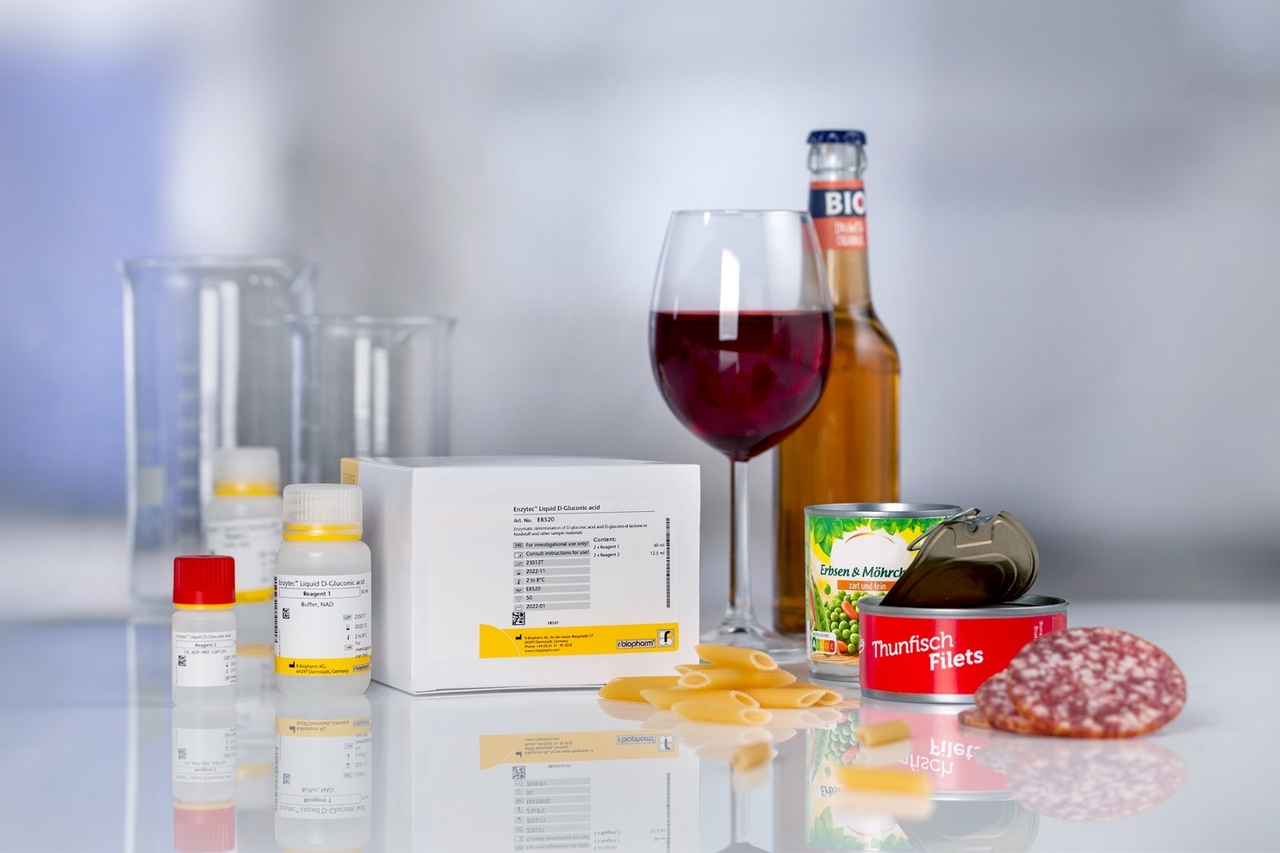
Parameters such as sugars, organic acids, ethanol, lactose, sorbitol, lactic acid, nitrate, ammonia… affect not only product quality but also legal compliance and brand reputation.
Currently there are two main groups of methods for physicochemical analysis:
- Traditional physicochemical analysis (titration, chromatography, spectrophotometry…)
- Enzymatic test kit method (enzyme test kits)
So which is the right solution for a modern QA/QC laboratory? The article below compares analysis time, accuracy and operating costs in detail, and at the same time
1. Overview of traditional physicochemical analysis
1.1 Common traditional physicochemical methods
In laboratories, traditional physicochemical analysis usually includes:
- Acid–base titration
- Redox titration
- UV–Vis spectrophotometry
- Liquid chromatography (HPLC)
- Gas chromatography (GC)
- Refractometers, densitometers
These methods have been used for decades and are regarded as the "standard" for analysis.
1.2 Advantages of traditional methods
- Suitable for in-depth research
- Several parameters can be analyzed at once (especially with HPLC, GC)
- High accuracy can be achieved when operated correctly
1.3 Limitations of traditional physicochemical analysis
However, in actual production, the traditional methods show many limitations:
- Long analysis times (from several hours to several days)
- Complex sample preparation process
- Heavy dependence on technician skill
- High equipment investment cost (HPLC, GC)
- Hard to deploy broadly for in-factory QA/QC labs
2. What is the enzymatic test kit method?
2.1 Principle of enzymatic test kits
- Enzymatic test kits use specific enzymes to catalyze the reaction with the analyte. The reaction product produces a color or optical signal, measured with a UV–Vis spectrophotometer.
* Example:
- Glucose oxidase enzyme to determine glucose
- Lactase enzyme to analyze lactose
- Alcohol dehydrogenase enzyme to determine ethanol
2.2 Standout features of enzymatic test kits
- Accurate quantification
- Easy to handle
- No complex equipment required
- Suitable for rapid in-production control
3. Comparing enzymatic test kits and traditional physicochemical analysis
3.1 Analysis time comparison
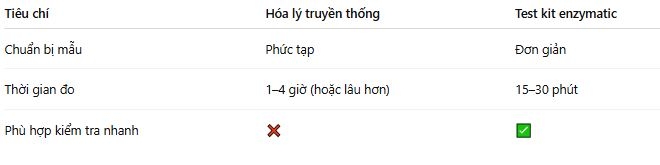
👉 Conclusion: enzymatic test kits cut analysis time by up to 80%, making them especially suitable for in-process control.
3.2 Accuracy and repeatability comparison
* Traditional analysis
- High accuracy but prone to operational error
- Heavily dependent on the operator
* Enzymatic test kits
- High specificity thanks to selective enzymes
- Good repeatability between measurements
- Little affected by the sample matrix
👉 In the QA/QC environment, enzymatic test kits ensure data consistency — something ISO, HACCP and FSSC 22000 audits care about greatly.
3.3 Operating cost comparison

👉 Although the cost per test may look higher for test kits, the total cost of operation (TCO) is significantly lower, especially for large-scale manufacturers.
4. Outstanding advantages of R-Biopharm test kits
4.1 A world-leading brand
R-Biopharm (Germany) is a globally trusted brand in:
- Enzymatic test kits
- Food testing
- Safety and quality control
R-Biopharm products are widely used in:
- Europe
- The Americas
- Japan
- Multinational food corporations
4.2 International standards — widely recognized
R-Biopharm test kits comply with:
- AOAC
- ISO
- DIN
- Clear, transparent IFUs
👉 This is the key factor that lets QA/QC labs pass audits, inspections and internal checks.
4.3 Optimized for QA/QC laboratories
R-Biopharm enzymatic test kits are designed especially for:
- Factory labs
- Incoming raw material control
- Production process monitoring
- Finished product checks before release
* Standout advantages
- Standardized process
- Easy staff training
- Fast, reliable results
4.4 A diverse parameter portfolio
R-Biopharm offers enzymatic test kits for many important physicochemical parameters:
- Glucose, Fructose, Sucrose
- Lactose, Galactose
- Ethanol
- Lactic acid, Acetic acid
- Sorbitol, Mannitol
- Nitrate, Nitrite, Ammonia
👉 Suitable industries:
- Food & beverage
- Dairy and dairy processing
- Beer — wine — soft drinks
- Pharmaceuticals
- Animal feed
5. Why enzymatic test kits suit small and large businesses alike?
5.1 Optimizing production speed
- Fast results
- Timely decision-making
- Lower risk of non-conforming product
5.2 Standardizing the QA/QC system
- Easy to build standard procedures
- Stable data
- Fits ISO, HACCP, FSSC 22000
5.3 Long-term economic efficiency
- Lower labor costs
- Fewer analysis errors
- Lower product recall risk
6. Conclusion
- In the era of automation, standardization and cost optimization, enzymatic test kits are gradually becoming the preferred alternative to many traditional physicochemical analysis methods in quality control.
- With high accuracy, fast analysis times and reasonable operating costs and especially their international standard status, R-Biopharm enzymatic test kits are the ideal solution for:
+ Small and large food businesses
+ Modern QA/QC laboratories
+ Businesses aiming for international standards and sustainable development
👉 Investing in R-Biopharm test kits is not just an investment in analysis — it is an investment in business quality and reputation.