
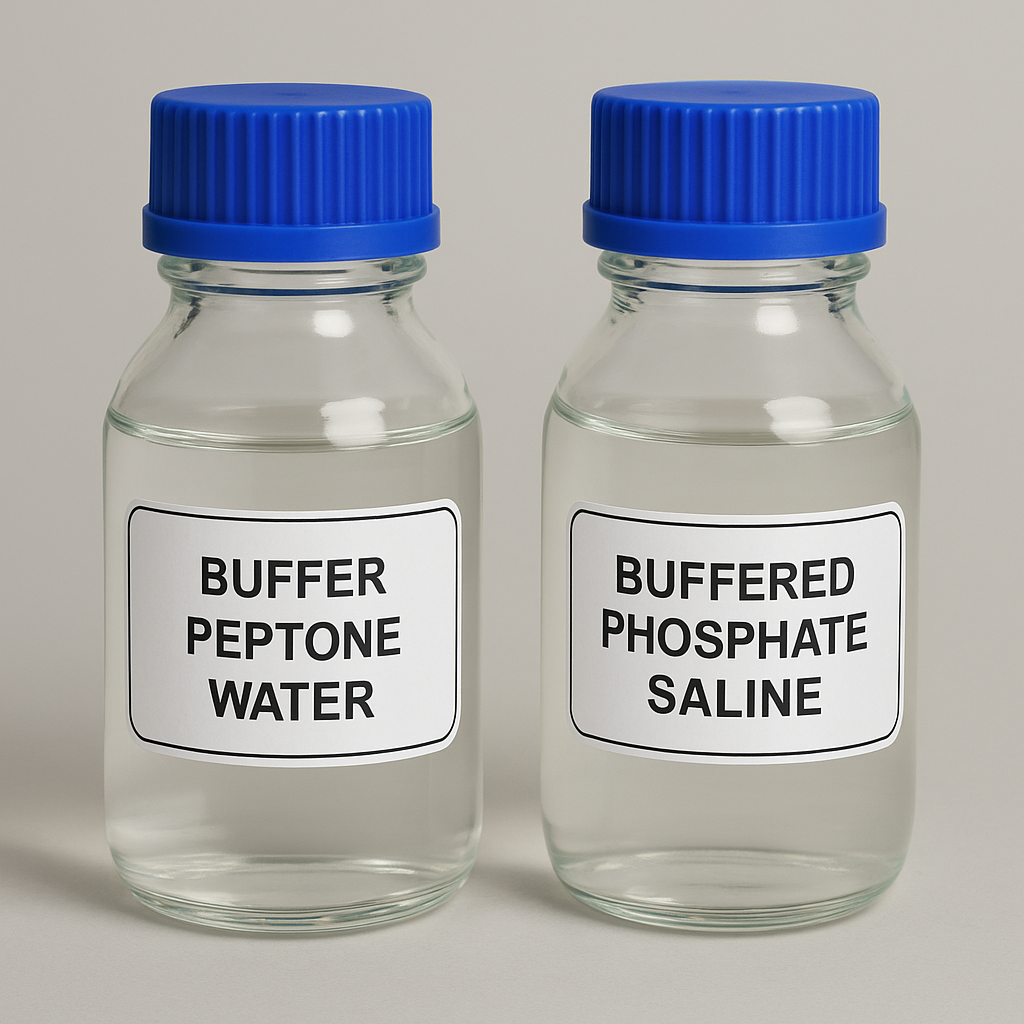
1. Buffer Peptone Water (BPW)
Main components: Peptone, NaCl, Na2HPO4, KH2PO4
* Uses
- Commonly used as a pre-enrichment buffer to recover stressed bacteria, especially in food microbiology testing.
- Supports the growth of bacteria such as Salmonella spp., E. coli, etc.
- Used for diluting samples in microbiology.
- pH: usually about 7.0 ± 0.2
- Characteristic: contains peptone, a nutrient source that helps bacteria grow in the early phase.
2. Buffered Phosphate Saline (PBS)
- Main components: NaCl, KCl, Na2HPO4, KH2PO4
* Uses
- Commonly used to maintain a stable pH in molecular biology and cell experiments.
- Does not support bacterial growth because it contains no nutrients.
- Used to wash cells and dilute biological samples without affecting microorganisms or cell structure.
- pH: usually about 7.2–7.4
- Characteristic: contains no nutrients, its only function is to buffer the pH.
Summary of the differences
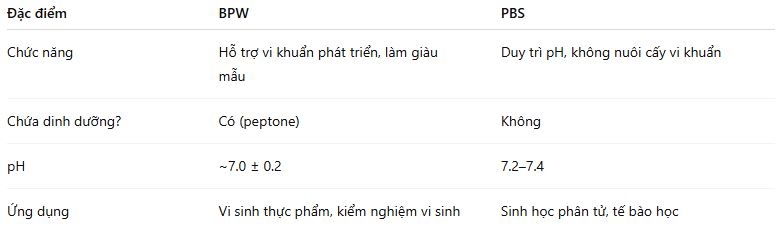
👉 If you need a medium to culture bacteria, choose BPW. If you only need a buffer to protect cell structure or maintain pH without stimulating bacterial growth, PBS is the suitable choice.