

1. Overview of food safety and hygiene
– A good understanding of the microbiological aspects of food production, as well as awareness of the possibility of microbial contamination in food, is very important for food safety in general. Reliable testing systems for analyzing and assessing microbial safety must help ensure safe products for consumers and reduce the risk of life-threatening bacterial infections in humans.
– The series "Compact Dry: Easier food microbiology testing, Part 1" will focus on current and emerging issues in the field of food microbiology testing and food safety. It will then address the most frequently asked questions, and identify usage details that are important for the microbiological safety of food.
– By detailing the available analytical solutions, this guide to Compact Dry: easier food microbiology testing is therefore intended to serve as a comprehensive know-how reference for all food microbiologists and food safety professionals in practice.

2. Microbial contaminants in food and food production
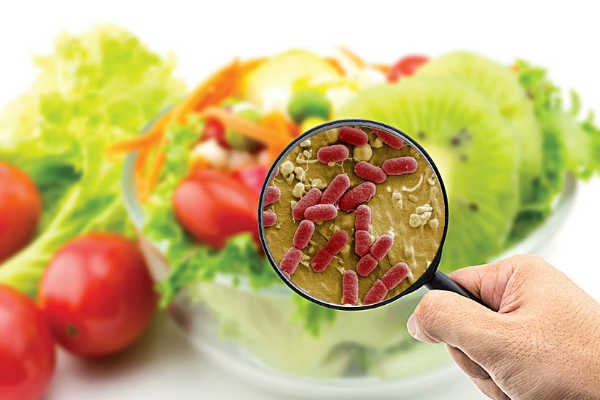
– The problem of microbial contamination in food is not a new one, and it is increasingly becoming a focal point of public health. Even when consumers know little about microorganisms in general, they understand that microbiological testing is necessary to avoid infections caused by foodborne pathogens.
3. The most common contaminating microorganisms in food
– The term "Salmonella bacteria" seems to ring alarm bells when food safety issues are discussed. Yet Salmonella is only one of many parameters that must be tested in the relevant sample matrices, even though it is one of the most common pathogens. The next group of concern is "fecal contaminating bacteria", exemplified by coliform bacteria; Enterobacteria; or E. coli, which remains the number one indicator of fecal contamination.
– Other organisms present in the environment of food production facilities, such as Staphylococcus; Listeria; Bacillus; and last but not least yeasts and molds, can also pose other threats if they are not well monitored. All of them are naturally present on raw materials or on people, and some of them are highly pathogenic and can lead to serious illnesses.
– Finally, the key parameter a food microbiologist must look for is the total bacterial count, called the "total viable count".
4. Monitoring microbial contamination with Compact Dry pre-poured plates
– The most effective way to monitor the production process for microbial contaminants is to carry out in-process controls at the production site. These controls will minimize problems at an early stage when set up properly: sampling at critical control points and analyzing them with reliable microbiological methods.
– Such a control system allows the producer to react quickly and take appropriate measures to ensure food safety for the final consumer.
– One preliminary option for optimizing the process is to control incoming raw materials. On the other hand, the control of finished products is usually carried out by accredited laboratories, but it can also be done "in-house" with methods that are easy to handle and officially validated.
– This is the mission of the Compact Dry pre-poured, freeze-dried agar plate product: a robust microbiological testing system that is easy to handle, with reliability demonstrated by official validations under the ISO 16140 standard as well as the AOAC-RI standard.

5. Compact Dry pre-poured, freeze-dried plates: compact plates for testing microorganisms in food
– Compact Dry plates can be used anywhere at any time because the dry plates do not need to be rehydrated before the sample is applied, and are therefore stable at ordinary temperatures for a long time. The chromogenic agents contained in all Compact Dry media allow the colonies to be counted easily (for example the product: Compact Dry Total Count) after incubation.
– Shimadzu Nissui supplies the Compact Dry analytical testing system with the following analytes:
- Total aerobic bacteria
- Coliform bacteria
- E. coli and coliforms
- Yeasts and molds
- Listeria spp.
- Listeria monocytogenes
- Vibrio parahaemolyticus
- Salmonella
- Enterobacteriaceae
- Enterococcus
- Staphylococcus aureus
- Bacillus cereus
Compact Dry offers alternatives to classical agar plates; and with the following installments of "Compact Dry: Easier food microbiology testing", we hope to walk you step by step toward this excellent product by sharing deeper insight into the necessity and advantages of microbiological food controls.

Pacific Company is the exclusive distributor of Shimadzu Diagnostics (Nissui) Compact Dry plate products for the Food & Feed sector in Vietnam. Please see the manufacturer's products at:
https://pacificlab.vn/vi/shops/group/dia-moi-truong-chuan-bi-san/
👉See also our article on the same topic: Easier food microbiology testing | Part 2