
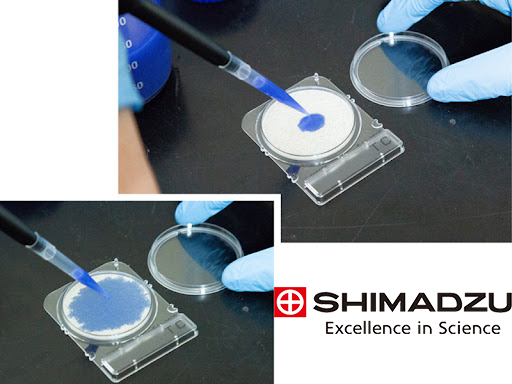
1. Shelf-life studies – a critical problem for food businesses
A shelf-life study is the process of tracking how product quality changes over time to establish the period d
Among the factors affecting shelf life, microorganisms play the pivotal role because:
- Microbial counts rise steadily over storage time
- They cause spoilage, sensory decline and food safety loss
- They are a mandatory parameter when declaring a use-by date
Therefore, periodic microbial monitoring over time is the method widely applied in shelf-life studies.
2. Sampling over time – the common 3-day interval model
A shelf-life study design commonly applied by QC/QA teams is:
- Periodic sampling every 3 days
- Performed throughout the expected shelf life
- At each time point, analyzing several representative microbial parameters
* Example:
- Day 0 → Day 3 → Day 6 → Day 9 → Day 12 → …
- Inoculate 2–3 Compact Dry plates per parameter to ensure repeatability
* This approach helps a business
- Track the microbial growth trend
- Detect the point where microbes start to surge
- Build the scientific basis for setting a safe use-by date
3. Using Compact Dry TC, EC, YMR plates in shelf-life studies
3.1. Compact Dry TC – Total aerobic bacteria
- Reflects the overall bacterial contamination level
- The baseline parameter for shelf-life assessment
- Helps track the impact of:
+ Formula
+ The production process
+ Packaging and storage conditions
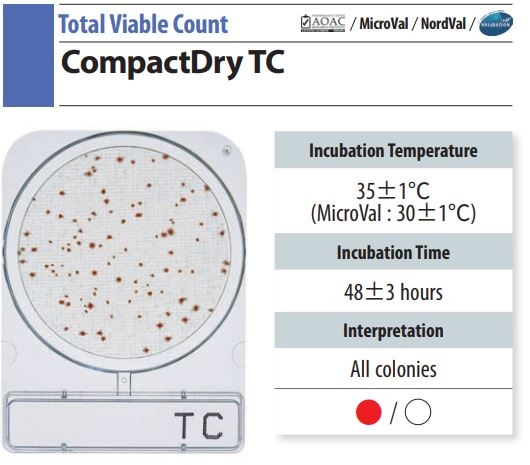
👉 TC usually rises gradually over time and is an early-warning parameter.
3.2. Compact Dry EC – Coliform / E. coli
- An indicator of hygiene conditions
- Detects secondary contamination risk during storage
- Especially important for:
+ Drinking water
+ ready-to-drink beverages
+ ready-to-eat foods

👉 EC is usually monitored to keep the product at the safety standard throughout its life cycle.
3.3. Compact Dry YMR – Yeast & mold
- The parameter that sets sensory shelf-life
- Highly sensitive to:
+ Moisture
+ Sugars
+ Packaging conditions
- Plays a crucial role for:
+ Confectionery and baked goods
+ Fruit juice
+ Milk and dairy products
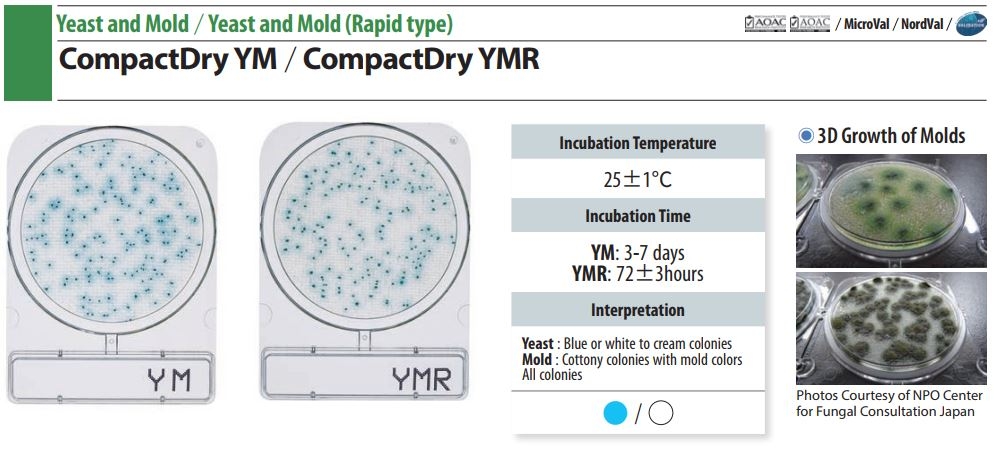
👉 YM is often the shelf-life limiting parameter, crossing its threshold before TC does.
4. Example of a 3-day periodic microbial tracking table using Compact Dry plates
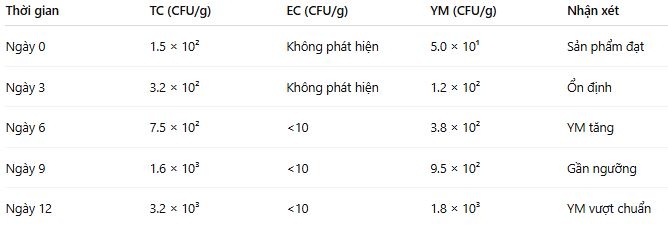
📌 From the data table:
- Yeast and mold exceed the limit on day 12
- The business can set a safe shelf life of 9–10 days
5. The advantages of Compact Dry for shelf-life studies
- Ready-poured, no media preparation → guarantees consistency across sampling rounds
- Simple handling, easy to train → suits studies that run for weeks
- Clear, easy-to-read and countable results → convenient for reports and trend charts
- Saves incubator space → fits businesses without a large microbiology lab
6. The right solution for businesses running shelf-life studies
Compact Dry TC – EC – YMR plates are the optimal choice for businesses that are:
- Running shelf-life studies for new products
- Adjusting formulas or packaging
- In need of reliable microbiological data to declare shelf life
➡ Compact Dry helps simplify the process, cut costs and raise reliability in assessing product shelf life.