
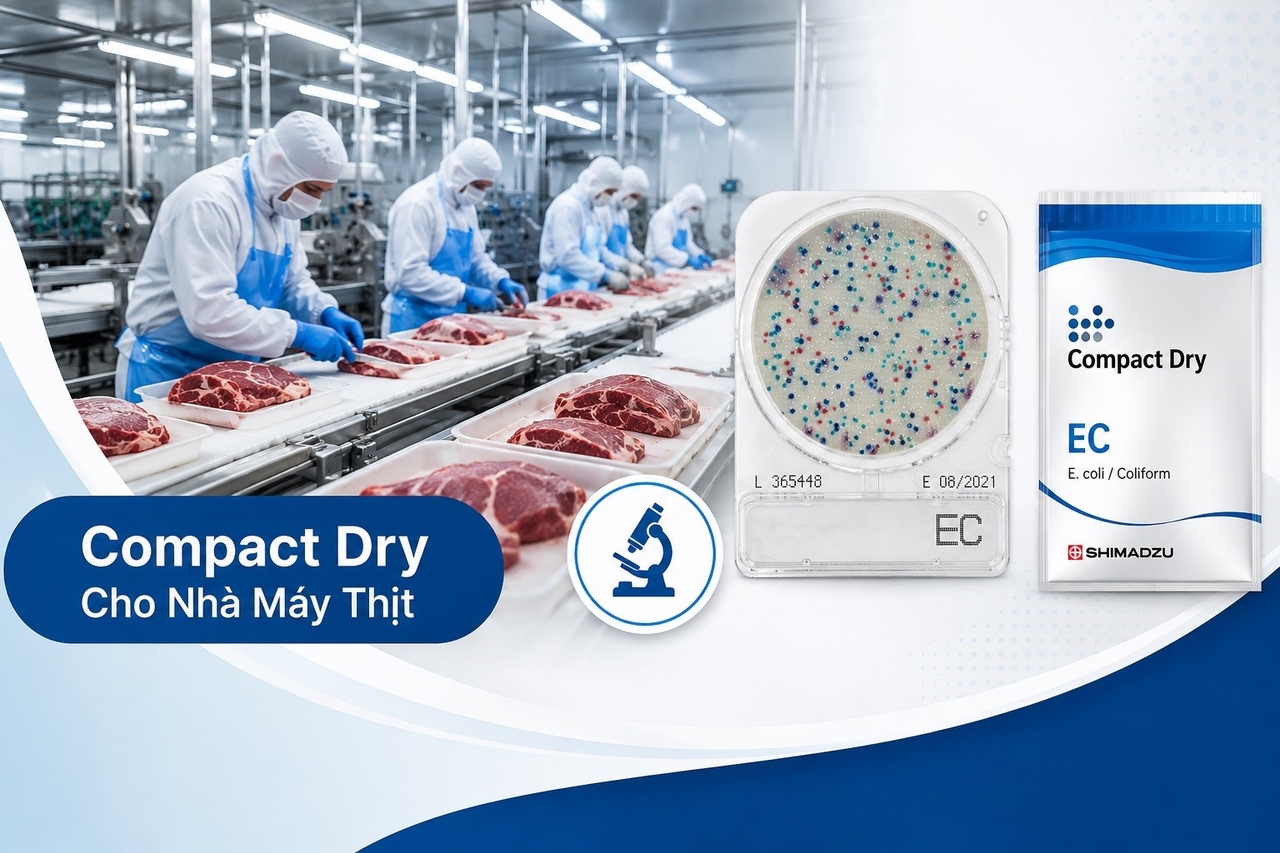
Why is microbiological testing important in the meat processing industry?
The meat processing industry is one of the fields with the most stringent food safety requirements. Meat is a nutrient-rich environment, very vulnerable to contamination by harmful microorganisms.
Microbiological parameters such as:
- Total aerobic bacteria (Total Plate Viable Count)
- Coliform
- E. coli
- Staphylococcus aureus
- Yeasts and molds
- Salmonella spp.
- Listeria monocytogenes
all need regular monitoring so that products meet domestic and international standards.
However, the traditional culture method usually takes a lot of time and labor, and requires a fully equipped laboratory.
Compact Dry culture plates
- Compact Dry is a dry microbiological culture medium developed by Shimadzu Diagnostics Corporation (Japan).
- Unlike the traditional agar pour plate method, Compact Dry already integrates:
- The culture medium
- The gelling agent
- The color indicator
- An automatic sample absorption system
- The user only needs to drop 1 mL of sample onto the plate; the medium self-diffuses and is ready for incubation.
- As a result, microbiological testing becomes simpler, faster, and more consistent.
The outstanding applications of Compact Dry culture plates in meat processing plants
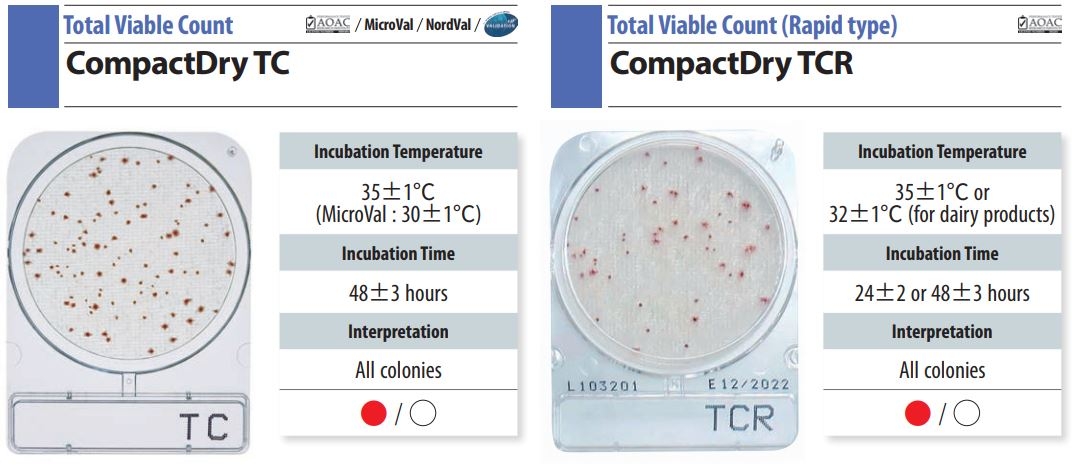
1. Testing the total aerobic count (TPC)
The total aerobic count is the parameter reflecting the general hygiene level of the raw material and the production process.
The Compact Dry TC Total Viable Count plate helps:
- Assess the quality of incoming raw materials
- Track the hygiene condition of the production line
- Control the final product before it leaves the factory
The colonies are displayed clearly, easy to count, and easy to record.
2. Monitoring Coliform and E. coli
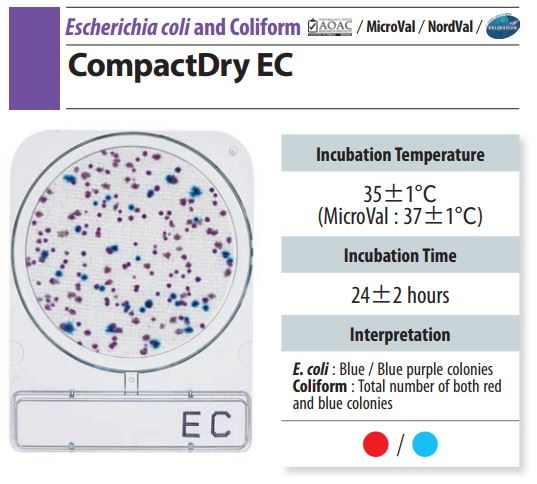
Coliform and E. coli are important indicators of the risk of fecal contamination or of poor hygiene conditions.
Compact Dry EC is widely used for:
- Testing fresh meat
- Frozen meat
- Processed meat
- Water used in the plant
Early detection helps the business rapidly fix the out-of-control points before they affect the product quality.
3. Testing for Staphylococcus aureus
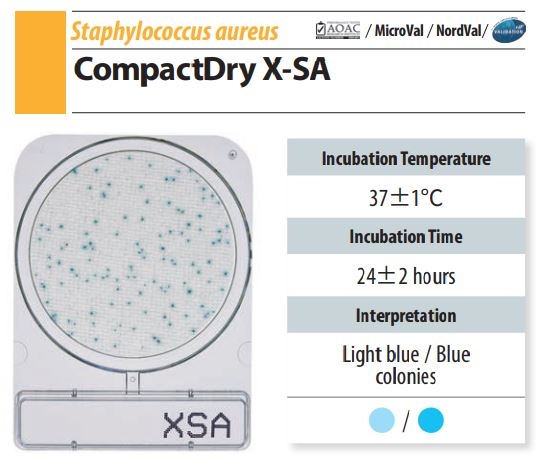
During meat processing, Staphylococcus aureus can be transmitted from production staff or the processing environment.
Compact Dry X-SA allows:
- Rapid detection of S. aureus bacteria
- Assessing personal hygiene efficiency
- Checking high-risk production areas
This is a useful tool in the plant's HACCP system.
4. Controlling yeasts and molds
Although less common in fresh meat, yeasts and molds can appear in:
- Sausages
- Smoked meat
- Dried meat
- Packaged products stored for long periods
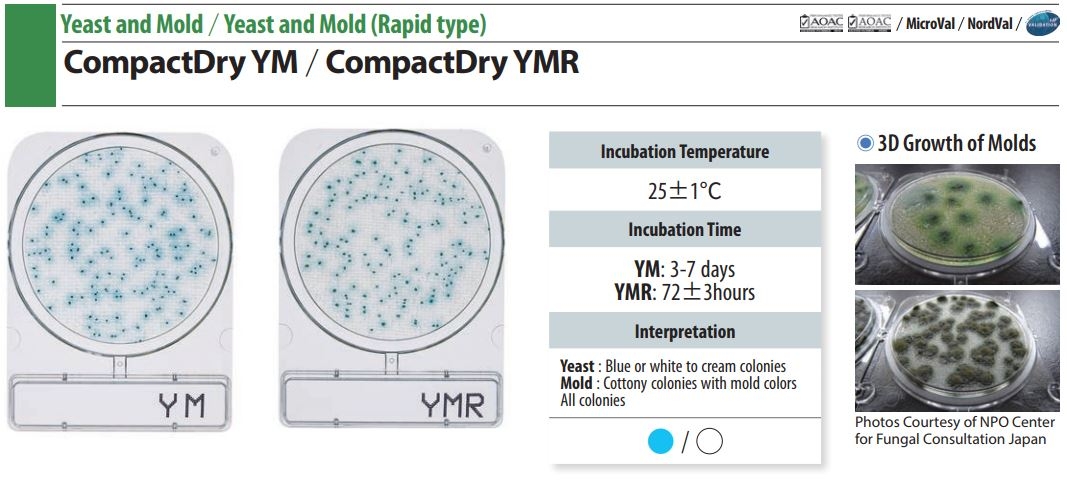
The Compact Dry YMR Yeast and Mold Rapid plate helps detect these risks quickly to ensure long-term product quality.
5. Testing the production environment
In addition to products, Compact Dry is also used to monitor:
- Processing table surfaces
- Knives and cutting boards
- Conveyor belts
- Packaging equipment
- Workers' hands
Through the swab or sterile gauze sampling method, the plant can build an environmental monitoring program as required by the standard.
The benefits of Compact Dry plates for meat processing plants
Saving operating time
No need for:
- Preparing media
- Autoclave sterilization
- Pouring agar plates
- Storing pre-mixed media
The technician only needs to drop the sample and incubate it.
Reducing the QC room operating costs
Compact Dry significantly reduces:
- The cost of culture media
- Labor costs
- Electricity for sterilization equipment
- Waste treatment costs
Especially suitable for plants handling large numbers of samples every day.
Consistent results
- Being industrially produced with stable quality, Compact Dry limits the error between medium lots.
- This increases the reliability of the testing data.
Saving laboratory space
- Compact Dry requires no separate medium preparation area, optimizing the QC room space.
- This is a great advantage for small and medium plants.
How does Compact Dry support the HACCP system?
In the HACCP system, regular microbiological monitoring is a mandatory requirement. Compact Dry supports:
- Tracking CCP and OPRP
- Verifying hygiene efficiency
- Assessing the production environment
- Controlling incoming raw materials
- Testing finished products before shipment
Thanks to its speed and convenience, the business can increase the sampling frequency without increasing costs significantly.
Conclusion
- In the context of increasingly strict food safety requirements, applying Compact Dry in meat processing plants is a practical and effective step.
- With the important parameters studied such as Total aerobic count, Coliform, E. coli, Staphylococcus aureus, yeasts and molds, Compact Dry helps businesses control quality faster and more proactively.