
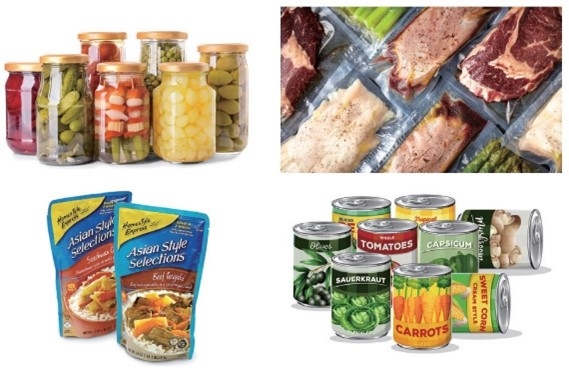
This bacterium is able to form spores and survives durably in unfavourable environmental conditions. In food, when C. botulinum encounters favourable conditions (such as a sealed anaerobic environment, an unsuitable temperature), the bacterium will grow, multiply and produce toxin, leading to the risk of botulinum poisoning (botulism) - a dangerous form of poisoning that can be fatal.

1. Clostridium botulinum in food
C. botulinum can exist as spores in nature, including in soil, water, plants and the surrounding environment. When these spores enter food and encounter favourable conditions, they will grow and produce toxin.
Foods that are prone to C. botulinum contamination include:
– Home-canned foods: Home-canned foods, especially those with a low acid content such as meat, fish, seafood, vegetables and fruit, are prone to contamination with C. botulinum spores if they are not properly sterilised.
– Low-acid foods: Foods with a pH above 4.6 (low acid), such as green vegetables, meat and seafood, are very easily contaminated. A low-acid environment is the ideal condition for C. botulinum to grow and produce toxin.
– Pre-processed foods: Some pre-processed products such as sausages, ham, smoked fish or improperly fermented pickled foods are prone to bacteria and botulinum toxin if the preservation process does not ensure temperature and anaerobic conditions.
– Honey: Honey may contain C. botulinum spores from the natural environment, and infants under 1 year old who eat honey are prone to botulinum poisoning because the infant's digestive system is not yet able to handle these spores.

2. Botulinum toxin and the mechanism of the disease
– The botulinum toxin produced by C. botulinum is a very potent neurotoxin. This toxin can block nerve activity by inhibiting the release of acetylcholine – the neurotransmitter that helps activate muscles. When acetylcholine is not released, muscles cannot contract, leading to flaccid paralysis.
The mechanism by which botulinum poisoning develops in food
– Anaerobic conditions: Clostridium botulinum only grows under anaerobic conditions (lack of oxygen). Therefore, this bacterium often grows vigorously in sealed canned foods or vacuum-packed foods.
– Temperature: The bacterium grows well at a temperature of 35-40°C. If food is stored at an unsuitable temperature, the bacterium will produce toxin.
– High pH: Botulinum toxin does not form in an acidic environment (pH < 4.6). Therefore, low-acid foods (high pH) have a higher risk of toxin contamination.
3. Symptoms of botulinum poisoning
– Symptoms of botulinum poisoning usually appear 12-36 hours after consuming food contaminated with botulinum toxin. However, the onset time can vary from a few hours to a few days, depending on the amount of toxin consumed and the individual constitution of each person.
The symptoms include:
– Facial muscle paralysis: Botulinum poisoning usually begins with symptoms affecting the head and face area, such as drooping eyelids, difficulty swallowing, difficulty speaking and facial muscle weakness.
– Muscle weakness and difficulty breathing: Botulinum toxin causes flaccid paralysis of the whole body, including the muscles of the arms, legs and especially the respiratory muscles, leading to respiratory failure.
– Dizziness, nausea and vomiting: Some people may experience dizziness, nausea and abdominal pain.
– Respiratory failure: In serious cases, botulinum poisoning can lead to respiratory failure and death if not treated promptly.

4. Preventing Clostridium botulinum in food
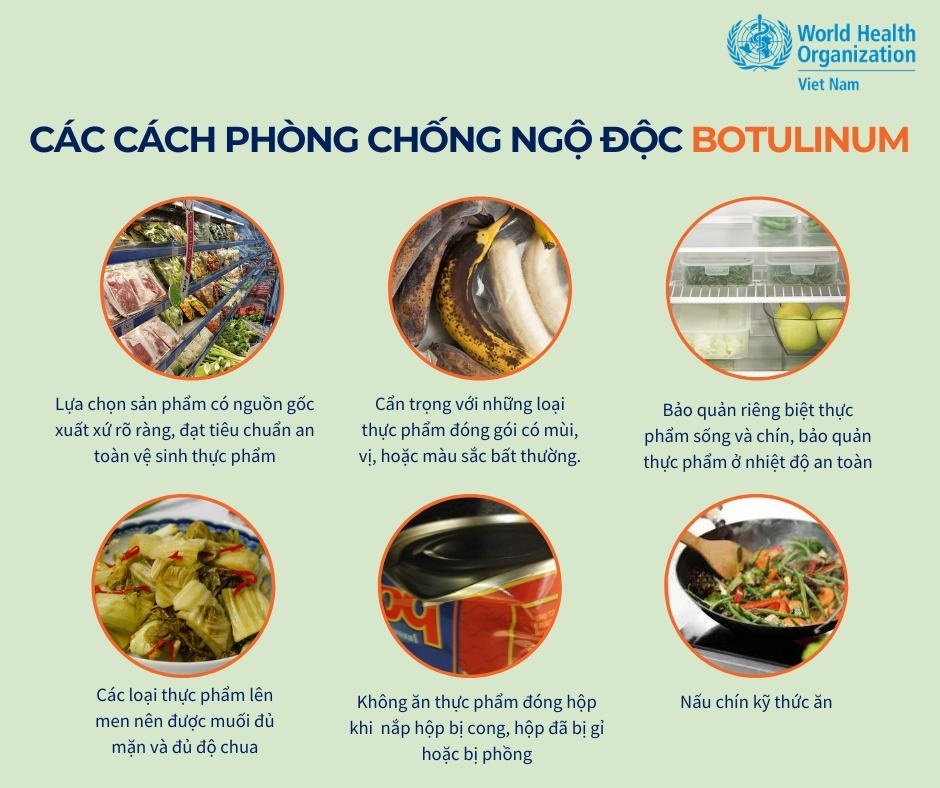
To reduce the risk of botulinum toxin contamination, the following preventive measures should be noted:
– Proper food canning: When canning food at home, high-temperature and high-pressure sterilisation (pressure cooker) must be used. This method reaches a temperature of 121°C, helping to kill C. botulinum spores, especially for low-acid foods.
– Boiling food: Before using canned or pre-processed foods, especially high-risk foods, they should be boiled for at least 10 minutes. Botulinum toxin can be destroyed at high temperatures, helping to reduce the risk of contamination.
– Proper food storage: Foods prone to C. botulinum contamination must be stored in a refrigerator at a temperature below 4°C. At this temperature, C. botulinum cannot grow and produce toxin.
– Inspecting canned foods: Do not use canned foods that are swollen, deformed or have an unpleasant smell. This is a sign that the food may have been contaminated with C. botulinum.
– Do not give honey to children under 1 year old: Honey may contain C. botulinum spores and can easily cause poisoning in infants, because the infant's digestive system is not yet strong enough to kill these spores.
5. Treatment of botulinum poisoning
Botulinum poisoning is an emergency that requires immediate medical intervention. The treatment methods include:
– Antitoxin injection: Antitoxin helps neutralise botulinum toxin in the blood, preventing the toxin from acting on the nervous system. Early antitoxin injection helps prevent serious complications.
– Respiratory support: If the patient has respiratory failure, ventilator support is needed to maintain breathing until the body recovers.
– Supportive medical care: During recovery, the patient may need functional rehabilitation therapies to restore muscle activity.
6. Testing methods for Clostridium botulinum
6.1. Biological method (Bioassay)
Animal testing
– Principle: This is a method of testing toxicity by injecting the sample into laboratory animals (usually mice) to detect the presence of botulinum toxin.
– Procedure: The food sample is processed and injected into mice. If botulinum toxin is present in the sample, the mice will show poisoning symptoms such as muscle paralysis, loss of reflexes and possibly death.
– Advantages: This is a sensitive method with high accuracy in detecting botulinum toxin.
– Disadvantages: This method requires a long time and causes suffering to the animals. In addition, it requires strict biosafety procedures and highly qualified personnel.
6.2. Culture method
– Principle: This method aims to isolate and culture Clostridium botulinum from the food sample, then identify the bacterium based on colony morphology and biochemical characteristics.
* Procedure:
– Sample preparation: The food sample is processed to create favourable conditions for C. botulinum to grow, then incubated under anaerobic conditions.
– Culturing: The sample is cultured on special media such as TPGY (Thioglycollate-Peptone-Glucose-Yeast Extract) medium to promote the growth of C. botulinum.
– Bacterial identification: After culturing, the bacterium is checked through biochemical reactions or Gram staining to confirm whether it is C. botulinum.
– Advantages: Helps isolate and accurately identify C. botulinum from food.
– Disadvantages: This method requires time (a few days to a few weeks), complex procedures and special anaerobic equipment.
6.3. Molecular biological method PCR (Polymerase Chain Reaction)
– Principle: PCR technology is used to detect the DNA of C. botulinum or the genes encoding botulinum toxin in the food sample.
* Procedure:
– Sample preparation: DNA is extracted from the processed food sample.
– PCR reaction: Specific primers are used to amplify the botulinum toxin gene, helping to determine the presence of the bacterium.
– Analysis of PCR products: The amplification product is examined by gel electrophoresis or analysed with a real-time PCR (qPCR) device to quantify the DNA of C. botulinum.
– Advantages: The PCR method has high sensitivity and specificity, gives fast results and helps identify the toxin even when the bacterium is no longer viable.
– Disadvantages: PCR technology requires modern equipment, high cost and requires operators with specialised expertise.
– See the PCR kit we offer here.
6.4. Mass spectrometry method (Mass Spectrometry)
– Principle: Mass spectrometry is used to identify and quantify botulinum toxin in the food sample.
* Procedure
– Toxin extraction: The food sample is processed to extract botulinum toxin.
– Mass spectrometry analysis: Botulinum toxin is analysed by LC-MS or GC-MS systems, helping to identify the toxin components present in the sample.
– Advantages: This method is accurate, has high sensitivity and can analyse very small amounts of toxin.
– Disadvantages: High cost, complex equipment and highly qualified technicians are required.
Clostridium botulinum in food is a major danger, but it can be completely prevented if we follow proper processing and storage measures. Canning, sterilisation and food storage must be carried out rigorously to ensure safety. If symptoms of botulinum poisoning appear after eating suspected food, one must go to a medical facility immediately for timely treatment, preventing dangerous life-threatening complications.
Testing for Clostridium botulinum in food is very important in preventing the risk of botulinum poisoning, especially for canned, pre-processed or low-acid foods. Each method has its own advantages and limitations, from traditional methods such as animal testing and bacterial culture to modern methods such as PCR, ELISA and mass spectrometry. In practice, combining the methods will bring greater accuracy and efficiency, helping to quickly and accurately determine the presence of C. botulinum and botulinum toxin in food, ensuring safety for consumers.