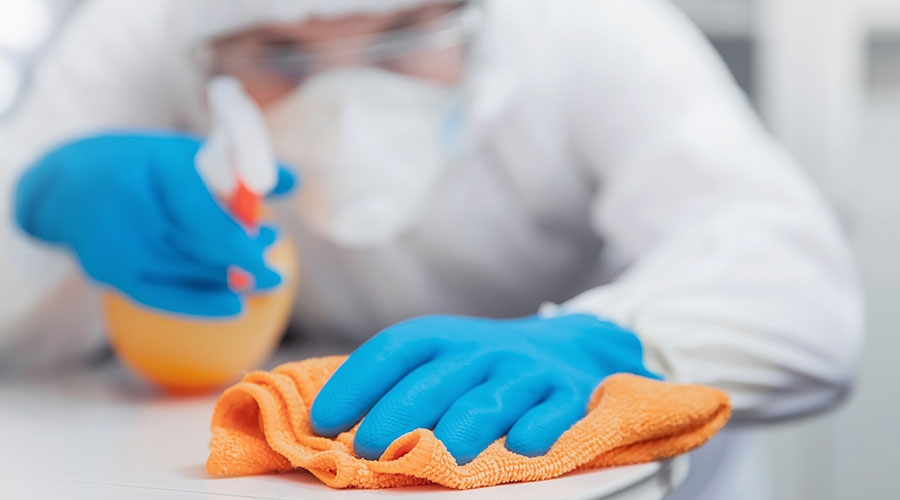
- Equipment surfaces that are shiny, no longer have any smell and have no visible stains are often considered “clean”.
- However, clean by eye does not mean microbiologically clean. This is one of the leading causes of contamination and cross-contamination during production.
Subjective hygiene assessment – a latent risk that is difficult to control
Most businesses today still check hygiene based on:
- Visual observation
- Touching with the hand to feel the cleanliness
- Subjective assessment after cleaning and disinfection
This method is fast but has many serious limitations:
- Microorganisms cannot be detected
- Remaining organic residues cannot be detected
- It depends entirely on the experience and awareness of staff
⚠️ Meanwhile, microorganisms and organic residues are factors that cannot be seen by the naked eye.
A surface that “looks clean” can still carry a risk of contamination
A surface that looks clean after cleaning can still have:
- Adhered food residues
- Protein, starch and fat that have not been completely removed
- Bacteria existing in crevices, hidden corners and equipment joints
These substances are precisely an ideal nutrient source for microorganisms to grow.
When the production line is back in operation, microorganisms easily:
- Spread to the raw materials
- Cause cross-contamination between stages
- Make the product fail to meet microbiological specifications
👉 This is the reason why many factories follow the correct hygiene procedure but still repeatedly have microbiological failures.
Limitations of traditional microbiological testing in daily monitoring
Microbiological testing is a necessary and mandatory method, however:
- Result turnaround time from 2–5 days
- It does not reflect the hygiene status at the moment of production
- It only detects the problem when the product is already completed
During the waiting time for results, the risk of contamination may already have occurred and spread throughout the entire production line.
👉 Therefore, relying on microbiological testing alone is not enough to control hygiene effectively.
An objective and immediate surface hygiene inspection solution is needed
To overcome the limitations of visual assessment, businesses need:
- A quantitative method that does not depend on subjectivity
- Fast results, immediately after cleaning
- Detection of organic residues and microbiological risk
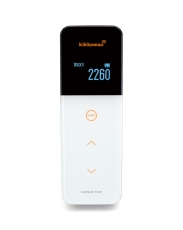
Surface hygiene inspection using ATP test is exactly the solution adopted by many modern factories in order to:
- Monitor hygiene effectiveness daily
- Detect the risk of contamination early
- Proactively prevent cross-contamination before production
👉 See the Lumitester Smart Kikkoman surface cleanliness inspection machine after cleaning here.
Conclusion
In quality control, looking clean by eye is only a necessary condition, not a sufficient condition. If organic residues and microorganisms remaining on surfaces cannot be controlled, businesses will always face the risk of:
- Contamination
- Cross-contamination
- Products that do not meet food safety standards
👉 It is time for businesses to move from “subjective assessment” to “data-driven control” to ensure product safety and quality.