- However, with the development of technology, rapid colony count methods have been introduced to optimize time, handling and operating costs.
- Among them, the Kikkoman Easy Plate is a solution that has drawn attention from many QC/QA departments, laboratories and food factories. What customers ask most often is:
+ Is Easy Plate accurate?
+ Can Easy Plate plates replace the traditional pour plate method?
+ Are Easy Plate results reliable for quality control?
- This article will help you compare in detail, analyze result correlation, and assess how realistically Easy Plate can replace the pour plate method in the l
1. Overview of the traditional pour plate method
1.1 What is the pour plate method?
The traditional pour plate method is a microbiological technique in which:
- The sample is diluted
- Mixed directly with hot agar medium (about 45–50 °C)
- Poured into a petri dish
- Incubated and colonies counted after the prescribed time
This method is specified in many ISO, TCVN and AOAC standards and is regarded as the "gold standard" in microbiological testing.
1.2 Advantages of the pour plate method
- High accuracy
- Widely recognized
- Suitable for many sample types
1.3 Limitations of the pour plate method
However, in actual operation, this method has many drawbacks:
- Many-step process, prone to error
- Requires medium preparation and autoclaving
- Takes a lot of time and labor
- High risk of cross-contamination
- Hard to standardize when sample volumes are large
👉 These limitations are exactly what has driven the demand for a replacement for the traditional pour plate method.
2. Kikkoman Easy Plate plates
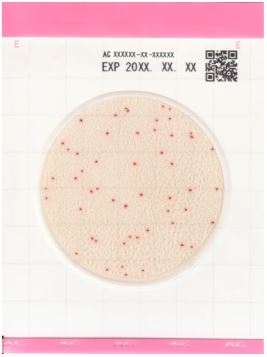
- Easy Plate is a ready-poured plate from Kikkoman (Japan), designed for rapid colony counting with simple handling, with no medium preparation needed.
* Standout features
- Pre-sterilized dry medium
- Just drop the sample in, no pouring of agar
- No need for a complex sterile inoculation cabinet
- Clear, easy-to-read results
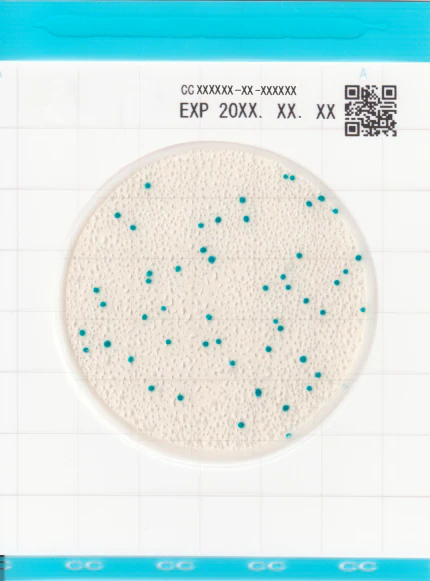
* Easy Plate currently comes in many plate lines such as:
- Easy Plate AC (Total aerobic bacteria)
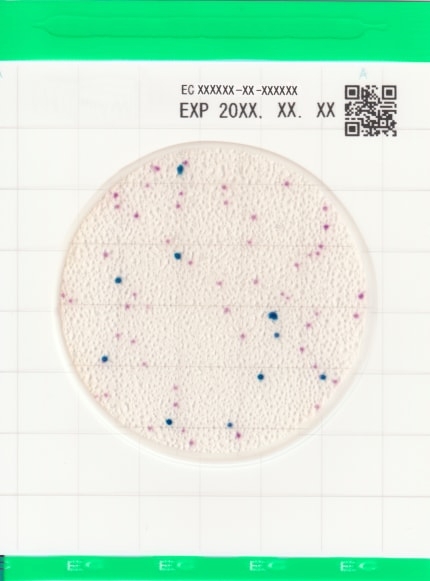
- Easy Plate EC (Coliform / E. coli)
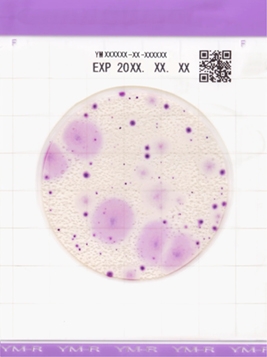
- Easy Plate YM-R (Yeast and mold)
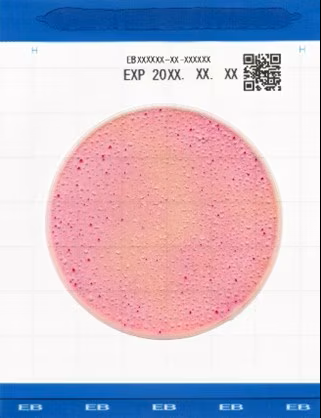
- Easy Plate EB (Enterobacteriaceae)
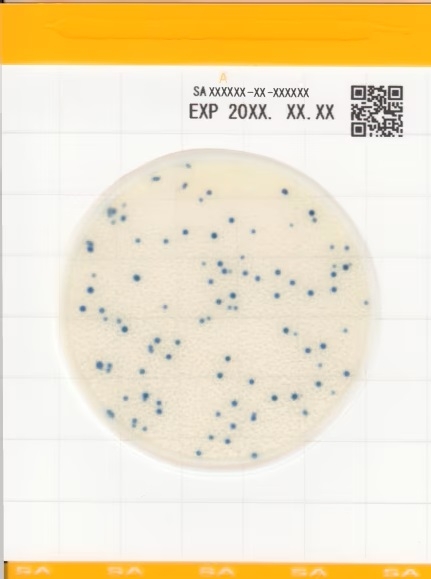
- Easy Plate SA (Staphylococcus aureus)
- Easy Plate AC-R (rapid total aerobic count)
3. Principle comparison: Easy Plate and the pour plate method
3.1 Principle of the pour plate method
- Microorganisms grow in the agar medium
- Colonies form inside and on the surface of the agar
3.2 Principle of Easy Plate plates
- The sample is absorbed into the dry medium layer
- Microorganisms grow, forming distinctively colored colonies
- Some Easy Plate lines have a color indicator that distinguishes the target microorganisms
👉 In essence, both methods are based on colony growth from living cells, differing only in how the medium is prepared and presented.
4. Is Easy Plate accurate? — Correlation analysis
4.1 Result correlation
Many studies and internal assessments show that:
- Colony counts from Easy Plate are highly correlated with the traditional pour plate method
- Deviations fall within the acceptable limits of microbiological testing
- Suitable for routine quality control
4.2 Stability and repeatability
- Easy Plate is produced under Kikkoman's standardized process
- Uniform medium, reducing errors from manual preparation
- High repeatability between test runs
👉 This resolves users' biggest "fear": worrying that results are inaccurate.
5. Can Easy Plate fully replace the pour plate method?
5.1 Cases where Easy Plate can replace it
Easy Plate can fully replace the traditional pour plate method in these cases:
- Periodic microbiological checks in the factory
- Quality control of raw materials and finished products
- QC/QA departments needing fast results
- Small and medium laboratories
- Internal checks under HACCP, ISO 22000
5.2 Cases where both methods should be used together
In some special cases:
- In-depth research
- Method validation
- Analyses where standards require the pour plate method
👉 Easy Plate is not meant to "eliminate" the traditional method completely, but serves as an effective replacement in real-world operations.
6. Saving time and cost — Easy Plate's big advantage
6.1 Time savings
- No medium preparation
- No autoclaving
- Shorter handling time
6.2 Lower operating costs
- Fewer laboratory staff
- Less auxiliary equipment
- Less medium consumption
6.3 Lower handling risk
- Fewer manual steps
- Limited cross-contamination
- Suitable for new staff
7. Real-world use of Easy Plate in laboratories
Today, Kikkoman Easy Plate plates are widely used in:
- Food factories
- Drinking water and beverage plants
- In-house QC departments
- Service testing laboratories
- Small and medium enterprises
Many organizations choose Easy Plate as their rapid colony count solution, alongside or replacing the pour plate method in routine testing.
8. So should you switch from pour plates to Easy Plate?
Easy Plate is not just a convenient product, it is also the inevitable trend in modern microbiological testing:
✔ Good result correlation
✔ High accuracy for quality control
✔ Time and cost savings
✔ Easy to use, easy to standardize
👉 For laboratories and factories aiming at efficiency — safety — speed, the Kikkoman Easy Plate can fully replace the traditional pour plate method in many real-world applications.