

1. Why an ATP measuring device is needed in the building hygiene management procedure
- Because of the spread of the new Corona virus strain (COVID-19), hand washing and environmental hygiene are being re-examined. Viruses and pathogenic microorganisms are known to persist on environmental surfaces for a certain period of time. Also, if the environmental surface is heavily soiled, the disinfection result will be poor; therefore, thorough cleaning reduces the risk of catching infectious diseases. The quality of cleaning can differ from person to person, which means it is necessary to visually confirm whether the cleaning was done correctly.
- I want to confirm whether the cleaning is being done according to objective principles.
- I want to confirm immediately whether the cleaning has been done correctly.
- I want to keep records of the cleaning quality and inform customers.
- Because of these needs, many customers are using the ATP cleaning test method (the A3 method) with the Lumitester Smart and LuciPac A3. The Lumitester Smart and LuciPac A3 not only show hygiene quality but also improve customer satisfaction and repeat rates by displaying the effective count of the cleaning.
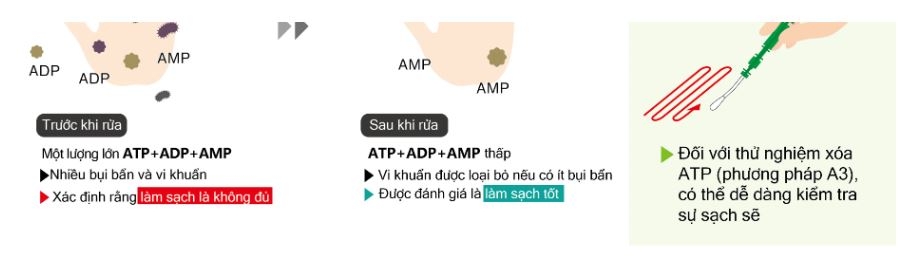
- ATP (Adenosine Triphosphate) is the energy molecule present in all living cells, including microorganisms, food, or organic dirt remaining after cleaning. Measuring ATP is the quick way to assess how clean a surface is. Kikkoman's ATP Lumitester Smart detects the presence of ATP within just 10 seconds, allowing the cleaning effectiveness to be assessed scientifically and quantitatively.
2. Introducing Kikkoman's ATP Lumitester Smart
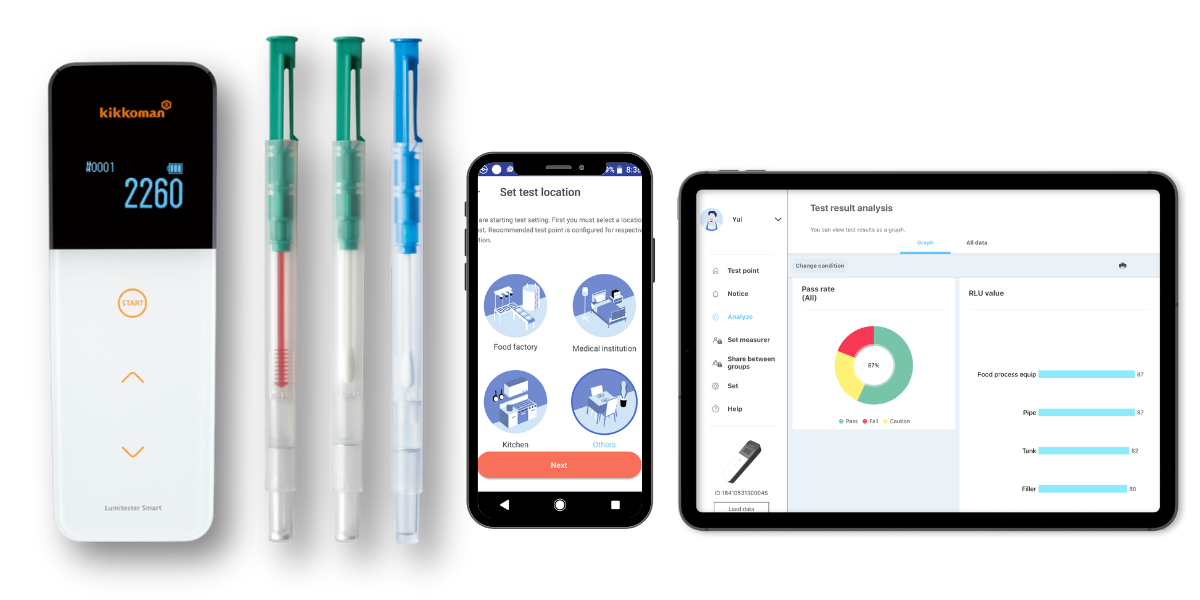
The Lumitester Smart is a new-generation ATP testing device with these outstanding features:
- Compact, portable design: easy to use in every part of the building.
- Bluetooth connection and an app: makes managing data and analyzing results easy.
- Sensitive sensor: measures ATP with high accuracy, needing only 10 seconds for a result.
- Real-time data storage and retrieval: convenient for tracking and writing reports.
3. The measurement points of the ATP cleaning test method (the A3 method)
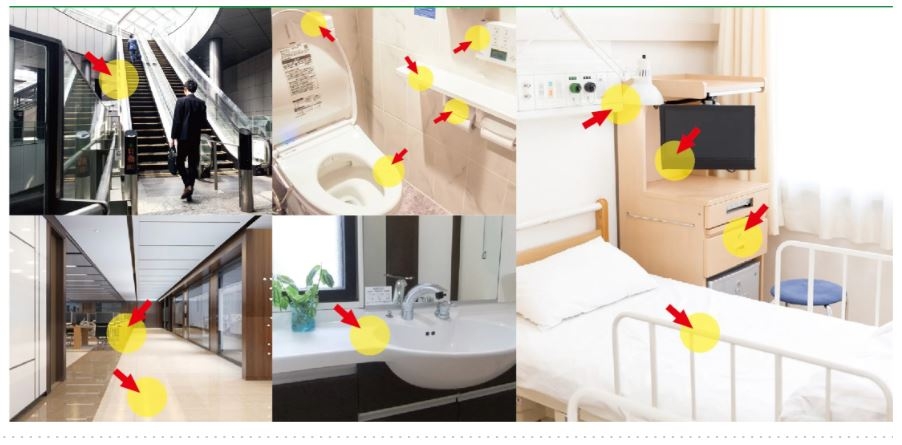
- Places frequently touched by many people, such as: door knobs, handles, handrails, switches, taps, desks, touch screens, and so on...
- Places that get dirty easily: around the toilets, washbasins, floors, and so on...
* Measurement points of the ATP cleaning test method (the A3 method)
* Below are some examples of touch screen panels
- A touch panel before cleaning was tested with the ATP cleaning test method (the A3 method) and the result was 14,771 RLU; after cleaning the result confirmed the measured value dropped to just 411 RLU. This result can immediately confirm the cleaning effectiveness on the spot, dispelling the worry about whether the hygiene was done well, which reduces pressure on cleaning staff and raises customer trust.
4. The building hygiene management procedure with the ATP Lumitester Smart
4.1. Draw up the hygiene assessment plan
- Identify the areas needing scheduled hygiene checks: restrooms, elevators, the main lobby, stair handrails, meeting rooms, the pantry areas...
- Set the checking frequency suited to each area.
- Set the RLU (Relative Light Unit — the luminous unit corresponding to the amount of ATP) standard for each kind of surface.
4.2. Train cleaning staff and test
- Instruct on how to use the Lumitester Smart device correctly.
- Train in how to collect samples with the LuciPac swab (which comes with the device).
- Communicate the RLU assessment standard for each area, for example as follows:
+ <100 RLU: the surface meets the hygiene standard.
+ 100–300 RLU: the surface needs recleaning.
+ 300 RLU: poor hygiene, needs a full re-clean.
4.3. Carry out the scheduled checks
- After cleaning is complete, use the sampling swab to wipe the surface.
- Insert the swab into the ATP Lumitester Smart.
- Record the measured result through the app or the device screen.
- Assess how clean the surface actually is against the standard.
4.4. Analyze the data and take improvement actions
- Consolidate data from the app by area, time, and responsible staff.
- Analyze trends and find the areas that frequently fail the standard.
- Propose ways to improve the hygiene procedures, or raise the checking frequency in the risky areas.
4.5. Report and assess the overall quality
- Produce periodic weekly/monthly/quarterly reports to send to the building management.
- Use the figures from the Lumitester as clear evidence of hygiene quality.
- Apply them as transparent, objective criteria for assessing cleaning contractors.
5. The benefits of integrating the Lumitester Smart into the building hygiene management procedure
- Transparency: in hygiene assessment, instead of a visual judgment.
- More effective training and supervision of cleaning staff.
- Saves the time and cost of dealing with hygiene-related risks.
- Raises the credibility and trust of residents, customers, and partners: in the working/living environment of the building.
Applying Kikkoman's ATP Lumitester Smart to the building hygiene management procedure is an important step forward in modern living and working environment control. It is an effective tool for raising service quality, preventing infection risks, and helping to build the image of a professional, clean, and safe building.
If customers need further technical support or advice on deploying ATP measuring devices in a building, please contact us for answers and timely support.