
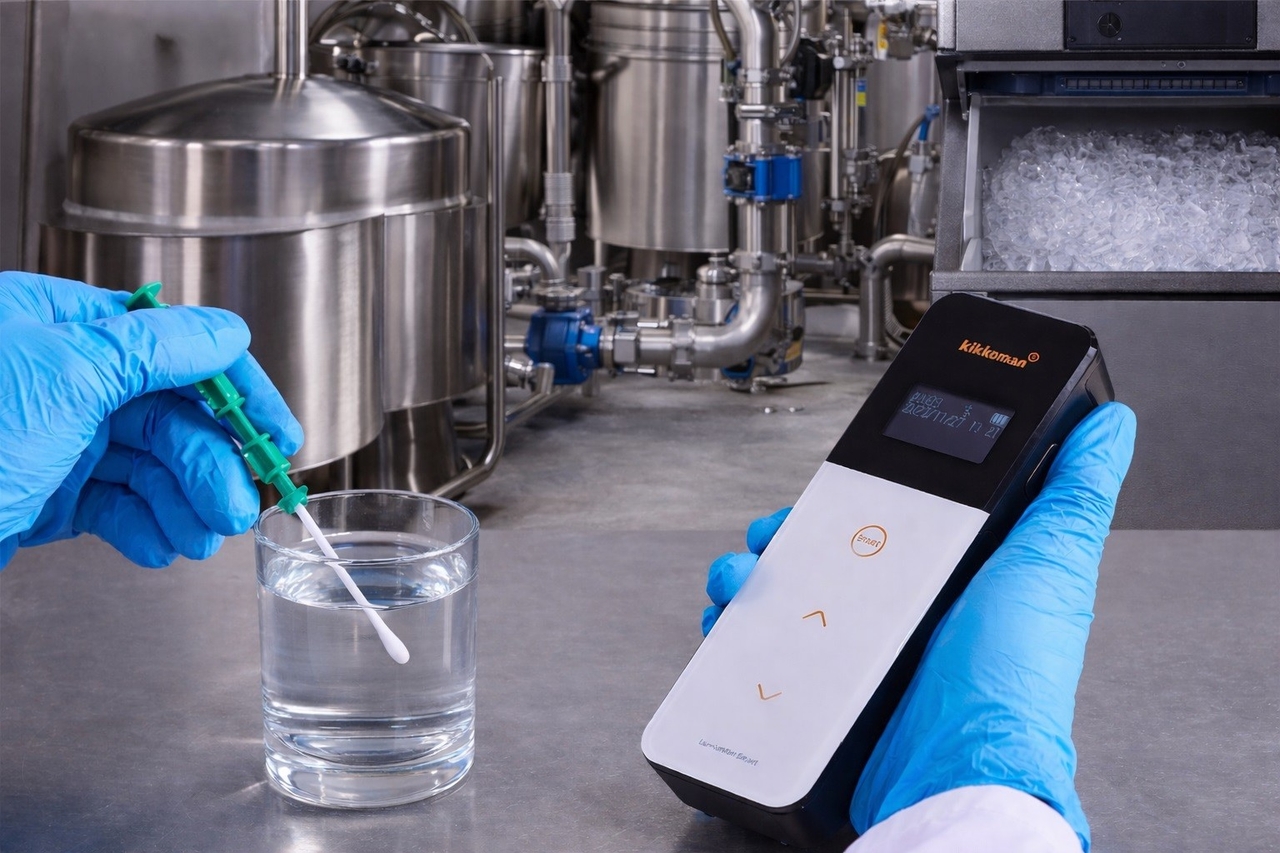
– However, assessing water cleanliness with traditional microbiological methods usually takes 24–72 hours to get results.
– Therefore, the ATP test is becoming a fast and effective control tool, helping businesses detect biological contamination in water
What is the ATP test?
ATP (Adenosine Triphosphate) is the energy-carrying molecule present in all living cells such as:
– Bacteria
– Yeasts
– Molds
– Organic cells
The ATP test method uses a bioluminescent reaction to measure the amount of ATP in a water sample. The result is displayed as RLU (Relative Light Units), reflecting the biological contamination level of the sample.
👉 The higher the RLU → the greater the contamination
* Advantages of the ATP test
– Fast results (10–30 seconds)
– Detects organic and microbial contamination
– Easy to use in the field
– Suited to routine hygiene control
Applying ATP testing in water hygiene control
ATP testing is widely applied to test many water types in the production system.
1. Controlling equipment washing water
In food or beverage factories, water is commonly used to:
– Wash machinery
– Wash conveyor belts
– Wash storage tanks
– Wash production utensils
Although the water may look clear and odorless, it can still contain:
– Protein
– Sugar
– Organic matter
– Microorganisms
The ATP test helps rapidly test wash water to ensure the water does not carry cross-contaminating substances into equipment.
2. Controlling CIP water in the equipment sanitation system
The CIP (Clean-In-Place) system is widely used in the industries of:
– Dairy processing
– Beverage manufacturing
– Beer brewing
– Liquid foods
After performing CIP, the business needs to confirm the system has been completely cleaned.
The ATP test can be used to:
– Check the final CIP rinse water
– Evaluate sanitizing effectiveness
– Detect leftover organic residues
Thanks to this, businesses can quickly verify the sanitary condition before starting production.
3. Controlling ice-making water
In many food industries, ice is used directly in products or during storage.
Examples:
– ice used in seafood
– ice in food processing
– ice in beverages
If the ice-making water source is contaminated with:
– microorganisms
– organic matter
– biofilm
then the ice can become a source of product contamination.
* The ATP test helps check
– the inlet water of the ice-making system
– water after treatment
– ice machine surfaces
Benefits of ATP testing in water control
Applying the ATP test brings many benefits to the quality management system:
1. Fast contamination detection
– No need to wait 24–48 hours for micro results; the ATP test gives results almost instantly.
2. Real-time hygiene monitoring
QC staff can:
– test directly on site
– verify sanitizing effectiveness right after cleaning
3. Preventing cross-contamination risks
The ATP test helps detect early:
– organic matter
– biofilm
– microorganisms
thereby reducing the risk of cross-contamination in production.
4. Optimizing the sanitation program
The business can use the ATP test to:
– evaluate the effectiveness of the sanitation process
– adjust CIP chemicals
– improve cleaning frequency
The ATP Test – a supporting tool for HACCP and hygiene management
The ATP test is now used by many businesses as a part of:
– HACCP
– GMP
– SSOP
– The food safety management system
This method does not completely replace microbiological testing, but it acts as a rapid monitoring tool, helping control hygiene more effectively during production.
Conclusion
Water plays an important role in many production stages. However, water that is visually clean does not mean it is microbiologically safe.
Applying the ATP test in water hygiene control to:
– equipment washing water
– CIP water
– ice-making water
helps businesses detect contamination fast, control hygiene effectively, and reduce food safety risks.
– The ATP test is becoming a modern hygiene monitoring tool, raising quality management effectiveness in the factory.