
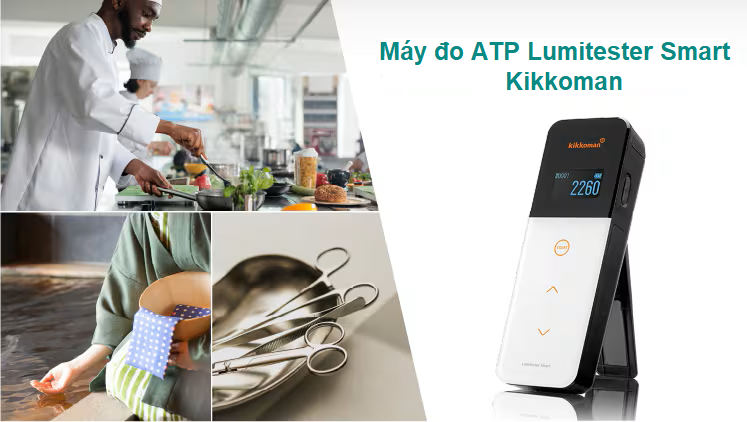
What is the ATP method?
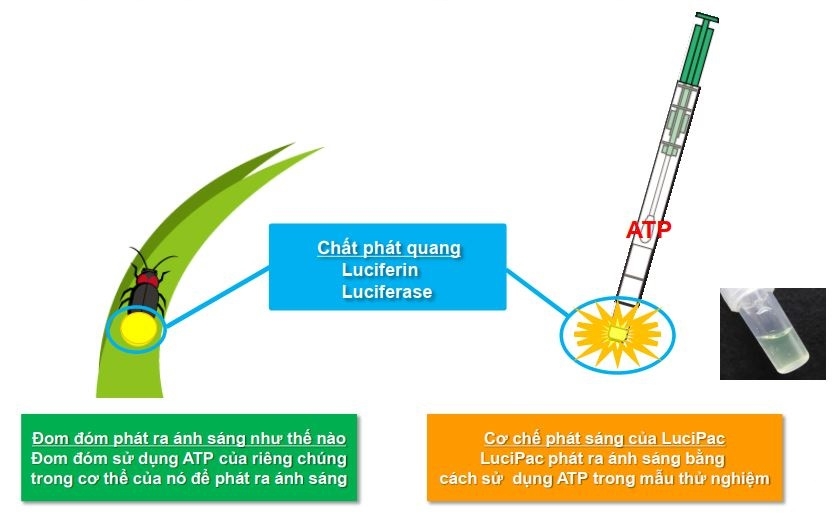
- The ATP method is based on detecting the presence of ATP – an energy molecule found in all living cells, including bacteria
- The chemical reaction between ATP and the luciferase enzyme (extracted from fireflies) produces light, and the amount of light is measured by an ATP meter. The emitted light intensity (expressed in RLU units – Relative Light Unit) is proportional to the amount of ATP on the surface.
Advantages of the ATP method
- Fast: results in only 10 seconds.
- Simple: easy to use, simple handling.
- Objective: gives a specific numeric value for easy assessment.
- Instant effectiveness: the sanitation process can be adjusted right away if the result fails.
ATP meters – a trusted cleanliness testing tool
The ATP measuring device is the key instrument in this method. Among the meters on the market, the Kikkoman Lumitester Smart ATP meter
- The Lumitester Smart is a handheld ATP meter developed by the Japanese company Kikkoman Biochemifa. It works by using a swab containing the luciferase enzyme, which reacts with ATP to produce light. The result is
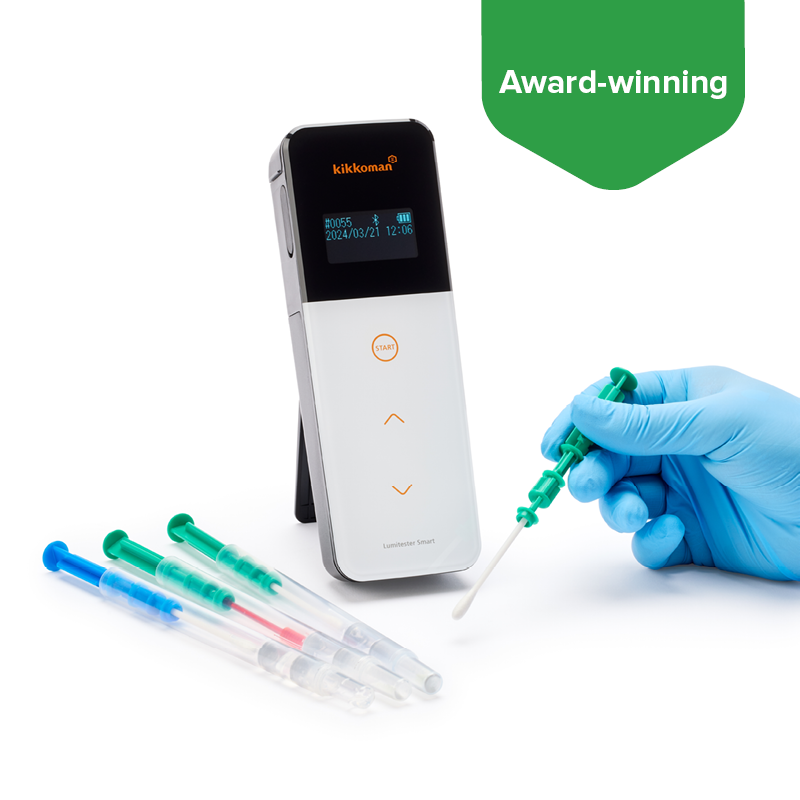
👉 Key features of the Kikkoman Lumitester Smart
- Accurate, repeatable results.
- Connects to smartphones through the “Lumitester Smart” app (downloadable from CH Play or the App Store).
- Compact design, easy to operate in the field.
- Data can be stored, analyzed and tracked as hygiene trends.
- Compliant with HACCP, GMP and ISO standards.
- The Lumitester Smart is not only an ATP meter for checking surface cleanliness after sanitation but can also rapidly test biological contamination in CIP water, RO water and water used in production. This is especially useful in the food industry, where piping systems, tanks and equipment are often cleaned
👉 Applications of this surface microbiology tester
- Food and beverage processing plants.
- Hospitals, clinics and sterile areas.
- Pharmaceutical and cosmetics plants.
- Industrial kitchens, restaurants and hotels.
- Industries requiring strict hygiene control.
👉 Extended applications of the Kikkoman Lumitester Smart ATP meter in food plants
- Testing equipment surface cleanliness: by swabbing over the surface to be evaluated after cleaning (machinery, work tables,
- Assessing CIP water quality (final rinse water after system cleaning) to ensure no biological or organic residue remains.
- Checking incoming RO water: to confirm that production water is free of microbial or residual organic contamination.
- Monitoring the effectiveness of routine sanitation cycles, thereby optimizing the cleaning process and saving chemicals, water and electricity.
- Connecting and storing assessment data on a mobile platform with cloud data storage, helping quality ma
👉 See the video introducing the Lumitester Smart and its workflow
Comparing the ATP method with traditional microbiological testing methods
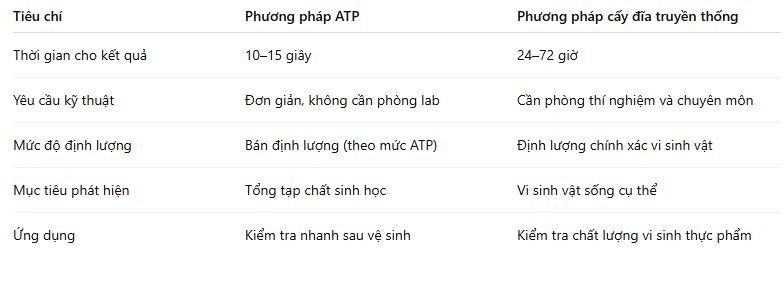
- The ATP method is a powerful tool for environmental hygiene control quickly and accurately. Applying devices such as the Kikkoman Lumitester Smart ATP meter not only helps businesses comply with safety standards but also proactively prevents cross-contamination risk and protects he
- For food plants, hospitals and food-service facilities, investing in an ATP meter for checking surface cleanliness after sanitation is an essential step to raise hygiene effectiveness, maintain customer trust and safeguard product quality.
- With its versatility in testing both equipment surfaces and sanitation water samples, the Lumitester Smart Kikkoman is the ideal choice for plants operating under the HACCP, ISO 22000, FSSC 22000 standards or other advanced quality management systems.
👉 See the article What is an ATP meter? Food safety hygiene monitoring with ATP