- However, traditional hygiene testing methods often take a long time to produce results, making it hard for businesses to detect and address contamination risks in a timely manner.
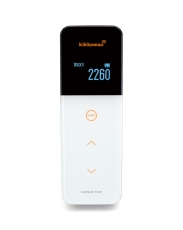
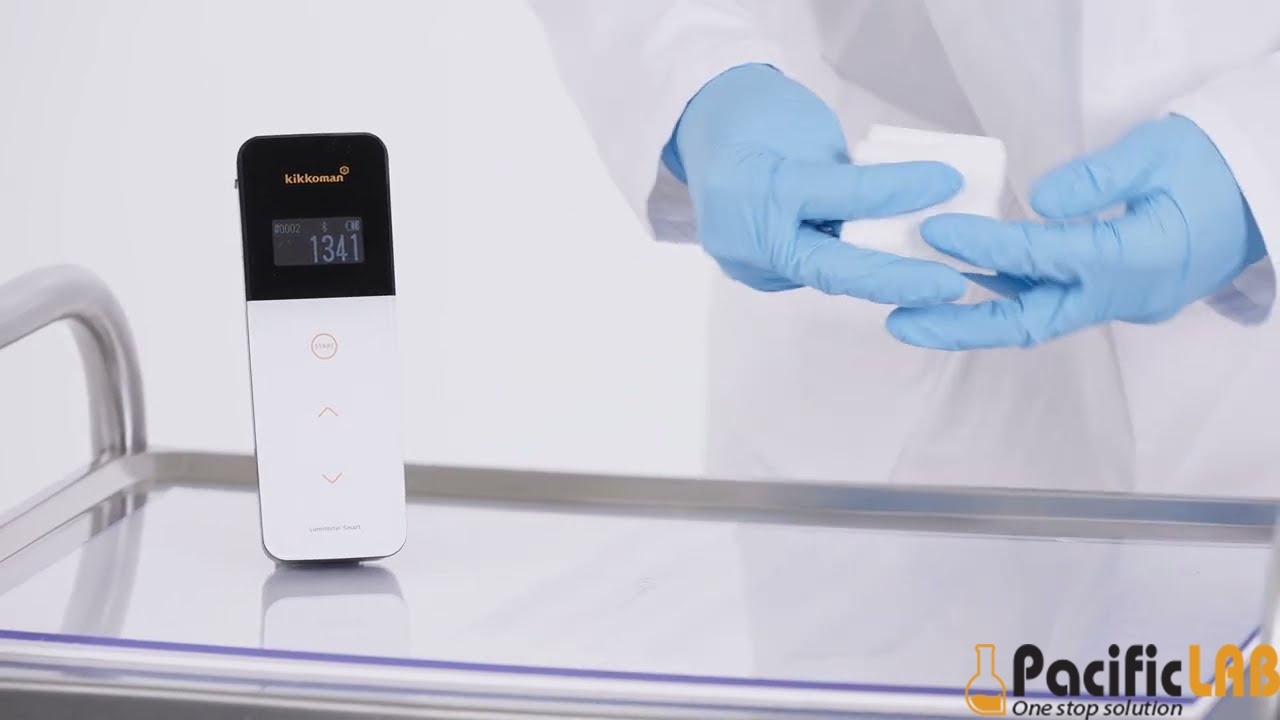
- Kikkoman's ATP Lumitester Smart is a rapid hygiene testing solution based on ATP bioluminescence technology, supporting businesses in assessing surface hygiene and monitoring cleaning effectiveness on site. With fast results, convenient operation and connectivity to data management systems, the device helps improve hygiene monitoring in food production and processing.
- If your business is looking for a Kikkoman ATP meter to optimize the hygiene control process, the ATP Lumitester Smart is a solution worth considering.
1. ATP Lumitester Smart
- ATP Lumitester Smart is an ATP measuring device developed by Kikkoman, used to quickly assess hygiene levels by detecting adenosine triphosphate (ATP) in the test sample.
- ATP is a molecule involved in energy metabolism and is present in living cells as well as many types of organic residues. Combined with a compatible ATP swab and the bioluminescence reaction, the device measures the emitted light intensity and reports the result in RLU (Relative Light Units).
- This result helps QC/QA staff assess hygiene conditions at the monitored points and identify areas that need re-cleaning.
- Unlike methods that rely on visual inspection alone, an ATP-based food hygiene testing device provides quantitative data to support decision-making in the hygiene process.
- Note: ATP testing does not fully replace microbial culture methods or specialized tests for identifying pathogenic microorganisms. ATP results should be used alongside a suitable hygiene monitoring program of your business.

2. Why should food businesses invest in a Kikkoman ATP meter?
Rapid detection of hygiene problems after cleaning
- A surface can look clean while still retaining organic residues. This is why visual inspection alone is not enough to assess cleaning effectiveness.
- With the ATP Lumitester Smart, staff can test food-contact surfaces, preparation tables, utensils, production equipment and other locations where organic residues may accumulate.
- Fast results help businesses identify non-conforming points early, so that re-cleaning can be carried out before production starts or before moving to the next step.
Shorter hygiene testing time
- In a production environment with many pieces of equipment and areas to monitor, testing time is an important factor.
- The Kikkoman ATP meter helps businesses quickly assess hygiene at the test point, reducing waiting time compared with processes that require microbial culture results.
- As a result, QC/QA teams can respond faster, supporting production schedules and improving daily hygiene control.
Standardizing the hygiene process with data
- An effective hygiene system needs clear acceptance criteria, tracking data and a defined process for handling non-conforming results.
- The ATP Lumitester Smart shifts hygiene assessment from subjective observation to data-driven measurement. Businesses can set acceptance thresholds for each area, track results and evaluate the effectiveness of cleaning processes.
- Building data over time also helps identify frequently failing locations, improving the cleaning process and staff training.
Supporting a food safety management system
- For businesses implementing or maintaining HACCP, ISO 22000 and other food safety management programs, hygiene monitoring is an important part of hazard control.
- An ATP monitoring system can be integrated into the internal hygiene monitoring program to support cleaning verification, trend tracking and record keeping for inspections.
- The device does not by itself guarantee HACCP or ISO 22000 certification. Effectiveness depends on how the process, acceptance criteria, records and related controls are established.
3. Key applications of the ATP Lumitester Smart
- The Kikkoman ATP meter can be considered for many environments that require hygiene control.
Food production and processing plants
- Hygiene checks on conveyors and food-contact surfaces.
- Monitoring preparation tables, utensils and processing equipment.
- Assessing cleaning effectiveness after each production shift.
- Testing locations at risk of ingredient or organic residue buildup.
Meat, seafood and dairy processing plants
- Supporting hygiene monitoring in preparation and processing areas.
- Testing equipment surfaces after cleaning.
- Monitoring hard-to-clean locations or those with crevices and hidden corners.
Restaurants, hotels and industrial kitchens
- Hygiene checks on kitchen preparation tables and utensils.
- Monitoring food preparation areas.
- Supporting staff training and standardizing shift-based hygiene processes.
QC/QA labs and quality control units
- Establishing a periodic hygiene testing program.
- Comparing results before and after cleaning.
- Helping evaluate the effectiveness of chemicals and cleaning processes when properly designed trials are carried out.
- Aggregating data to identify trends and improve monitoring activities.
4. The ATP Lumitester Smart and the benefits of an ATP monitoring system
Investing in an ATP meter is not only about getting fast test results. The greater value lies in bringing data into the company's hygiene management process.
A well-organized ATP monitoring system can support the following activities:
- Test: Collect samples at the locations defined in the monitoring plan.
- Assess: Compare results against the established acceptance thresholds and confirm conformity.
- Correct: Re-clean, investigate the cause and take corrective action when results do not pass.
- Track: Keep records to evaluate hygiene effectiveness by area, time or production shift.
- Improve: Use the data to identify weak points and optimize the cleaning process.
Depending on the configuration, software and supported connection methods, businesses can use the data for test records or to integrate hygiene control into quality management processes.
When choosing a device, businesses should confirm connectivity, data management functions and compatibility with existing systems according to the product version.
5. Factors to consider when choosing an ATP meter
There are many ATP hygiene testing devices on the market. To make a suitable choice, businesses should assess the following criteria:
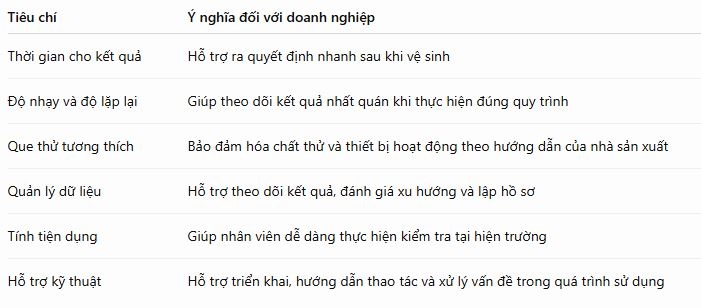
- The Kikkoman ATP Lumitester Smart is worth considering for businesses that want to run on-site ATP testing and make hygiene monitoring more consistent.
- When comparing devices, ask suppliers to confirm technical specifications, compatible swab types, storage conditions, calibration or device verification procedures as instructed, and data management capabilities.
6. Does investing in a Kikkoman ATP meter save costs?
The cost of a hygiene control process is not limited to cleaning chemicals or labor. Businesses must also account for waiting time for results, repeated testing, the need to re-clean and the losses that can arise when the cleaning process does not pass.
Using the ATP Lumitester Smart can help optimize costs through:
- Faster response time: Detecting early which locations need re-cleaning.
- Better use of staff: Supporting QC/QA staff in performing quick on-site tests.
- Improved cleaning effectiveness: Identifying frequently failing areas to adjust the process.
- Risk prevention support: Increasing the chance of detecting organic residues after cleaning before equipment goes back into use.
- Better management: Using data to evaluate the effectiveness of cleaning activities over time.
Actual savings depend on production scale, the number of test points, monitoring frequency and current operating costs. Businesses should evaluate the investment based on real data rather than comparing purchase prices alone.
7. Why learn more about Kikkoman's ATP Lumitester Smart?
When choosing a hygiene testing device, businesses need more than a meter. What matters is selecting a solution that fits the production process, has compatible consumables and comes with proper usage guidance.
When evaluating the ATP Lumitester Smart, businesses should prioritize:
- Genuine devices with clear technical information.
- Advice on choosing ATP swabs suitable for the application.
- Guidance on the sampling, measurement and result interpretation process.
- Help designing a hygiene monitoring program tailored to the plant.
For QC/QA teams, food plants, industrial kitchens and businesses standardizing their hygiene processes, choosing the right device from the start makes implementation smoother and avoids unnecessary costs.
8. Where to buy the ATP Lumitester Smart?
- If your business is looking for a Kikkoman ATP meter, a food hygiene testing device or an ATP monitoring system, contact us for advice tailored to your actual needs.
- We can help your business explore device configurations, compatible swabs, application testing and what to prepare before rolling out an ATP monitoring system.
- Contact us now for advice on the ATP Lumitester Smart:
- Advice on choosing a device suitable for your plant, QC/QA lab or food processing facility.
- Learn about consumables and compatible accessories.
- Discuss hygiene testing needs, the number of sampling points and the implementation plan.
- Receive pricing information and supply conditions.
- ATP Lumitester Smart – A rapid hygiene testing solution that supports better food safety management.
- Don't wait for problems to arise before evaluating cleaning effectiveness. Act today to build an ATP monitoring system to strengthen control, standardize processes and protect your product quality.
- See the ATP Lumitester Smart products we supply here.
PACIFICLAB CO., LTD
Office: No. 28 Street No. 20, Him Lam Residential Area, Tan Hung Ward, Ho Chi Minh City
Contact: Mr. Tien 0972 598 642 or email: xuantien@pacificlab.vn