1. Why does honey contain antibiotics?
- Both the bees and the plants from which the bees collect nectar may have been treated with antibiotics. In this way, antibiotic residues can also be found in honey.
- Antibiotic exposure is a major issue in global honey trade. Antibiotic residues are frequently detected in honey – sometimes at alarming levels. So the question is whether honey contains antibiotics and how antibiotics enter honey.
- First, bee diseases such as American foulbrood and varroasis can be treated with antibiotics. In addition, antibiotics can be used to treat plant diseases such as fire blight. By collecting nectar from treated plants, antibiotic residues also enter honey.
- Due to the potential risks to health, the use of antibiotics in beekeeping is generally prohibited in the EU. Except for streptomycin, no maximum residue limit has been established (no intake). Accordingly, honey originating from Europe is rarely contaminated with antibiotics.
- However, the use of antibiotics is legal in some other countries, including South America, which produces most of the global honey supply. Therefore, checking the relevant residues, especially for imported honey, is quite important.
2. Which parameters do test analyses in honey usually include?
- Authenticity (for example enzymes and various sugars)
- Quality check parameters (for example water content, sugar and acid)
- Botanical origin
- Genetically modified organisms
- Microbial. For example: total aerobic microbial count, bacteria, yeast and mold)
- Pesticides
- Bee repellents
- In particular antibiotic residues in honey
The parameters relevant to antibiotic residues are Streptomycin, Chloramphenicol and Tetracycline. For all three of these analytes, R-Biopharm test kits are available. The tests for Streptomycin and Chloramphenicol have recently been revised and now provide a simplified sample preparation and test implementation process as well as improved values for sensitivity, recovery and detection limits.
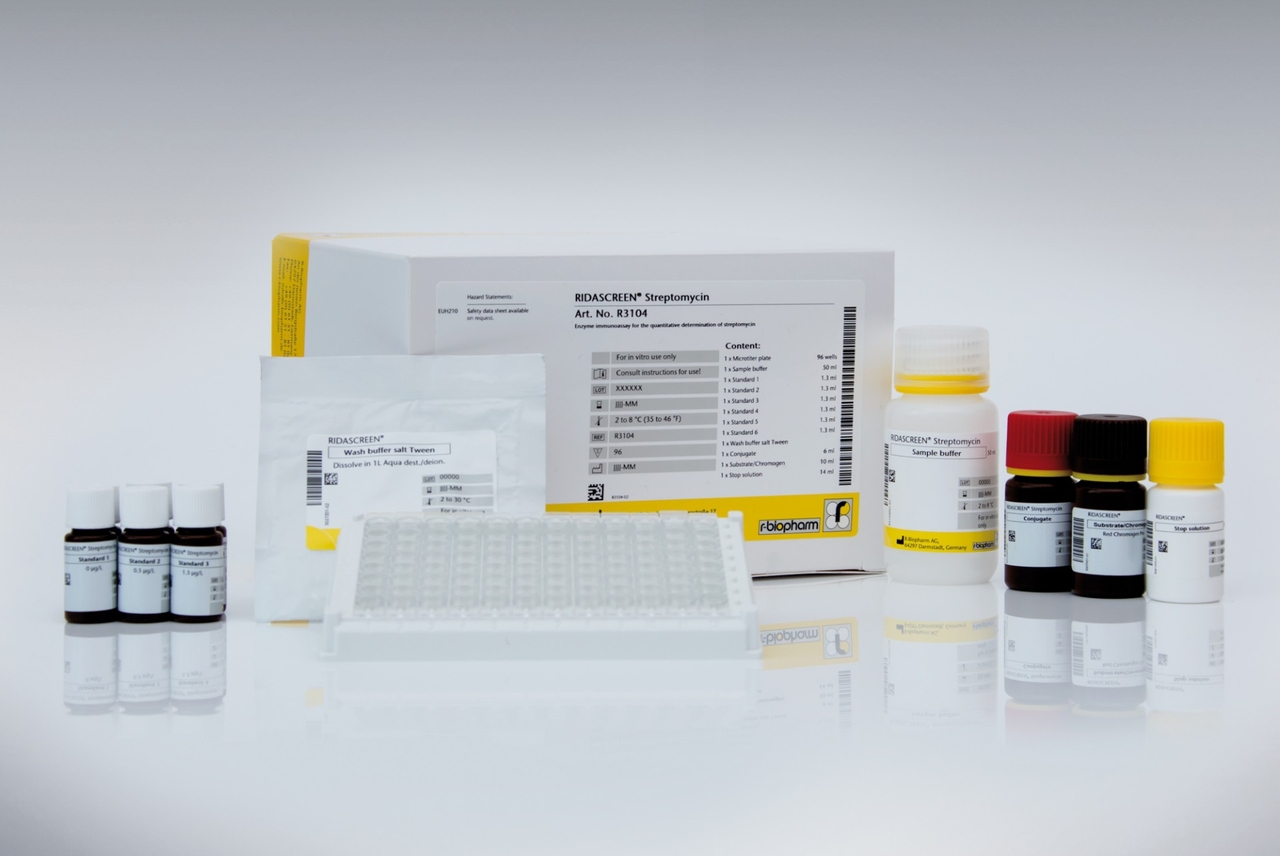
* R3104: RIDASCREEN® Streptomycin
- Ready-to-use reagents
- Reduced incubation time to only 45 minutes
- Less pipetting through pre-functionalized microtiter wells
- Detection limit of 2 μg/kg
- For details of the Elisa Streptomycin test kit see here.
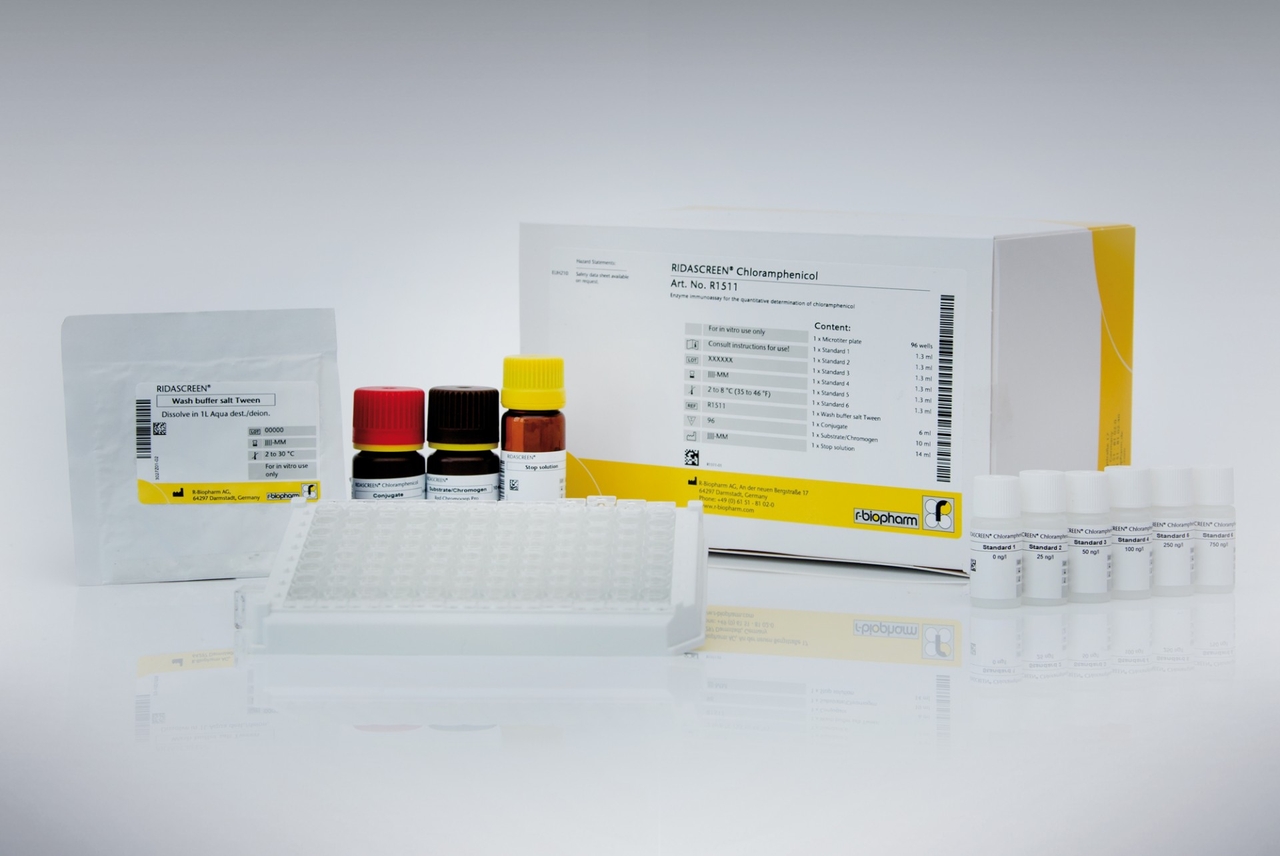
* R1511: RIDASCREEN® Chloramphenicol
- Simple sample preparation without IAC or SPE
- Ready-to-use reagents
- Less pipetting through pre-functionalized microtiter wells
- Detection limit below MRPL
- For details of the Elisa Cloramphenicol test kit see here.
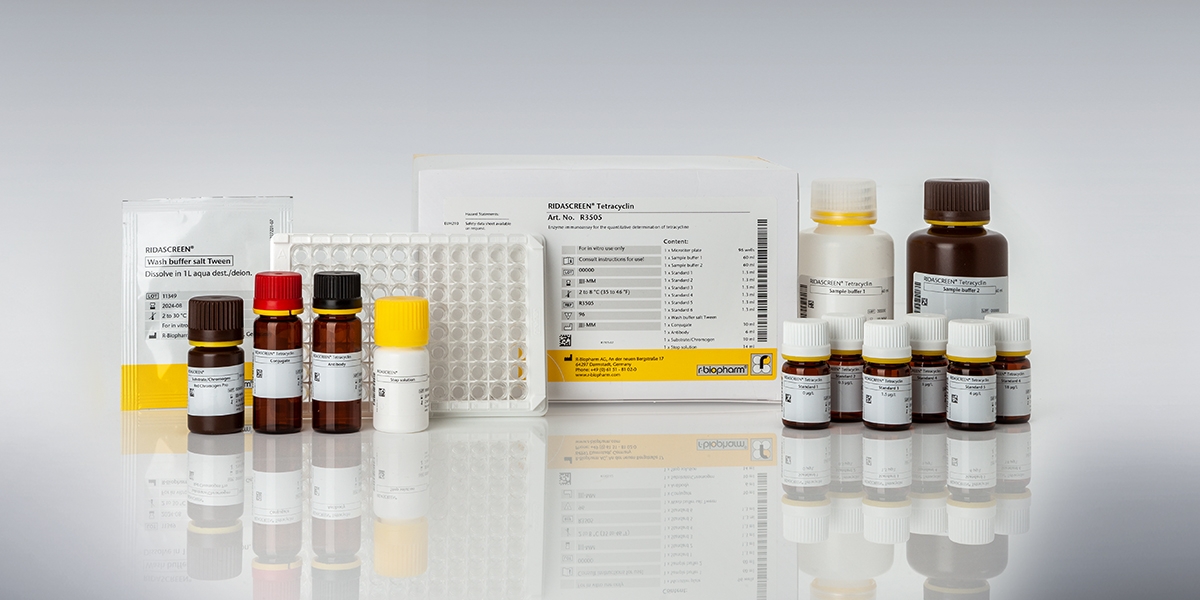
* R3505: RIDASCREEN® Tetracycline
- Simple sample preparation
- Ready-to-use reagents (concentrated standard)
- Detection limit of about 3,7 μg/kg
- For details of the Elisa Tetracyline test kit see here.
Evaluation is performed with an ELISA reader and RIDA®SOFT Win.net software.