
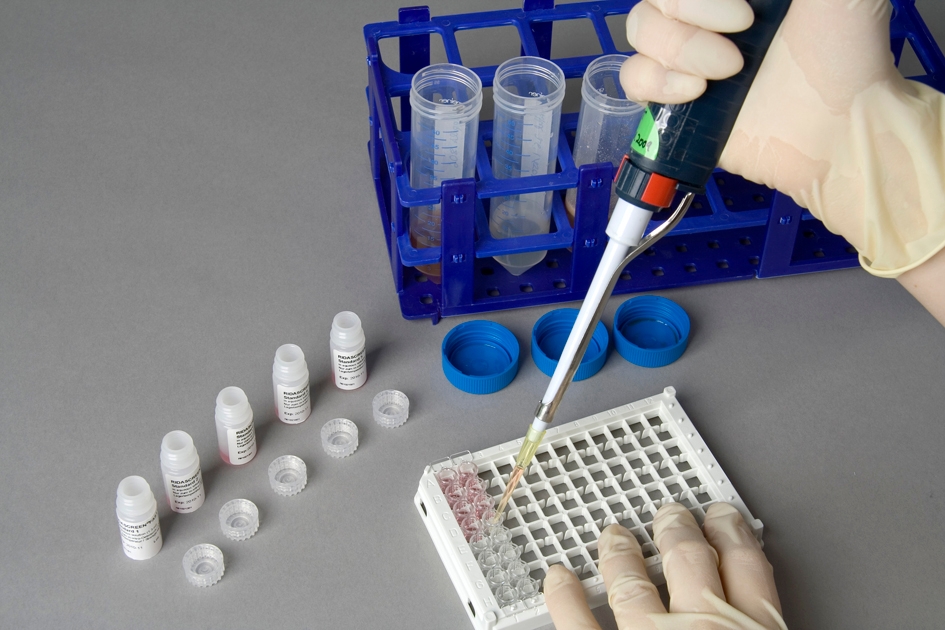
The ELISA (Enzyme-Linked Immunosorbent Assay) technique is a technique that helps detect and accurately quantify allergenic proteins. Below is the basic process of using the ELISA technique to test allergens in food with R-Biopharm kits.
1. Sample preparation
– Grinding the sample: The food sample needs to be ground finely to achieve homogeneity.
– Weighing the sample: Weigh an accurate amount of sample according to the instructions of the ELISA kit (usually 1-5g, depending on the kit type and the food).
– Extracting allergens: Add the extraction buffer to the weighed sample. This extraction buffer helps separate the allergenic proteins from the sample.
– Shaking or stirring: To ensure the allergens are fully extracted, the solution needs to be stirred or shaken evenly for a certain period of time (usually 10-30 minutes).
– Filtering or centrifuging: After extraction, the mixture is filtered through a filter membrane or centrifuged to remove residue and impurities. The filtrate obtained is used for the subsequent analysis steps.
2. Diluting the sample
The extracted sample may then need to be diluted at an appropriate ratio with the dilution buffer supplied by R-Biopharm, depending on the concentration of the allergen in the sample.
3. Preparing the ELISA plate
– ELISA plate: The wells of the ELISA plate are coated with antibodies specific to the allergen being tested (for example: gluten, peanut, milk, egg, almond, or soy).
– Adding standard solutions: Prepare standard solutions containing allergens at known concentrations and add them to the standard wells to create the standard curve.
– Adding the extracted sample: Add the diluted extract to the remaining wells of the ELISA plate
4. Incubating the sample
First incubation: After adding the sample and the standard solutions, the ELISA plate is incubated for the specified period of time (usually 30 minutes to 1 hour) at room temperature or in an incubator. During this time, the allergens (if present) will bind to the antibodies on the wells of the ELISA plate.
5. Washing the plate
After the incubation process is completed, the ELISA plate is washed with wash buffer to remove unbound components. This washing step is performed several times (usually 3 to 5 times) to ensure that only the allergenic proteins bound to the antibodies remain in the wells.
6. Adding the conjugate enzyme and further incubation
– Adding the conjugate enzyme: Add the conjugate enzyme solution containing an enzyme (usually peroxidase) linked to a secondary antibody, to detect the antigen (allergen protein)-antibody complex.
– Second incubation: The ELISA plate continues to be incubated for a certain period of time (usually 15-30 minutes) to allow the enzyme conjugate to bind.
7. Adding the substrate
– After completing the second incubation, add the substrate solution to the wells of the ELISA plate. The substrate will react with the conjugate enzyme and produce a colour (usually blue).
– Third incubation: Continue incubating the plate for a short period of time so that the colour reaction is complete.
8. Stopping the reaction
Adding the stop solution: Once the colour reaches its maximum level, the stop solution (usually an acid) is added to the wells to stop the enzyme reaction, turning the colour from blue to yellow.
9. Reading the results
– Reading the optical density (OD): Use an ELISA reader to measure the optical density (Optical Density - OD) of the wells at a wavelength of 450 nm (or 405 nm depending on the kit instructions).
– Comparing with the standard curve: The OD value of the sample is compared with the standard curve to determine the allergen concentration in the sample.
10. Analysis and reporting
– Calculating the allergen concentration: Based on the OD value obtained and the standard curve, calculate the allergen concentration in the sample.
– Reporting the results: Prepare a report and compare the results with the safety limits for allergens in food.
*Common allergens that can be tested with R-Biopharm ELISA kits:
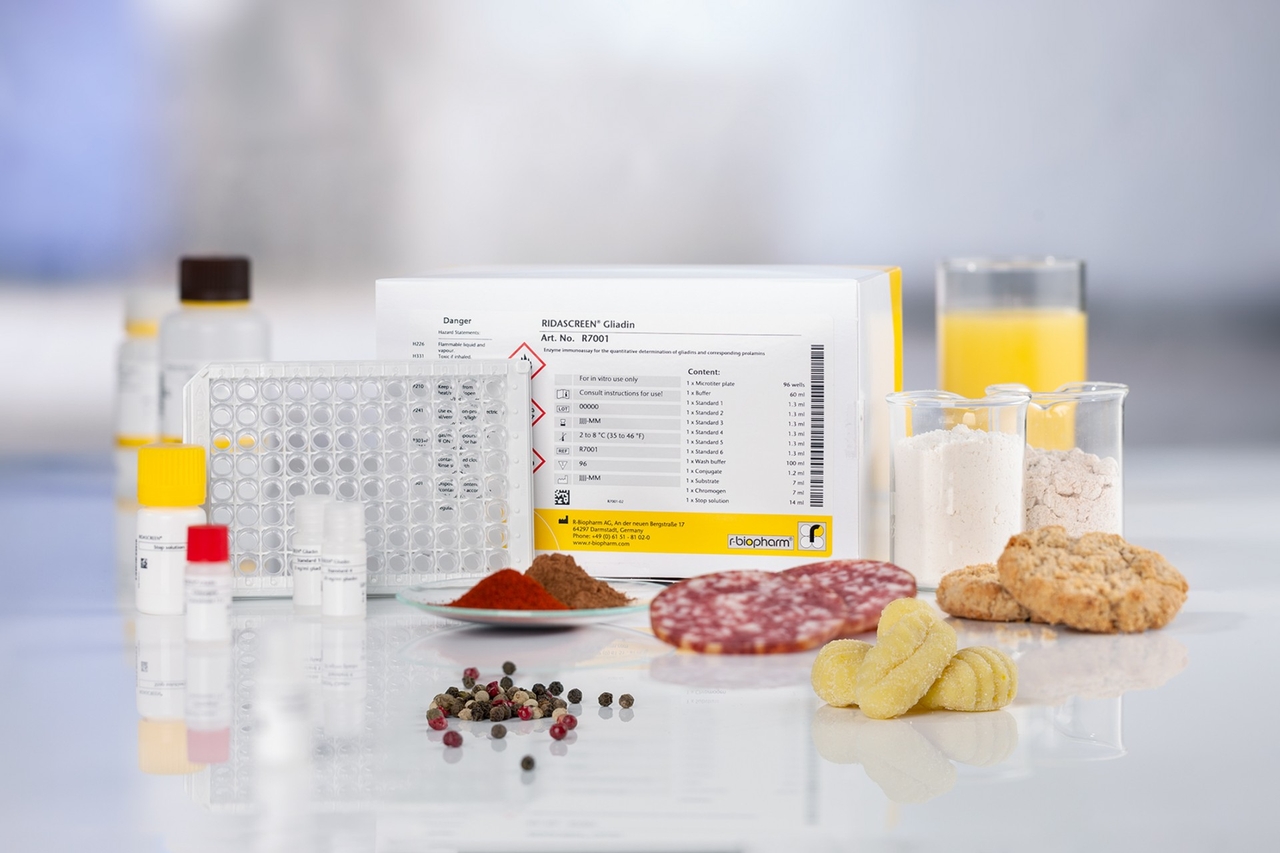
– Gluten/Gliadin: Tested in cereal products such as wheat.
– Milk and Casein: Tests for lactose and milk proteins.
– Egg: Protein from eggs.
– Peanuts and tree nuts: Especially important for people allergic to peanuts or nuts such as almonds and walnuts.
– Soy: Tests soy products.
– Fish and seafood: Protein in fish and shellfish (such as shrimp and crab).
* Notes when performing the ELISA test procedure for allergens:
– The instructions for use of each ELISA kit must be strictly followed.
– Ensure utensils and equipment are sanitized to avoid cross-contamination between samples.
– Perform all washing and incubation steps for the correct duration to ensure the accuracy of the results.
The ELISA method from R-Biopharm provides a quick and accurate way to detect allergens in food, meeting food safety standards and protecting consumers from dangerous allergic reactions. Please contact us for advice on the ELISA testing solution that suits your needs!