
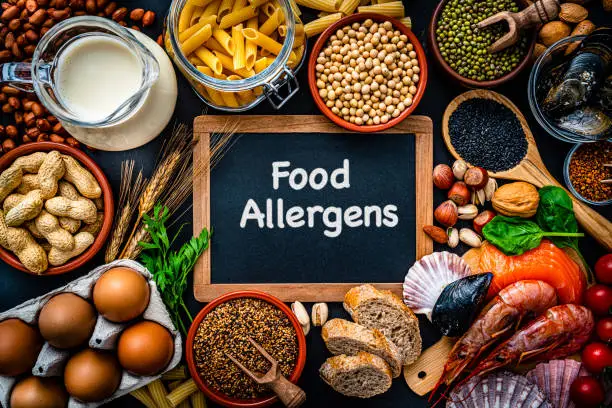
1. Identify and assess allergen risks
- Build the allergen list: list the common allergens such as milk, peanuts, tree nuts, wheat, soybeans, fish, crustacean shellfish, eggs, and so on.
- Assess raw material sources: check incoming materials and suppliers to identify potentially allergenic ingredients.
- Assess cross-contamination risk: consider the risk of contamination from production areas, equipment, tools, or during transport and storage.

2. Establish policies and working instructions
- Allergen policy: set out a clear policy for controlling and labeling allergens.
- Working procedure instructions: define specific procedures for handling, storing, and labeling products containing allergens.
3. Manage materials and products
- Segregated storage: store allergenic ingredients in a separate area, clearly labeled.
- Label materials: state the allergens clearly on raw material packaging and the final product.
- Manage production: schedule production sensibly to reduce the risk of cross-contamination (produce allergen-free products first).
4. Cleaning and training
- Cleaning procedures: make sure equipment, tools, and production areas are cleaned between production batches to remove the risk of cross-contamination.
- Staff training: run training sessions on allergen management, recognition, and emergency response when an incident occurs.
5. Product labeling
- Accurate labeling: make sure allergens are clearly stated in the product's ingredients and comply with legal requirements.
- Additional warnings: if the product may be cross-contaminated, a warning label such as "This product may contain…"
6. Checking and monitoring
- Periodic checks: carry out regular reviews of the management procedure and the products to make sure they comply.
- Materials monitoring: assess suppliers' quality and compliance regarding allergens.
7. Incident response
- Emergency handling: define the procedure to follow when an unlabeled allergen is found or a product is cross-contaminated.
- Product recall: plan to recall products quickly when a risk to consumer health is detected.
8. Continuous improvement
- Evaluate how effective the procedure is: periodically review and improve the allergen management procedure based on practical experience and new legal requirements.
- Customer feedback: gather feedback from consumers to improve quality and reduce risk.
The allergen management procedure can be adjusted to fit each production model and the legal requirements in Vietnam, or to fit the requirements of the EU or North American markets. If you need more details or specific documentation on allergens, please contact us to be provided with a food allergen control solution that suits your production conditions!