1. What is Aflatoxin M1
- Aflatoxin M1 is a mycotoxin (mold toxin) produced by the metabolism of Aflatoxin B1 in the animal liver. It occurs mainly in milk and dairy products and can persist in meat if the animals received feed contaminated with Aflatoxin B1.
* The harm of Aflatoxin M1
- Causes liver cancer: Aflatoxin M1 is classified as a Group 1 carcinogen by IARC (the International Agency for Research on Cancer)
- Causes genetic mutations and affects the immune system.
- Risk of acute toxicity when large amounts are consumed.
- Affects infants through contaminated breast milk or infant formula.
2. Test methods for the Aflatoxin M1 toxin
Because of how dangerous Aflatoxin M1 is, many testing methods have been developed to keep food and fe
2.1. High-performance liquid chromatography (HPLC)
- HPLC is the most common and most reliable method for detecting Aflatoxin M1 with high sensitivity.
* Working principle
- The food sample is extracted for Aflatoxin M1 with a suitable solvent.
- The sample is cleaned up using an immunoaffinity column or SPE (Solid-Phase Extraction).
- Analysis is done by HPLC with a fluorescence detector (FLD) or HPLC-MS/MS.
- Quantification compares the sample's peak areas against an Aflatoxin M1 standard.
* Advantages
- High sensitivity and accuracy.
- Detects very low concentrations (ppb – parts per billion).
- Suitable for many food and feed matrices.
* Disadvantages
- Requires expensive equipment.
- Requires highly skilled technicians.
2.2. Liquid chromatography-tandem mass spectrometry (LC-MS/MS)
LC-MS/MS is the most modern method and the most accurate for testing Aflatoxin M1.
* Working principle
- The sample is extracted and purified by SPE or an immunoaffinity column.
- The sample enters the LC system, which separates Aflatoxin M1 from other compounds.
- The MS/MS detector identifies and quantifies Aflatoxin M1 based on its mass-spectrum signature.
* Advantages
- Extremely high accuracy and sensitivity.
- Can detect several other mycotoxins simultaneously in a single run.
- Minimizes matrix-related errors.
* Disadvantages
- High equipment and operating costs.
- Requires technicians with advanced expertise.
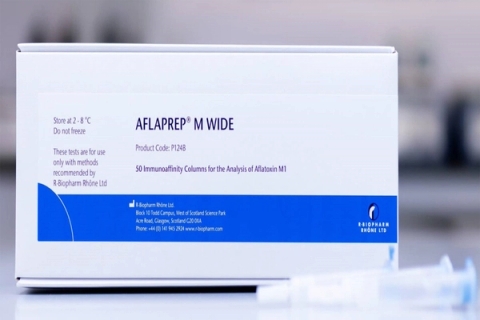
- Please see the Immunoaffinity columns for Aflatoxin M1 analysis we supply here.

2.3. Thin-layer chromatography (TLC)
* Working principle
- The sample is extracted and separated on a silica-coated plate.
- The fluorescent spots are compared against standards to identify Aflatoxin M1.
* Advantages
- Simple, low-cost method
- No complex equipment needed.
* Disadvantages
- Lower sensitivity than HPLC.
- Hard to quantify accurately.
2.4. Enzyme immunoassay (ELISA - Enzyme-Linked Immunosorbent Assay)
* Principle:
- Based on the reaction between the antibody and Aflatoxin M1.
- A colour develops and is measured spectrophotometrically to determine concentration.
* Advantages
- Fast, and suitable for screening large sample batches.
- Does not need complex HPLC-type equipment.
* Disadvantages
- May suffer interference from other compounds.
- Less accurate than HPLC.
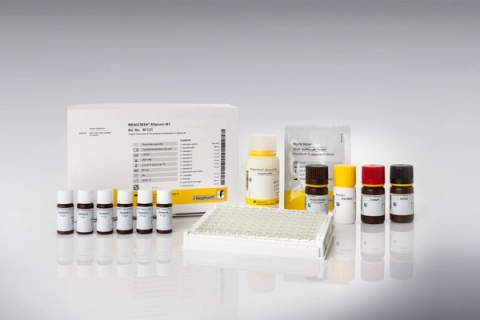
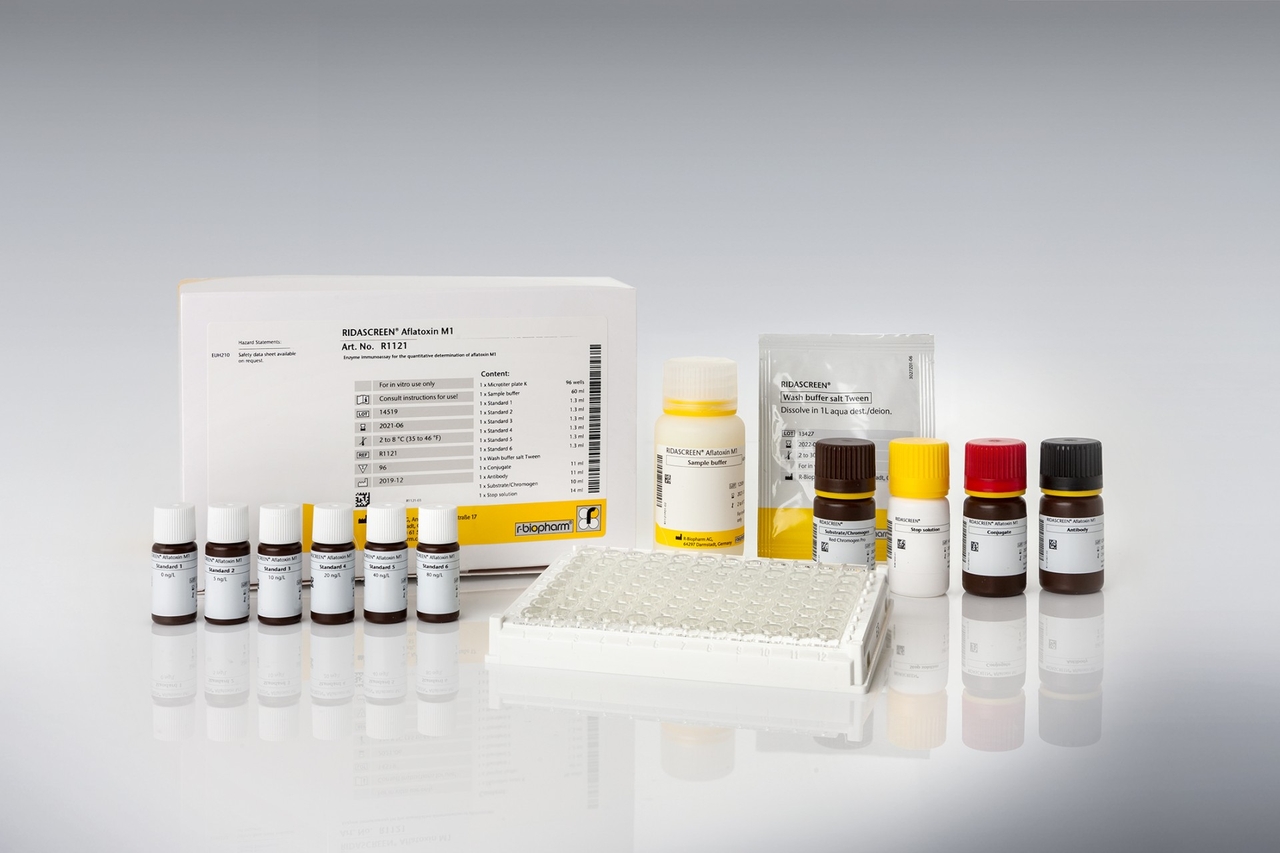
- Please see the Elisa test kit for Aflatoxin M1 analysis we supply here.
2.5. Gas chromatography-mass spectrometry (GC-MS)
- This method is less used for Aflatoxin M1 testing because aflatoxins degrade easily at high temperature, but it remains
Aflatoxin M1 is a dangerous toxin that must be strictly controlled. Among the test methods, HPLC and LC-MS/MS
The choice of testing method depends on the purpose, the accuracy required and the actual conditions of the laborato
- Pacific Company is proud to supply microbiological and toxin testing solutions for food, including ELISA test ki
📌 Contact us for more information about Aflatoxin M1 testing methods and advanced analytical so