1. What is Aflatoxin B1?
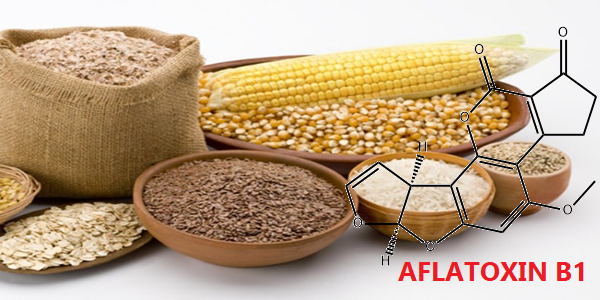
- Aflatoxin B1 (AFB1) is one of the most toxic aflatoxins, produced by certain mould species of the genus Aspergillus, mainly Aspergillus flavus and Aspergillus parasiticus. This substance often occurs in foods such as cereals, peanuts, oilseeds, spices, as well as in animal feed.
- Aflatoxin B1 is highly toxic, causes liver cancer and gene mutations, so many countries set strict limits on aflatoxin levels in food and feed.

2. Effects of the Aflatoxin B1 toxin
- For human health: AFB1 is a Group 1 carcinogen according to the classification of the World Health Organization (WHO). Long-term consumption of food contaminated with AFB1 can lead to liver cancer, immunosuppression, and acute poisoning.
- For livestock: Aflatoxin B1 reduces growth productivity, causes immunosuppression, liver damage and can even cause death in cattle and poultry.
3. Methods for testing Aflatoxin B1
3.1. Testing by Thin Layer Chromatography (TLC)
- Thin Layer Chromatography (Thin Layer Chromatography - TLC) is one of the traditional methods for detecting aflatoxin. This approach is low-cost but not highly sensitive and requires experience to analyse the results.
3.2. Testing by High-Performance Liquid Chromatography (HPLC)
High-Performance Liquid Chromatography (High-Performance Liquid Chromatography - HPLC) is the popular method for quantifying AFB1 with high accuracy. This method uses a fluorescence detector or a mass detector to detect the toxin with a very low detection threshold.
3.3. Testing by Liquid Chromatography Coupled with Mass Spectrometry (LC-MS/MS)
LC-MS/MS is the most modern method, allowing detection and quantification of AFB1 with extremely high sensitivity. This method is suitable for high-standard laboratories.
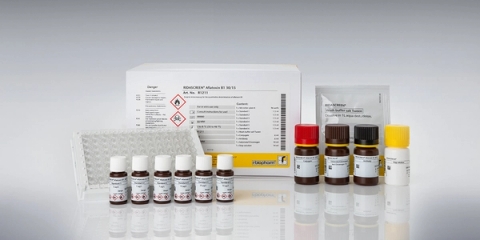
3.4. Testing with ELISA kits (Enzyme-Linked Immunosorbent Assay)
- ELISA is a popular method for rapid testing and quantification of Aflatoxin B1 in food and animal feed. This method is based on the principle of specific binding between the antigen (AFB1) and enzyme-labelled antibodies. When the reaction occurs, a colour signal appears and the colour intensity is directly proportional to the concentration of AFB1 present in the sample.
* Advantages
- Fast, giving results within 1-2 hours.
- High sensitivity, able to detect AFB1 at very low levels.
- Easy to perform, with no requirement for complex equipment.
* Limitations
- Cross-reactions with similar compounds may occur, causing errors.
- Test conditions need to be well controlled to ensure accuracy.
- The ELISA method is currently widely used in the food and animal feed industries because of its ability to test large numbers of samples at reasonable cost.
- Please refer to our Aflatoxin B1 toxin ELISA test kit product here.

4. Conclusion
Aflatoxin B1 is a serious risk to human health and livestock, requiring strict control in the food chain. AFB1 testing methods are developing increasingly, helping businesses and food regulatory authorities to better control product quality, ensuring safety for consumers and livestock.