1. What is acetic acid
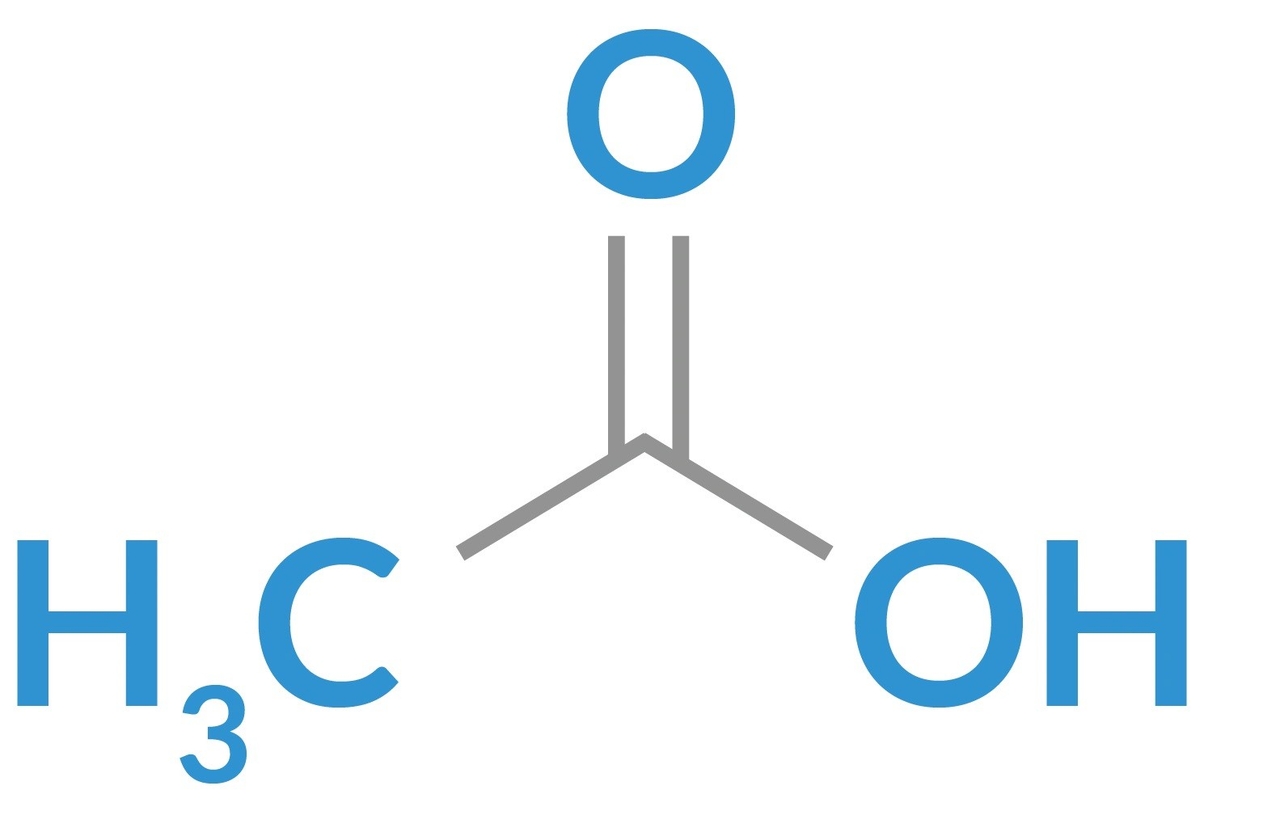
Acetic acid (also called ethanoic acid, chemical formula CH₃COOH) is a weak organic acid that occurs naturally in the ferment
2. The role and applications of acetic acid in food
- Flavouring and preservative: acetic acid can inhibit microorganisms and extend food shelf life.
- Main component of vinegar: vinegar usually contains 4–8% acetic acid and is used in cooking and pickling.
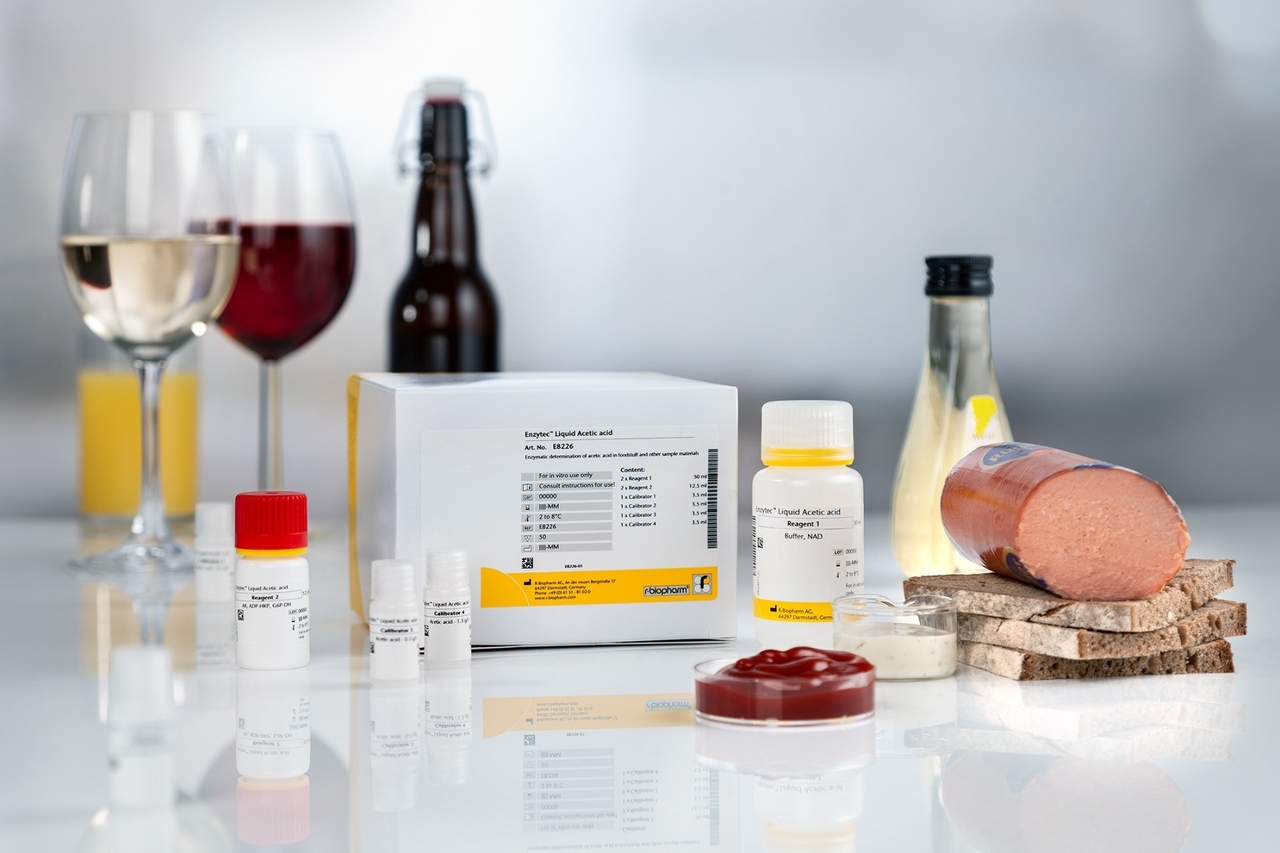
- In beverages and fermented foods: acetic acid appears naturally in beer, wine, soy sauce, kombucha
- Quality indicator: the acetic acid concentration can reflect the degree of fermentation, freshness or microbial spoilage in foo

3. Why acetic acid in food needs to be tested
Testing the acetic acid content of food is necessary to:
- Ensure compliance with food safety regulations.
- Control fermentation: in the production of wine, vinegar, fruit juice or other fermented foods.
- Assess quality and detect spoilage caused by acetic-acid-producing bacteria in products where that fermentation is unwanted
4. Testing acetic acid in food with the enzymatic method
- The quantitative assay for acetic acid (acetate) uses an enzymatic reaction chain whose key enzymes are acetate kinase (AK), ADP-hexokinase (ADP-HK) and glucose-6-phosphate dehydrogenase (G6P-DH).
* Reaction principle:
- Acetate reacts with ATP under the catalysis of acetate kinase (AK) to form acetylphosphate and ADP.
➤ The amount of ADP produced is molar-proportional to the acetate concentration.
- ADP then reacts with D-glucose under the action of ADP-HK, forming D-glucose-6-phosphate and AMP.
- D-glucose-6-phosphate subsequently reacts with NAD⁺ under the catalysis of G6P-DH, forming D-glucono-δ-lactone-6-phosphate and NADH.
- The amount of NADH produced (measurable at 340 nm) is proportional to the initial acetic acid concentration in the sample.
* Important notes:
- Because the reaction does not produce a linear plot of acetic acid concentration against OD at 340 nm, you should use multi-point calibration (4 calibrators) to guarantee accuracy.
- This method is especially suitable for analysis in foods and fermented beverages, where acetic acids
* Advantages of the enzymatic method
- High accuracy and repeatability.
- Barely affected by impurities in the sample.
- Suitable for many food and beverage matrices (wine, vinegar, fruit, yogurt...).
- No hazardous chemicals needed as with titration methods.
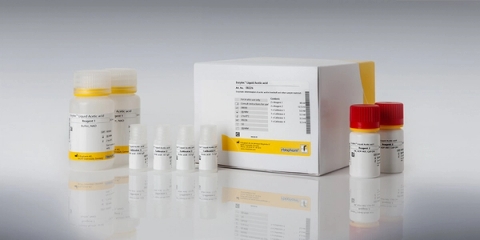
5. Introducing the Enzytec™ Liquid Acetic acid (E8226) test kit
* Product information
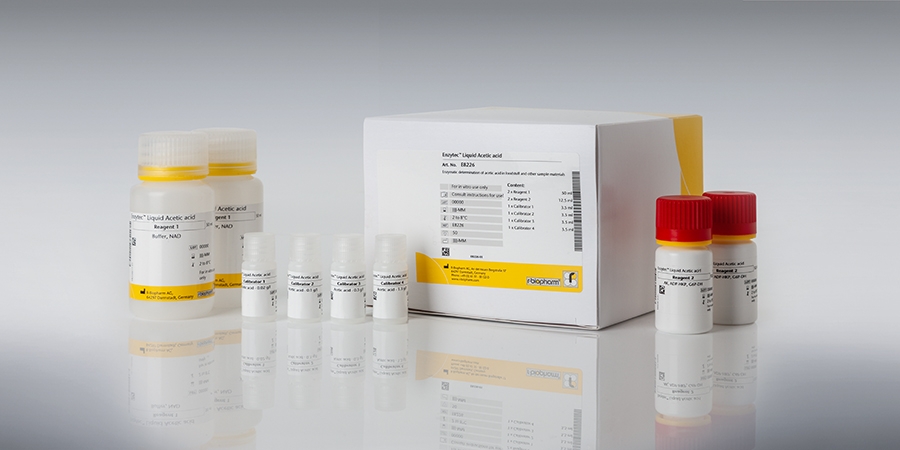
- Product name: Enzytec™ Liquid Acetic acid
- Product code: E8226
- Manufacturer: R-Biopharm AG (Germany)
- Kit format: ready-to-use liquid reagents
- Intended use: quantitative determination of acetic acid in foods and drinks such as vinegar, beer, wine, yogurt, fruit juic
* Advantages of the Enzytec™ Liquid E8226
- No reagent preparation needed: all reagents come ready in liquid form, convenient to handle.
- Simple operation: only a spectrophotometer and pipettes are required.
- Accurate analysis: reaction time is only about 10–15 minutes per sample.
- High sensitivity: detects acetic acid concentrations as low as 2.5 mg/L.
- Compatible with automated and semi-automated laboratory systems.
* Packaging specifications
- 50 assays / kit (depending on single or duplicate sample format).
- Includes all enzymes, buffer, solvents and the instructions for use.
Determining the acetic acid content of food is necessary to ensure product quality and safety. The Enzytec™ Liquid Acetic acid E8226 from R-Biopharm. With high accuracy, simple handling and a ready-to-use liquid format, this kit is the ideal to
If you need technical advice, a price list or detailed usage guidance, please contact Pacific Company (Thái Bình Dương) – the official distributor of R-Biopharm products in Vietnam. Please see the products we supply here.