
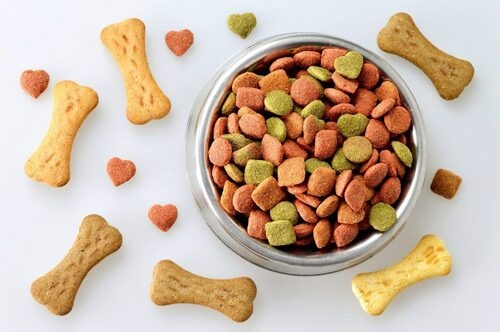
- Just like humans, animal health and performance depend heavily on a balanced diet. In livestock farming, feed quality is the deciding factor for success, but quality demands are also rising in the field of animal nutrition.
- Clearly, animal feed must be formulated for each specific animal species, contain sufficient nutrients and contain no undesirable or prohibited substances. To ensure this, feed must comply with strict regulations. Therefore, regular analysis is necessary.
1. Microbiological contamination
- Salmonella has caused several product recalls in recent weeks; affected products include dog chews and soybean meal. Protein-rich feed is particularly susceptible to contamination because it creates a very favorable environment for Salmonella. Contaminated feed can cause infection in animals. This is particularly problematic in livestock farming because Salmonella can enter the milk, eggs or meat of animals through infection.
- Besides Salmonella, other bacteria as well as yeasts and molds can also contaminate animal feed. Therefore, monitoring pathogenic microorganisms and the total bacterial count is an important task in animal feed production.
2. Residues
- Meat used to produce animal feed must follow strict control measures, just like meat for human consumption. However, residues of hormones, antibiotics or veterinary drugs can occur in the meat.
- ELISA tests can detect many such substances in a timely manner. Moreover, residues of plant protection products (pesticides) or fertilizers (nitrate) can enter animal feed. Maximum residue limits (MRL) are set in the EU.
3. Mycotoxins
- Mycotoxins are harmful metabolites produced by molds. They can cause growth disorders and impaired reproduction in animals even at low concentrations. Cereals are often mold-infested and can therefore be contaminated. In the German feed regulation, maximum levels are set for aflatoxin B1; the EU Commission has defined guidance values for deoxynivalenol (DON), zearalenone, ochratoxin and fumonisin.
- Mycotoxins can be detected quickly and easily on site by mycotoxin rapid tests. Thanks to extensive control and preventive measures, mycotoxins are rarely found in animal feed nowadays.
4. Genetically modified organisms (GMO)
Soybean meal, widely used in animal feed production, is often made from genetically modified soybeans. Corn, rapeseed and rice are also often derived from genetically modified crops. Many GMOs are approved in the EU, but they must be declared from a threshold of 0,9%. Non-GMO animal feed manufacturers must test their products. The method chosen for this is Real-Time PCR.
5. Heavy metals
Heavy metals can harm humans and animals and can cause chronic poisoning. They enter the feed through soil, fertilizer or additives. In particular, lead has repeatedly been detected in animal feed – most recently in late January in dog food from Sweden. For lead, cadmium, mercury, arsenic and fluorine, maximum levels are set in the EU.
6. Dioxin
Dioxin is an organic pollutant that accumulates in the environment and is found everywhere in soil, water, plants and animals. For dioxin and dioxin-equivalent polychlorinated biphenyls (PCB), maximum levels are set in the EU.
* Legal regulations on animal feed
- German feed regulation
- Regulation (EC) No 767/2009
- Directive 2002/32/EC
- Regulation (EC) No 152/2009
- Recommendation 2006/576/EC
Source: food.r-biopharm.com