
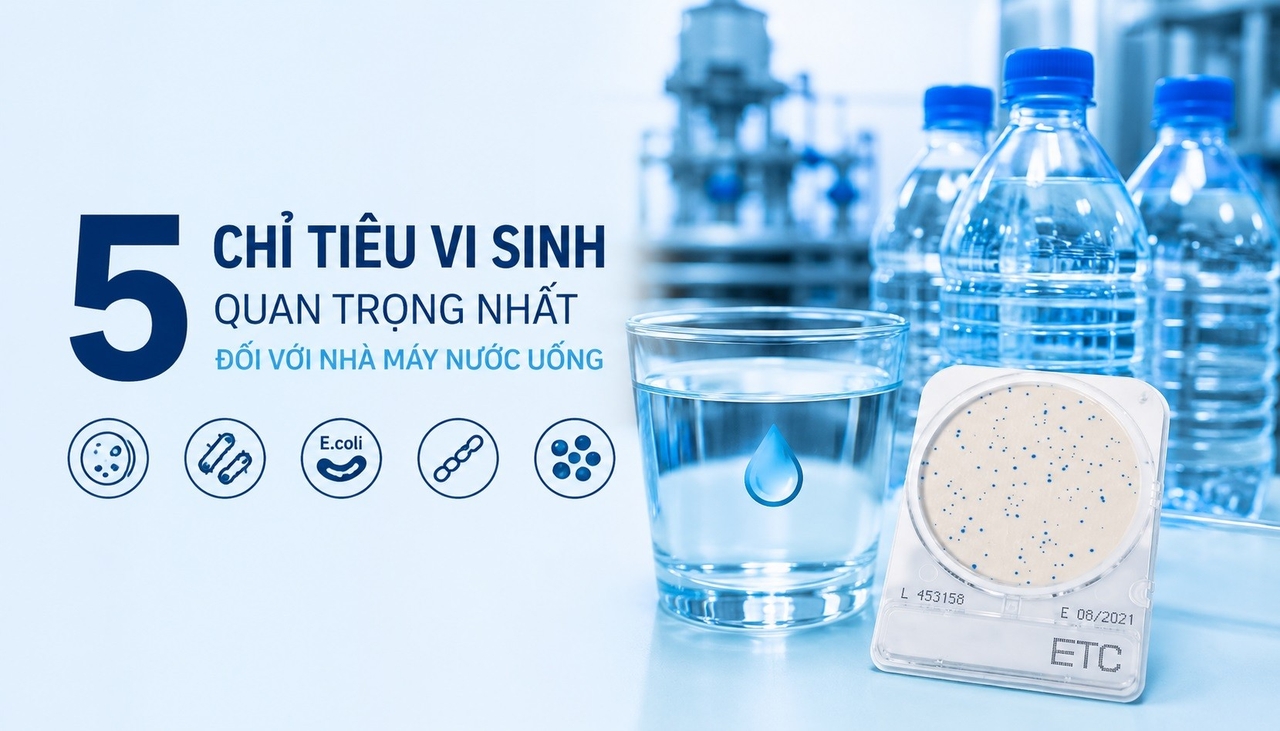
Just a small amount of harmful microorganisms appearing in the finished product can lead to:
- Large-scale product recalls
- Loss of brand reputation
- Customer complaints
- Violations of legal regulations
- Major economic damage
Therefore, periodic microbiological testing is mandatory for every bottled water plant.
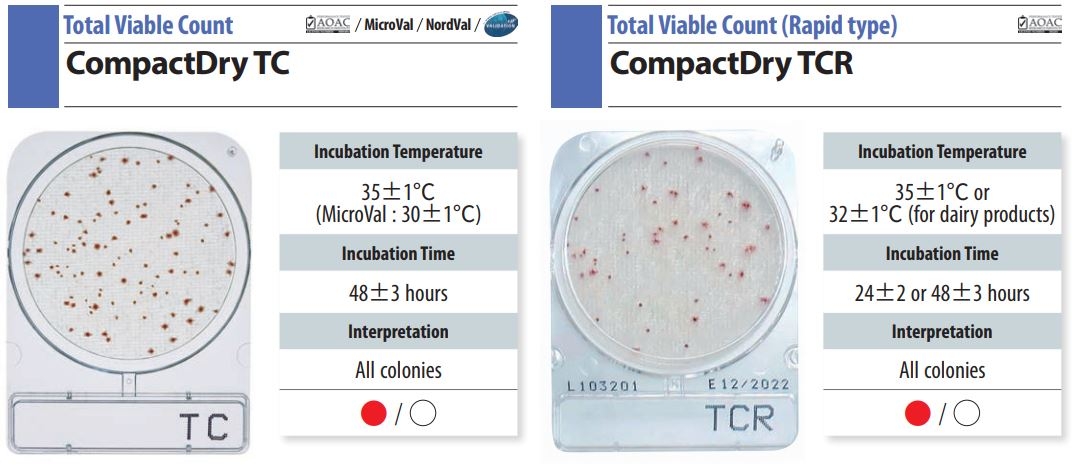
1. Total aerobic microorganisms (Total Viable Count - TPC)
This indicator reflects the overall hygiene level of the production process.
The total aerobic count reveals:
- The effectiveness of the water treatment system
- The sanitary condition of the pipework
- How clean the production equipment is
- The risk of microbial contamination during bottling
If this indicator rises, the plant must immediately review:
- The filtration system
- The filling equipment
- The CIP sanitation process
- The production room conditions
Reference limits
- Under many bottled water standards, the total aerobic microorganism count must be very low or must not exceed the prescribed limit.
Testing methods
- Traditional agar pouring
- Compact Dry culture plates
- The Compact Dry TC plate
2. Coliform
Coliform is the most important indicator group of bacteria in water quality control.
The appearance of Coliform shows:
- The water source is polluted
- The treatment system is ineffective
- Equipment or packaging is at risk of contamination
Although not all Coliforms are pathogenic, this is a warning sign that must be strictly controlled.
Why is Coliform important?
Many international standards regard Coliform as a mandatory indicator for assessing the safety of drinking water.
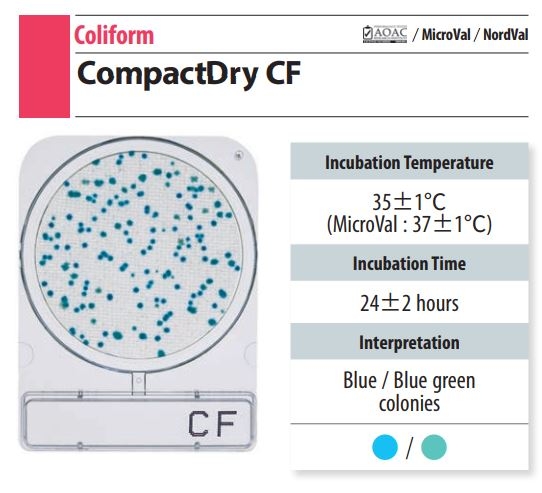
Testing methods
- MPN
- Membrane filtration
- The Compact Dry CF plate
3. Escherichia coli (E. coli)
E. coli is a specific indicator of fecal contamination. When E. coli is detected in drinking water, this shows:
- The water source has been exposed to household or animal waste
- The treatment system has failed
- There is a risk of other pathogenic microorganisms being present
Health risks
Some E. coli strains can cause:
- Acute diarrhea
- Abdominal pain
- Vomiting
- Intestinal infections
Requirement for drinking water
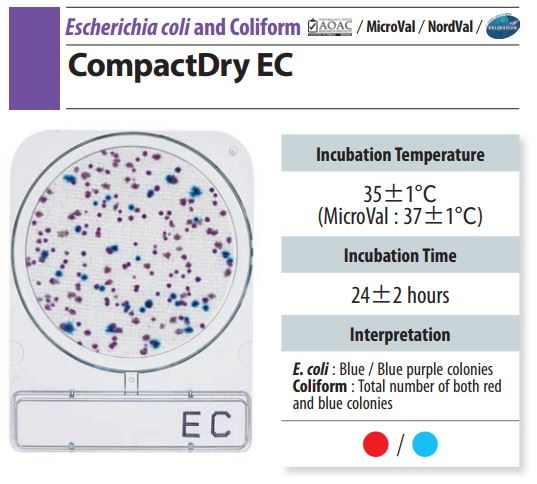
E. coli must not be detected at all in drinking water samples.
Testing methods
- The Compact Dry EC plate
- Microbiological membrane filtration
- Selective culturing
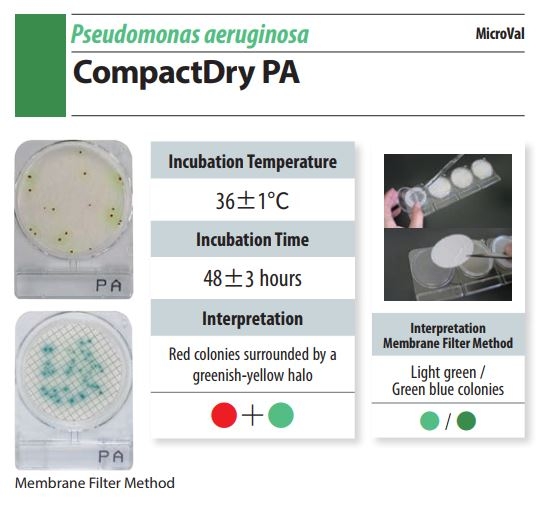
4. Pseudomonas aeruginosa
Pseudomonas aeruginosa is a bacterium commonly found in aquatic environments and is of great concern to bottled water plants. Characteristics of this bacterium:
- It forms biofilms
- It clings inside pipework
- It is hard to remove with ordinary cleaning
- It can resist many types of disinfectants
Harmful effects
In people with weakened immune systems, this bacterium can cause:
- Skin infections
- Eye infections
- Respiratory tract infections
Common sources of contamination
- Water storage tanks
- Production pipework
- Filling nozzles
- Filters
Testing methods
- Selective culturing
- Microbiological membrane filtration
- Dedicated media for detecting Pseudomonas
5. Enterococcus
Enterococcus is a fecal-contamination indicator group of bacteria with higher environmental resistance than Coliform. Therefore, many experts use this indicator to evaluate:
- The effectiveness of water treatment
- The risk of recontamination after treatment
- The long-term safety of the water source
Advantages of the Enterococcus indicator
- It survives longer than E. coli in the water environment
- It reflects the risk of fecal contamination accurately
- It is widely used in international standards
Requirement
It must not be detected in finished drinking water.

Summary table of the 5 important water microbiology indicators

Rapid microbiological testing solutions for water plants
Currently many water plants are switching from the traditional agar-pouring method to using Compact Dry plates thanks to these advantages:
- No medium preparation needed
- No autoclaving needed
- Simple handling
- Reduced variability between operators
- Laboratory space savings
- Clear, easy-to-read results
* Some commonly used Compact Dry plate types:
- Compact Dry TC: total aerobic microorganisms
- Compact Dry CF: Coliform
- Compact Dry EC: E. coli and Coliform
- Compact Dry ETC: Enterococcus
- Compact Dry PA: Pseudomonas aeruginosa
This is a suitable solution for bottled water, purified water, mineral water, food-grade ice plants, and QC rooms that need to optimize testing cos
Conclusion
To ensure product quality and meet legal requirements, water plants must tightly control at least these 5 important microbiology indicators: total aerobic microorganisms, Coliform, E. coli, Pseudomonas aeruginosa, and Enterococcus. Periodic testing not only protects consumers but also helps raise brand reputation and reduce the risk of product recalls