
10 NOTES FOR AN ELISA TEST TO BE SUCCESSFUL, EXTREMELY IMPORTANT
The ELISA test (Enzyme-linked Immunosorbent Assay) is one of the most common techniques in rapid testing today. In quality management, popular rapid ELISA testing solutions such as residue testing , toxins, allergies, etc. The ELISA test is applied in medicine such as diagnosing infections in humans, animals and aquatic products, and cancer research. Ensuring the accuracy of this method is always a concern because of several basic technical issues. We hope this article can help you improve the effectiveness of your ELISA test.
* To learn more about ELISA kits from PacificLAB, please visit the links:
https://pacificlab.vn/vi/shops/group/test-kit-tieu-hao-linh-vuc-hoa/
https://pacificlab.vn/vi/shops/group/test-kit-tieu-hao-linh-vuc-sinh/
1. Consistency, the key to any ELISA test KIT
Many people think that consistency between plates within a test will not significantly affect the analysis results. You might combine wells from different kit boxes into the same test, or carry out lot mixing, to save reagents from the previous kit lot.
In reality, you should never mix components between kit lots. Each test lot (Lot No.) is designed to give you a certain performance within its shelf life. If you mix multiple lots, you may inadvertently introduce reagents that have degraded, leading to test results that are suboptimal or ineffective.
It is also possible to ensure the consistency of each lot between test runs by: using reagents from the same Lot No, under the same storage, transport conditions, etc. But we encourage you not to do this.
Basically, consistency should be carefully controlled by labelling a management code on the kit box and the kit components. Data on the import/export dates and storage conditions of this Kit should be fully recorded. This is also in line with ISO 17025 for the testing field.
2. Try to maintain the repeatability of the test method
For users of ELISA test kit, repeatability is extremely important, it shows the reliability of the method. Reproducibility can be affected by incorrect or inconsistent preparation of reagents or even sample handling. Make sure all reagents of the kit are placed at room temperature for about 30 minutes before each test.
Many reagents contain temperature-dependent components that can only function and disperse evenly in solution once at room temperature. Therefore, using reagents at room temperature ensures consistent immune binding and consistent colour development from one test to another. Temperature changes can affect test performance and can lead to your data lacking repeatability.
Sample handling is also very important when it comes to repeatability. For example: sampling needs to be consistent, minimising the number of freeze-thaw cycles for seafood samples and optimising the sample dilution.
3. Ensuring the accuracy of the ELISA test
Where conditions allow, you should increase accuracy by running duplicate wells for all points in the test, including background wells, standard wells and samples. This will let you immediately spot standards or samples with abnormal OD that could affect your average OD value.
For example: if you accidentally have a pipetting problem when adding reagents, it will certainly affect the OD, and therefore the calculated average value, leading to inaccurate interpolation from the standard curve.
4. Avoiding sample contamination when performing the ELISA test
The % CV between your sample replicates shows the level of stability and is a sign of sample cross-contamination. A test is successful and runs well when the % CV between duplicate wells is low.
New pipette tips should be used for each addition of sample/standard/reagent. Also, do not pour reagents back into the original bottle, as this can also inadvertently contaminate the reagent. During sample handling, instruments should be cleaned or replaced when necessary.
5. Building reliable standard curves
For reproducible standard curves (referred to as standard curves), make sure to dilute the curve in the order instructed by the manufacturer. Adding standards higher or lower than the manufacturer's recommended concentration range will not increase sensitivity and will not allow detection of higher concentrations because of the binding capacity limit of the antibody coated on the well walls.
New standard curves must be built for each test / plate. Most ELISA tests will suggest a certain time window for using newly prepared standard curves. It is important to follow the manufacturer's recommendations.
6. Ensuring correct test sample handling when performing the ELISA test
For the most accurate sample analysis, it is very important for every user to optimise the dilution, because the level of biological marker can vary with the matrix interference potential. Therefore, it is important that:
- The analyte concentration in the sample falls in the safe position on the standard curve (recommended between standard points 2 and 4).
- Check dilution linearity using the dilution solution (sample dilution).
By personal experience, you should still optimise the dilution ratio for your samples yourself and consult further guidance/recommendations for the matrix. Some people underestimate the importance of this optimisation and, in some cases, the result is sample data that is non-linear, falls outside the curve, or varies too much, making the data essentially unusable.
A typical example: when a sample is outside standard point 4, you dilute it 10 times; if the result decreases 10 times (dilution linearity achieved), then the original result is acceptable. If after dilution the result only decreases 5-7 times, you need to dilute further, in this example perhaps 20 times, and compare the results between the 10-fold and 20-fold dilutions to see whether the linearity ratio is achieved. If achieved, take the result after the 10-fold dilution; if not, dilute further. … These processes will be shortened by personal experience, estimating the concentration range of the product sample, etc.
7. Understand and grasp the role of the background well and the control well.
To ensure your ELISA test is successful and allows troubleshooting if needed, you should run additional check wells.
- Background well: checks contamination of chemicals, reagents, instruments, etc. The lower the %CV of the background well, the better. Ideally, it should reach the %CV of the zero standard.
- Control well: %Recovery should be stable for each method. There are 2 types of control well:
Standard curve control well: add a solution of known concentration prepared in the same matrix as the standard.
Sample processing control well: add a known amount of analyte to the sample, then analyse it in parallel with the other samples and check the recovery to evaluate the handling and the method.
8. Using the supplied / recommended diluents and buffers
Wash buffer parameters (pH, ion content, etc.) all play a certain role in finding a favourable environment for good test results.
You should use the diluents and wash buffers supplied with the kit to get the best possible results.
9. Following the recommended incubation time, temperature and conditions
For the colour development to complete, make sure to follow the instructions on how to incubate, the temperature, time and shaking conditions (if required). Shortening the incubation time can prevent the reaction from reaching equilibrium before moving to the next step.
Large temperature changes can also affect binding kinetics.
If shaking is recommended, you had best follow that principle, because the accuracy and consistency of handling during plate incubation can really help improve assay performance.
10. Optimising reading and data handling
Read the plate at the wavelength indicated in the test manual and use the recommended data analysis software.
The results should be read as soon as the stop solution has been added.
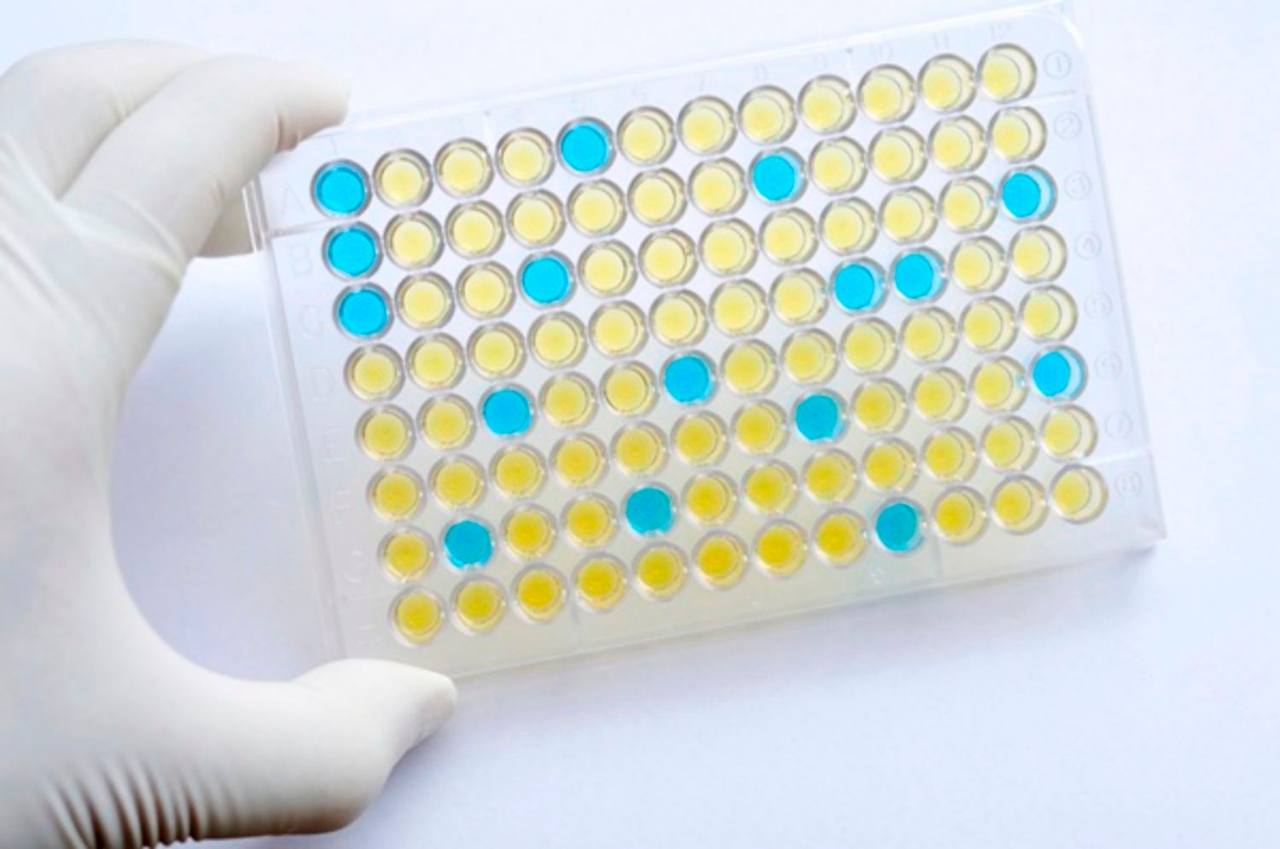
The ELISA test (elisa test kit) - a rapid method for checking antibiotic residues, toxins and microorganisms
Source: Reference: Erica Brooks