1. Scope
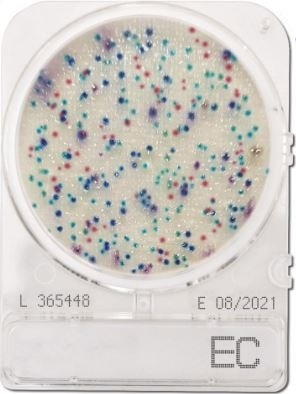
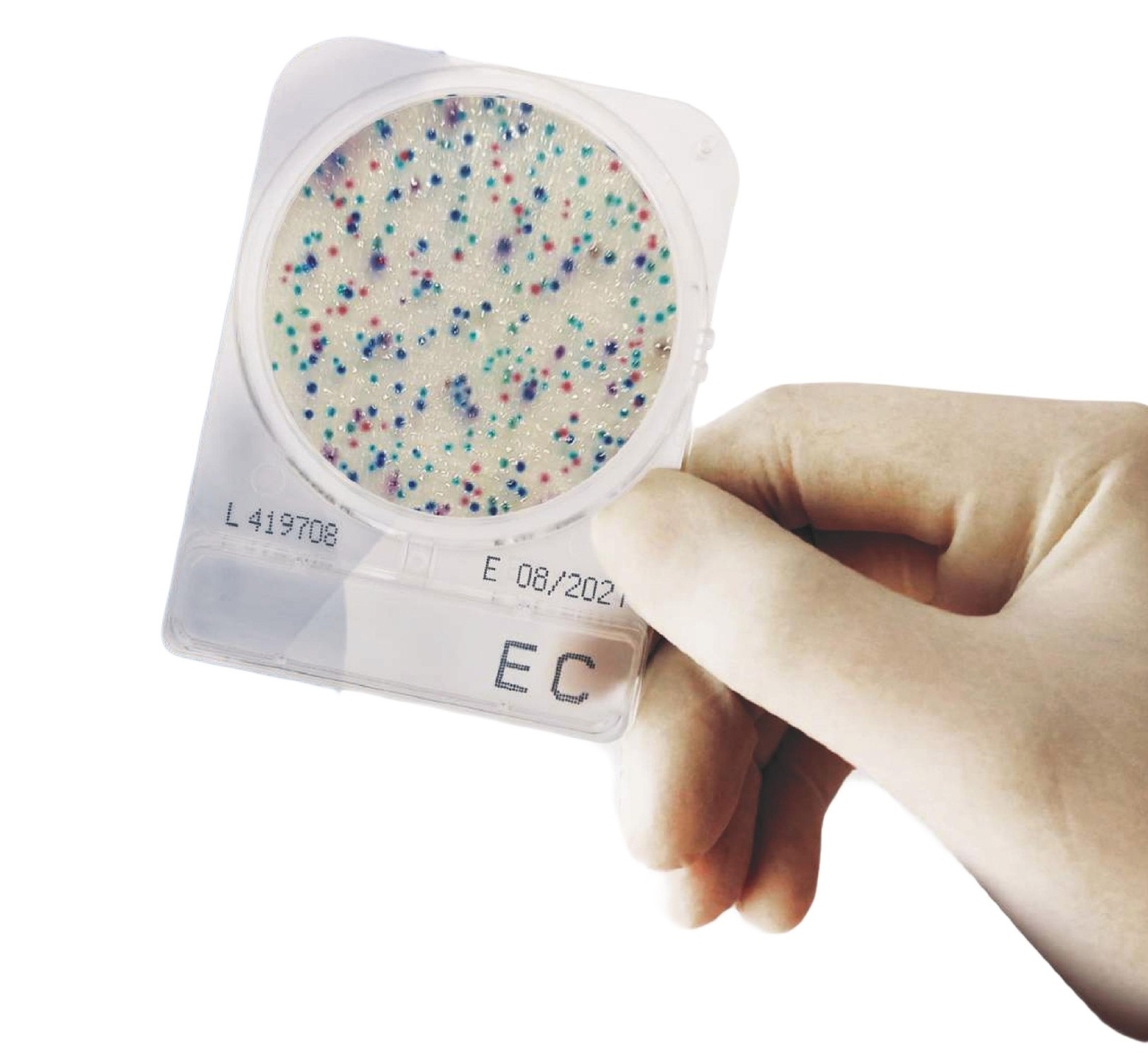
- This standard specifies the method for using Compact Dry EC plates for rapid enumeration of Escherichia coli bacteria (excluding E. coli O157 strains) and total coliforms in foods.
- Annex A provides information on the method validation results and the results of the collaborative studies carried out by AOAC [9],[13],[14], NMKL - NordVal [11] and Microval [12].

2. Definition of Ecoli bacteria
Ecoli bacteria at 37 ºC form typical colonies of blue or purple colour on the medium under the conditions specified in this standard.
3. Definition of Coliform bacteria
Coliform bacteria at 37 ºC form typical colonies of blue, purple, pink or red colour on the medium under the conditions specified in this standard.
4. Colony
A visible cluster of microbial biomass growing on or within a solid nutrient medium, developed from a single living cell
5. Test principle
- Use a ready-prepared medium plate consisting of culture medium, gelling agent and two chromogenic enzyme substrates. The medium in the plate is wetted with the prepared test portion, and then the gelling agent solidifies the medium. Incubate the medium containing the test portion at 37 ºC ± 1 ºC for 24 h ± 2 h.
- E. coli forms blue or purple colonies, and coliform bacteria other than E. coli form red or pink colonies.
* NOTE 1: Non-coliform bacteria are inhibited and will not form the typical blue, purple, pink or red colonies.
* NOTE 2: E. coli O157 does not produce beta-glucuronidase and therefore is not detected as E. coli on Compact Dry EC plates. E. coli O157 forms red or pink colonies on Compact Dry EC plates.
6. Culture media and diluent
Use only analytical grade reagents; the water used shall be distilled water, demineralised water or water of equivalent quality, unless otherwise specified.
6.1. Compact Dry EC Ecoli Coliform plate
- Compact Dry EC plates consist of a mixture of nutrients (peptone, potassium nitrate, sodium chloride and sodium pyruvate), phosphate buffer, selective agents against Gram-positive bacteria, a gelling agent (agar-based polysaccharide) and two chromogenic enzyme substrates, namely 5-bromo-6-chloro-3-indoxyl-beta-D galactopyranoside (Magenta-GAL) and the cyclohexylammonium salt of 5-bromo-4-chloro-3-indoxyl-beta-D-glucuronic acid (X-Gluc).
- The plate size is 20 cm2; the underside of the plate is printed with a grid of 1 cm × 1 cm and 0,5 cm × 0,5 cm squares to make colony counting easier.
- Store the plates at temperatures from 1 ºC to 30 ºC.
6.2. Peptone salt solution (MRD)
6.2.1. Composition
- Peptone (enzymatic casein hydrolysate) 1,0g
- Sodium chloride (NaCl) 8,5 g
- Water 1000ml
6.2.2. Preparation
- Dissolve the components into the water placed in a flask or bottle of 1 000 mL capacity by heating, if necessary. Sterilise for 15 min in an autoclave (6.3) at 121 °C.
- Adjust the pH so that after sterilisation it is 7,0 ± 0,2 at 25 °C, if necessary.
7. Equipment, apparatus and consumables required
Use the usual equipment and apparatus of a microbiology laboratory, together with the following equipment and apparatus:
- Analytical balance, readable to 0,1 mg.
- pH measuring instrument, with an accuracy of 0,1 pH units at temperatures from 20ºC to 25ºC.
- Autoclave, controllable at 121 °C.
- Volumetric flask, 1 000 mL capacity.
- Pipette, capable of dispensing 1 mL.
- Vortex mixer.
- Filtered stomacher bags, capacity from 80 mL to 400 mL, for example: Stomacher bag.
- Sample homogeniser, for example: Stomacher.
- Incubator, capable of maintaining 25 °C ± 1 °C.
- Colony counter.
8. Sampling
- Sampling is not specified in this standard. Sampling should preferably be carried out in accordance with TCVN 11923 (ISO/TS 17728) [6]; for carcass surface sampling in accordance with TCVN 7925 (ISO 17604) [3], and sampling of milk and dairy products in accordance with TCVN 6400 (ISO 707) [1].
- The samples received by the laboratory shall be truly representative and shall not have been damaged or altered during transportation and storage.
9. Test sample preparation
9.1. Preparation of the test portion, in accordance with the corresponding part of TCVN 6507 (ISO 6887).
9.2. Preparation of the test sample suspension
9.2.1. Preparation of the test sample suspension
- Weigh 10 g of the test portion, accurate to 0,1 mg, place in the sample homogeniser and add 90 mL of peptone salt solution (5.2). Homogenise using the sample homogeniser for 2 min ± 15 s.
- For powdered test samples, weigh 10 g of the test portion, accurate to 0,1 mg, place in a stomacher bag and add to 90 mL of peptone salt solution pre-heated to 45 ºC ± 1 ºC. Rotate and shake gently until the sample is dissolved.
NOTE: Use a filtered stomacher bag to avoid leaving small fragments on the surface of the culture medium.
9.2.2. Liquid food samples
- For liquid test samples, depending on the expected level of E. coli and coliform contamination, the undiluted test portion may be used directly, or a dilution of 1 mL of test portion in 9 mL of peptone salt solution (5.2) may be prepared, with further dilution if the count is greater than 250 CFU/plate 1).
- Mix using a vortex mixer.
10. Procedure
- Take the required number of Compact Dry EC Ecoli Coliform plates. If colonies are to be counted at consecutive dilutions, use a set of four plates. Label the plates with the test sample information and the dilution factor.
- Remove the lid of the plate, pipette 1 mL of the prepared test portion (see Clause 9) onto the centre and close the lid. The test portion will spread automatically and uniformly over the whole medium and set to a gel.
- Care is needed to avoid microbial contamination.
- Samples with high viscosity, dark colour, too high a pH, or that react with the redox indicator may affect the results. For such samples, analyse only after diluting the sample, adjusting the pH of the sample with buffer solution or taking other measures.
- Invert the covered plate and place it in the incubator, incubating the plate at 37 ºC ± 1 ºC for 24 h ± 2 h. During incubation, keep the plate lid closed to avoid moisture loss
- Count the coloured colonies on the culture medium, using a colony counter. E. coli colonies (excluding E. coli O157 strains) are blue or purple, and colonies of coliform bacteria other than E. coli are red or pink, therefore the total coliform count is the total number of blue, purple, red and pink colonies. White paper may be placed under the plate to make colony counting easier. The count on the plate must be adjusted according to the dilution factor.
- When colonies are difficult to count because a large number have grown on the medium, the total colony count may be calculated as 20 times the mean colony count from the representative 1 cm × 1 cm squares, or as 80 times the mean colony count from the representative 0,5 cm x 0,5 cm squares, these squares being counted at the four corners of the plate.
- The countable colony range is from 1 CFU/plate to 250 CFU/plate. If the counted plate has more than 250 CFU/plate, dilute the test sample with a suitable diluent.
11. Calculation and expression of results
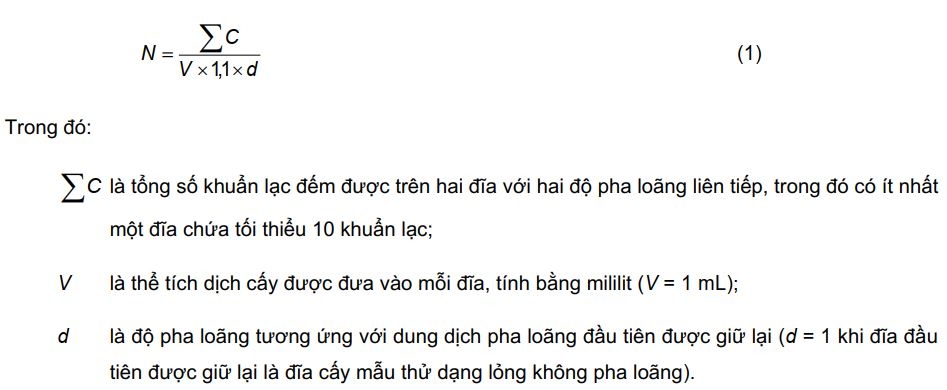
a) Calculate the total number of yeasts and moulds in the test sample, N, from the mean colony count from two consecutive dilutions, applying Formula (1):
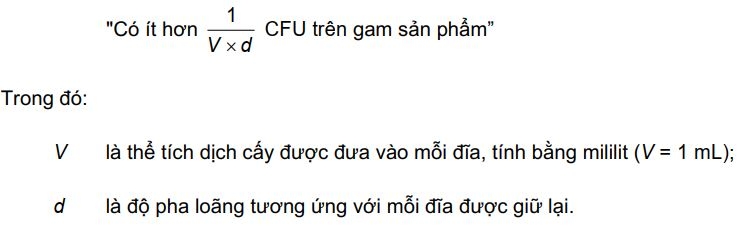
b) If the plates contain no colonies, report the result as:
c) If the colony count on one plate is in the range from 1 CFU/plate to 3 CFU/plate, report the result as:

d) If the colony count on one plate is in the range from 4 CFU/plate to 9 CFU/plate, calculate the estimated number NE of yeasts and moulds per gram of product according to Formula (2):
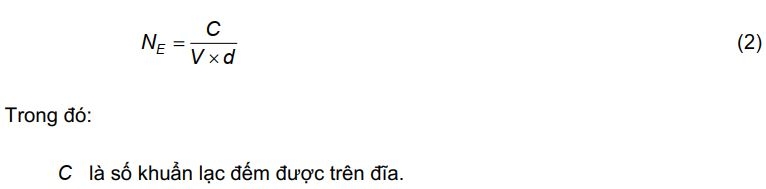
e) In the case where only the plate containing the last incubated dilution that can be counted, and which contains from 10 CFU/plate to 150 CFU/plate, calculate the number of yeasts and moulds per gram of product, N’, applying:

f) If the colony count on one of the plates containing all the incubated dilutions gives a number of yeasts and moulds greater than 150 CFU/plate, report the result as:

12. Test report
The test report shall include at least the following information:
a) all information necessary for the complete identification of the test sample;
b) the sampling method used, if known;
c) the test method used, with reference to this standard;
d) any specific points observed during the course of the test;
e) any details of operations not specified in this standard or regarded as optional, together with any other abnormal details that may have affected the results;
f) the test results obtained.
The above is the information on the detection and enumeration of Ecoli Coliform bacteria by the method using Compact Dry EC Ecoli Coliform plates according to Vietnamese Standard TCVN 13875:2023. For more detailed information about the Compact Dry EC plate product, please visit the following link:https://pacificlab.vn/vi/shops/phong-thi-nghiem/dia-compact-dry-ec-ecoli-coliform-compact-dry-ec-ecoli-coliform-shimadzu.html
Vietnamese Standard certification document TCVN 13875:2023 for the Compact Dry EC Ecoli Coliform plate:
/uploads/news/2024_04/tcvn-13875-2023-compact-dry-ec-e.coli-2023.08.25.pdf